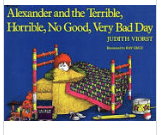
Alexander and the Terrible, Horrible, No Good, Very Bad Day, by Judith Viorst

Some days are just terrible, horrible, no good and very bad. Follow Alexander as he experiences one such day. It might make yours feel a little less terrible. This book is a good one to use to talk about feelings and safe behaviors for letting off steam.

Materials

globe or world map

yoga cards

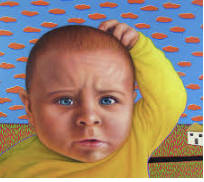
Picture of Aboriginal art

several clean egg cartons

Qtips

small suitcase or small satchels

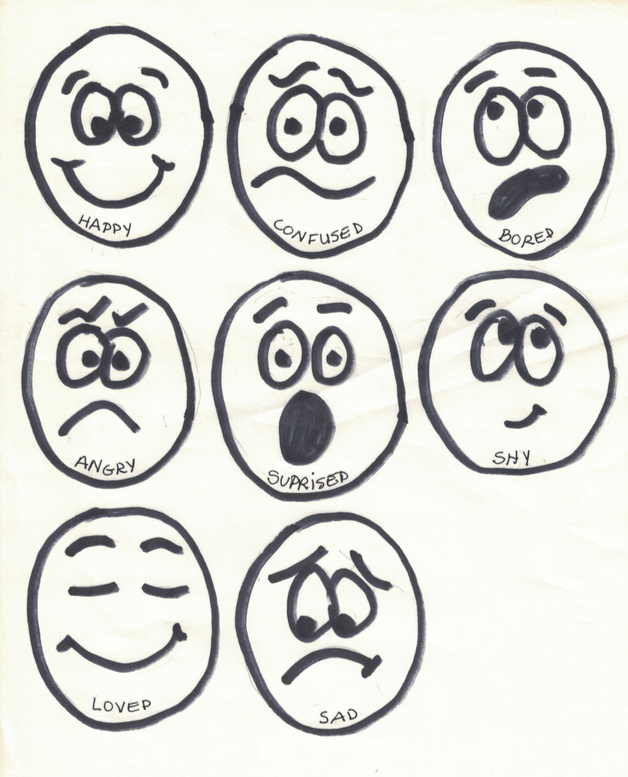
Emotion cards for game

Emotion cards for wall of library

Several Page protectors and dry erase marker

Several toothbrushes

Vocabulary

Australia (a country far away from the United States where people, kangaroos and koala bears live)

Lousy (a day when nothing goes the way you want it to)

Tense (muscles kept very stiff so cannot move)

Stiff (to keep your body strong and not moving)

Relaxed (Muscles are not stiff and so body falls over)

Before Reading the Story

Ask the children if they have ever had a day where nothing goes right and everything seems wrong? Explain that some people call this a lousy day or a rotten day. Give some examples of what having a rotten day might look like (When I was walking I stepped in dog-doo. When I was taking a bath I got soap in my eye). Ask the children if they have any examples of a rotten day they might like to share? After they have given any examples, tell them that fortunately, bad days come to an end and the next day will be better.

Language Development/Speaking & Communicating; progress in abilities to initiate and respond appropriately in conversation and in discussions with peers and adults.

Reading the Story

After the first mention of Australia, stop and show the children where it is located on a globe or world map. Say that Australia is very far away.

Social & Emotional Development/Knowledge of Families & Communities; begins to express and understand concepts and language of geography in contexts of the classroom, home, and community.

Read the story with disappointment and frustration in your voice. As you read, point to Alexander’s face on different pages and mimic your own to express how he is feeling. Note mentally if any children respond to your facial expressions in any way.

Social & Emotional Development/Social Relationships; progresses in responding sympathetically to peers who are in need, upset, hurt, or angry; and in expressing empathy or caring for others.

After reading the Story

Note to the children that even though Alexander was having a terrible, horrible, no good, very bad day, he NEVER lashed out at his friends or brothers. Even when his big brothers were teasing him after the dentists. Ask the children if they can think of things they can do if they are very, very frustrated and angry or are just having a rotten day? (Punch a pillow, throw a bean bag at a wall target, punch down play dough, scream outside, dig holes in the dirt on the playground, do some yoga).

Discovery

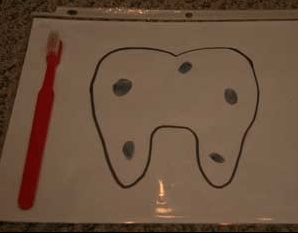
Remind the children that in the story Alexander had a cavity on his tooth and had to go to the dentist. Talk about how it is important to brush your teeth to keep them clean and cavity free. Draw a simple tooth shape and slide it into a page protector. Give the child a marker to make cavities all over the tooth. Then give them a toothbrush and have them scrub away the cavities and make the tooth clean again.

Physical Health & Development/Health Status & Practices; shows growing independence in hygiene, nutrition, and personal care when eating, dressing, washing hands, brushing teeth, and toileting.

If your school brushes teeth after meals, look at the children’s toothbrushes and replace those that are narly and chewed up. Remind the children that they should scrub their teeth and try not to chew on their toothbrush.

Physical Health & Development/Health Status & Practices; shows growing independence in hygiene, nutrition, and personal care when eating, dressing, washing hands, brushing teeth, and toileting.

Music and Movment

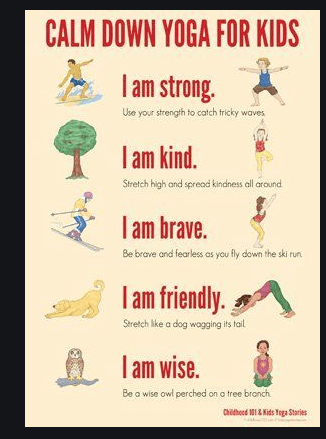
Do yoga poses with the children.

Physical Health & Development/Health Status & Practices; progresses in physical growth, strength, stamina, and flexibility.

Sing If Your Happy and You Know It but include other emotions. Name an emotion and let the children help make an action to go along with.

Language Development/Listening & Understanding; demonstrates increasing ability to attend to and understand conversations, stories, songs, and poems.

Sing How Are You Feeling? to the tune of What are You Wearing? https://www.youtube.com/watch?v=C0Z8euLE5Fw

How are you feeling, How are you feeling?

How are you feeling today, today?

How are you feeling, How are you feeling?

How are you feeling today?

If you’re feeling happy jump up and down

If you’re feeling sad bend over and cry

If your feeling scared scrunch down low

If your feeling angry shout out loud!

Make up verses to fit your classroom needs.

Creative Arts/Music; participates with increasing interest and enjoyment in a variety of music activities, including listening, singing, finger plays, games, and performances.

Ask the children if they remember what Alexander bought when they went to the store (sneakers). Tell the children that you are going to play a shoe game. Have all the children take off one shoe and put it in the middle of the circle. Teacher takes one shoe and begins passing it around the circle to music. When the music stops, whoever is holding the shoe must find the correct person who’s shoe it is. Take another shoe and begin again until all the shoes have been collected. Can the children put their own shoe on? Can they tie, buckle, or velcro by themselves?

Physical Health & Development/Health Status & practices; shows growing independence in hygiene, nutrition, and in personal care when eating, dressing, washing hands, brushing teeth, and toileting.

Teach the children the chant, Brush Your Teeth. Act out as you chant.

Brush your teeth everyday, up and down it is the right way.

Back and forth and circles too, that’s just what you’ve got to do.

Brush your teeth everyday, up and down it is the right way.

Language Development/Listening & Understanding; demonstrates increasing ability to attend to and understand conversations, stories, songs, and poems.

Blocks

Add one inch squares to the center today. Challenge the children to build tall towers. Can they build to ten or more tall? Have them count their tower blocks.

Mathematics/Number & operations; begins to use one-to-one correspondence in counting objects and matching groups of objects. AND Physical Health & Development/Fine Motor Skills; grows in eye-hand coordination in building with blocks, putting together puzzles reproducing shapes and patterns, string beads, and using scissors.

Art

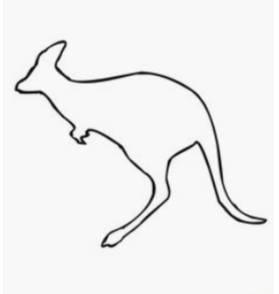
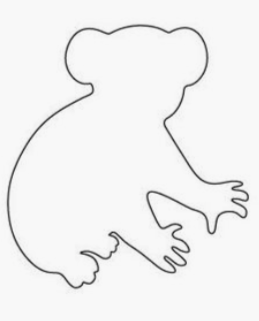
Show the picture of the Aboriginal art and explain to the children that in Australia one popular kind of art is ‘dot art’ Pour a small amount of paint into every-other egg carton section. Give a child a picture outline of one of the Australian animals and show them how to put the Qtip into paint and use it to make dots upon the animal shape. Encourage them to continue making dots until they fill the entire shape in.

Approaches to Learning/Engagement & Persistence; grows in abilities to persist in and complete a variety of tasks, activites, projects, and experiences.

Library and Writing

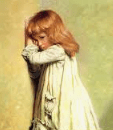
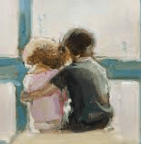
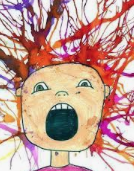
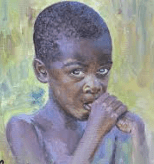
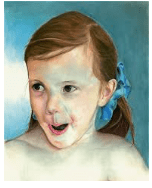
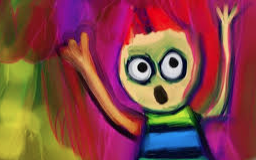
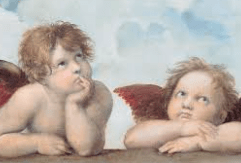
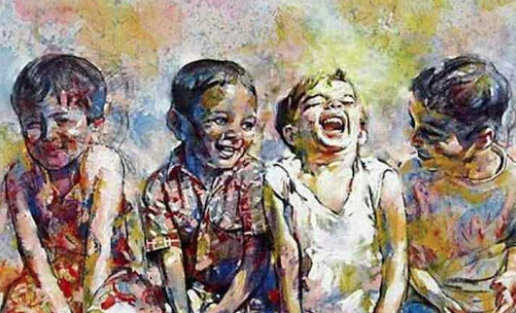
Add books that show emotions or add the pictures from resources. As the children enjoy the center, talk to them about the different emotions and what makes them feel that way?

Language Development/Speaking & Communicating; develops increasing abilities to understand and use language to communicate information, experiences, ideas, feelings, opinions, needs, questions; and for other varied purposes.

Sand and Water

Add soap bubbles to the water play today.

Social & Emotional Development/Self-Control; demonstrates increasing capacity to follow rules and routines and use materials purposefully, safely, and respectfully.

Dramatic Play

Add suitcase or small satchels to the center so the children can pretend that they are going on a trip, perhaps to Australia. They can pack their bags and then turn the center into a car, boat, or airplane.

Creative Arts/Dramatic PLay; shows growing creativity and imagination in using materials and in assuming different roles in dramatic play situations.

Math and Manipulatives

Make several sets of the emotion cards and cut out. The children can then take turns matching and naming the emotion. Or turn them over and use as Memory cards.

Social & Emotional Development/Cooperation; develops increasing abilities to give and take interactions; to take turns in games or using materials; and to interact without being overly submissive or directive.

Outdoor Play

Play Tense and Relaxed. Have the children stand in front of you so that they are not touching. Ask them to show you what happens to a ice cream cone in the sun (melt your body). Now be a glass of water that gets put in the freezer (stiffen your body) Tell them that you are going to clap your hands three times and their body will get more and more relaxed. Now clap three times and their body will get tense and stiff. Ask them to tighten all at once with one clap and then take three claps to relax. Demonstrate if necessary.

Language Development/Listening & Understanding; shows progress in understanding and following simple and multiple-step directions.

Transitions

Put the emotion cards in a pile up-side down. A child picks one and names the emotion and something that might make you feel that way.

Language Development/Speaking & Communicating; understands an increasingly complex and varied vocabulary

Resources
Aboriginal Art
kangaroo

Enlarge and use animal outlines for dot art
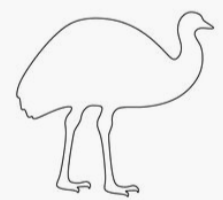
Emu
koala bear
example for discovery center

Enlarge these art works and hang in library for children to talk about.
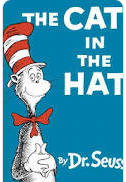
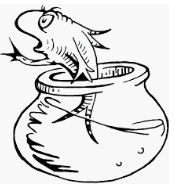
The Cat in the Hat, by Dr. Seuss

Classic Dr. Seuss full of rhymes and silliness. But really, this is a good book to use when you want to talk about letting someone into the house when your parents are not home.

Materials

Vocabulary

  • Safety (to be protected from danger)
  • Stranger (someone person or animal that you do not know or have not been introduced to)

Before Reading the Story

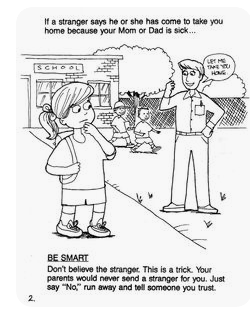
Tell the children that you want to talk to them about safety today. Ask them what they think being safe means? Explain that there are lots of things that are unsafe in the world. Allow the children to comment if they choose. Tell them that today you want to spend a moment talking about strangers. Do the children know what a stranger is? Explain that sometimes there are strangers who are not kind to children and so it is important that you do not go with them or let them fool you into getting into a car with them or eating food that they give you. If your parent or teacher says it is ok, then you may go. But if someone just walks or drives up to you say “No,no I won’t go”! Have the children practice saying this loudly. Tell them that today’s story is about a stranger that the children let into the house. Ask the children if they think this is a good idea, why/why not? Let’s read the story and find out what happens.

Physical Health & Development/Health Status & Practices; builds awareness and ability to follow basic health and safety rules such as fire safety, traffic and pedestrian safety, and responding appropriately to potentially harmful objects, substances, and activities.

Reading the Story

As you turn to page 1, ask the children if they can tell what kind of a day it is? On page 6, stop and ask the children if they should let a stranger into the house? What do you think might happen? On page 29 where the cat introduces the box, ask the children to guess what they think is inside? On page 61, ask the children what would you do? and allow them to respond.

Literacy/Book Knowledge & Appreciation;demonstrates progress in abilities to retell and dictate stories from books and experiences; to act out stories in dramatic play; and to predict what will happen next in a story.

After Reading the Story

Remind the children about stranger danger. Do not go with a stranger and do not let a stranger into your house unless your parent says it is ok.

Physical Health & Development/Health Status & Practices; builds awareness and ability to follow basic health and safety rules such as fire safety, traffic and pedestrian safety, and responding appropriately to potentially harmful objects, substances, and activities.

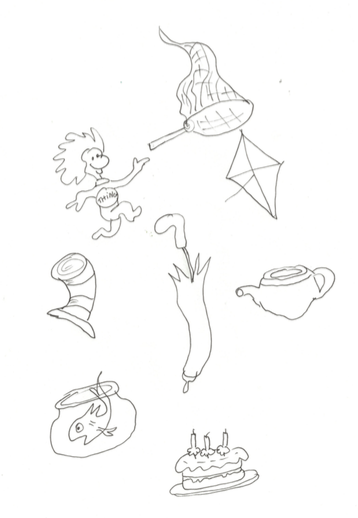
Make copy of the Cat in the Hat items and cut around each. Make a loop of masking tape to attach each to a board or wall where all the children can see. Cover the board and take away one object. Turn it back for the children to see and tell which object is missing.

Approaches to Learning/Reasoning & Problem Solving; grows in recognizing and solving problems through active exploration, including trial and error, and interactions and discussions with peers and adults.

If your children are capable of sitting for a few minutes more, play the video Stranger Danger for them. If not schedule it into another part of your day. https://www.youtube.com/watch?v=A55bwVVDQTU

Physical Health & Development/Health Status & Practices; builds awareness and ability to follow basic health and safety rules such as fire safety, traffic and pedestrian safety, and responding appropriately to potentially harmful objects, substances, and activities.

Discovery

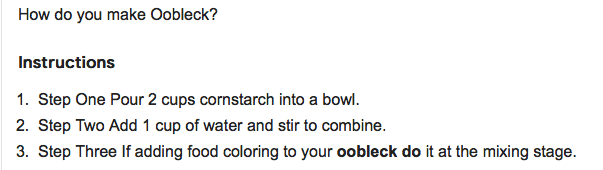
Make oobleck ahead of time and put it out with cookie sheet for the children to experiment with.

Science/Scientific Skills & Methods; begins to use senses and a variety of tools and simple measuring devices to gather information, investigate materials, and observe processes and relationships.

Music and Movement

Teach the children, The Cat Came Back https://www.youtube.com/watch?v=OE8gsYejpQc. Make up a simple verses and have the children help sing the chorus. There was a man who lived in Raleigh, the cat got out and the man said golly. But the cat came back…..

Sing What Are You Wearing? https://www.youtube.com/watch?v=C0Z8euLE5Fw Have the children follow the directions. Make one last verse about wearing stripes.

Language Development/Listening & Understanding; shows progress in understanding and following simple and multiple-step directions.

Sing Rhyming Words Sound the Same to Looby Loo

Rhyming words sound the same. Rhyming words sound the same. Rhyming words sound the same, Rhyming words sound the same. Hold up a rhyming words picture and see if the children can make a word that rhymes with it. (cat=hat, boy=toy, frog=log)

Literacy/Phonological Awareness; progresses in recognizing matching sounds and rhymes in familiar words, games, songs, stories, and poems.

Blocks

As the children play with the blocks today, encourage them to put the blocks away by like kinds. If you have not already done so, label your block shelves so the children learn to sort as they cleanup.

Mathematics/Geometry & Spatial Sense; begins to determine whether or not if two blocks are the same size and shape.

Art

Make simple kites and decorate. Depending upon the skill of your children, you might want to make some or all of the kites ahead of time. Let the children decorate the kite with stickers or markers. Remind the children what happened in the story when the things flew kites in the house. Tell the children that you will take the kites outside when you go to the playground.

Physical Health & Development/Fine Motor Skills; progresses in abilities to use writing , drawing, and art tools, including pencils, markers, chalk, paint brushes, and various forms of technology. AND Language Development/Listening & Understanding; shows progress in understanding and following simple and multiple=step directions.

Library and Writing

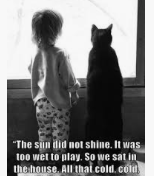
Make a copy of the picture showing “The sun did not shine”. Ask each child to tell you something they like to do on rainy or very cold wet days. Write their responses on a piece of paper and hang it on the wall under the picture. (I watch tv, My cat sleeps with me, My brother and me made a tent).

Literacy/Early Writing; begins to represent stories and experiences through pictures, dictation, and in play.

Sand and Water

Fill the table with puff balls. Explain to the children that you are going to have a puff ball race. When the timer begins they will use the tongs to pick up puff balls and put them in a basket. When the timer stops they will count how many puff balls they were able to pick up in the alloted time. Set the time for one-minute.

Mathematics/Number & Operations; begins to use one-to-one correspondence in counting objects and matching groups of objects.

Dramatic Play

Remind the children that in the story, the cat picked up all his playthings. Encourage the children to really clean and organize the center today. Give them damp paper towels to wipe down the shelves and challenge them to put all the toys away where they belong. As they work, keep an eye out for broken or ripped items that should be thrown away.

Social & Emotional Development/Knowledge of Families & Communities; develops growing awareness of jobs and what is required to perform them. AND Approaches to Learning; Engagement & Persistence; shows growing capacity to maintain concentration over time on a task, question, set of directions or interactions, despite distractions and interruptions.

Math and Manipulatives

Tell the children that the cat’s hat had stripes on it. Cut out many strips of construction paper for the children to make and copy patterns with.

Mathematics/Patterns & Measurement; enhances abilities to recognize, duplicate, and extend simple patterns using a variety of materials.

Set out a balance scale and one-inch cubes. Challenge the children to put a item into one side of the scale and then add one-inch cubes to the other until they are balanced. How many one inch cubes equal a toy car, a wooden rectangle block, a paintbrush, etc.

Mathematics/Patterns & Measurement; shows progress in using standard and non-standard measures for length and area.

Outdoor Play

In the story the cat balanced on the ball. Encourage the children to practice their own balance. Can the walk on a balance beam or the edge of the sandbox? Can they stand and hop on one foot? Can they walk on clomper stompers without falling off?

Physical Health & Development/Gross Motor Skills;shows increasing levels of proficiency, control, and balance in walking, climbing, running, jumping, hopping, skipping, marching, and galloping.

Bring your art kites outside for the children to run with.

Physical Health & Development/Gross Motor Skills;shows increasing levels of proficiency, control, and balance in walking, climbing, running, jumping, hopping, skipping, marching, and galloping.

Transitions

Make 5 copies of the hat to color. On each one make the colors of the stripes white and ________(one red, one blue, one green, etc. of colors that you are working on. Put the hats in the center of the circle and have a child hide their eyes. Put the cat under one of the hats so that it is hidden. The child must guess which hat the cat is under by naming the color of the stripes. You can also write letters of the alphabet on the hats, numbers, or shapes depending upon which concept you are working on.

Social & Emotional Development/Cooperation;develops increasing abilities to give and take in interactions; to take turns in games and using materials; and to interact without being overly submissive or directive.

Resources

stripe ideas for pattern play
objects for What’s Missing? game
Use one of these pictures to start ideas for library and writing
Use these for transition game

Why? by Laura Vaccaro Seeger

Why? The question so often asked by young children. This books helps give simple answers to some of the questions children often ask why? about.

Materials

Vocabulary

Telescope (a tool used to help us see things that are very, very far away. Like stars in the night sky.

Gravity (an invisible force that makes things fall to the ground).

Before Reading the Story

Draw a large question mark/? on a piece of paper and ask the children if they know what this is? Explain that it is called a question mark and is used in stories when someone asks a question. A question is when someone wonders about something. Say several sentences and see if the children can tell if you are asking a question or not. (My cat sleeps with me at night. Does your cat sleep with you? What is your cats name? My cats name is Mink). Encourage the children to ask a question.

Language Development/Speaking & Communicating; develops increasing abilities to understand and use language to communicate information, experiences, ideas, feelings, opinions, needs, questions; and for other varied purposes.

Reading the Story

As you turn to each page, ask the children if they can tell you what Bear and Rabbit are doing? (Bear is lying down. He is holding his tummy. His stomach is fat). Then read the page. (Why? Because I ate too much).

Literacy/Book Knowledge & Appreciation; shows growing interest and involvement in listening and discussing a variety of fiction and non-fiction and poetry.

After Reading the Story

Ask the children why Rabbit told Bear not to go into the cave? (Because they were friends and Rabbit would miss him). Ask the children if they have a special friend? What kinds of things do you like to do with your friend? Allow the children to share.

Language Development/Speaking & Communicating; progresses in abilities to initiate and respond appropriately in conversation and discussions with peers and adults.

Discovery

Do a simple science experiment with the children. Ask them why they think it got the reaction it got. It does not matter if they are right or wrong in their answer, it is about doing the experiment and posing a question. This web site has several fun and not too difficult experiments to do with preschoolers. https://babbledabbledo.com/20-science-projects-for-preschoolers/.

Science/Scientific Methods & Skills; begins to participate in simple investigations to test observations, discuss and draw conclusions, and for generalizations.

Music and Movement

Sing Where oh Where are All the Children? to Paw Paw Patch. https://www.youtube.com/watch?v=NsZ6RS67oAY (During the chorus the children can clap their hands along to the beat. During the verse the children can act out the actions).

Where oh where are all the children?

Where oh where are all the children?

Where oh where are all the children?

Way down yonder in the Apple Orchard.

Picking apples put them in the basket

Picking apples put them in the basket

Picking apples put them in the basket

Way down yonder in the apple orchard.

(Carrots-pulling, potatoes-digging, lettuce-cutting,etc.).

Creative Arts/Music; participates with increasing interest and enjoyment in a variety of music activities, including listening, singing, finger plays, games, and performances.

Play the Question Game song for the children and see if they can answer the questions as the puppet sings. https://www.youtube.com/watch?v=h1vJ7ARCdGg.

Language Development/Listening & Understanding; demonstrates increasing ability to attend to and understand conversations, stories, songs, and poems.

Blocks

As the children build today, stop by often and ask questions. What are you making? Why are you putting that block there? How will the cars get inside? Do you want to make a sign to go with your structure? What will you add next?

Language Development/Speaking & Communicating; develops increasing abilities to understand and use language to communicate information, experiences, ideas, feelings, opinions, needs, questions; and for other varied purposes.

Art

Add red, yello, blue, and white paint to the easel today. Encourage the children to mix and make colors. Hang a color mixing poster next to the easel to help the children.

Creative Arts/Art; begins to understand and share opinions about artistic products and experiences. AND Science/Scientific Skills & Methods; begins to participate in simple investigations to test observations, discuss and draw conclusions, and form generalizations.

Library and Writing

On a piece of paper (one per child), draw a large question mark ? in a yellow marker. Give the children other color markers and ask them to copy over your question mark and say question mark. Now ask them to ask you a question that they would like to know about. Write their response on the paper below the question mark. You can send these home and ask parents for parent involvement to help answer the question for their child. (Why does my dog have brown spots? Can I go to John’s house? Why is it raining outside today?).

Physical Health & Development/Fine Motor Skills; progresses in abilities to use writing, drawing, and art tools, including pencils, markers, chalk, paint brushes, and various types of technology. AND Literacy/Print Awareness & Concepts; demonstrates increasing awareness if concepts of print, such as reading in English moves from left to right and top to bottom, that speech can be written down, and that print conveys messages.

Sand and Water

Fill the table with water today and bring over a cubby/basket full of classroom items (small car, cube, plastic fork, necklace, crayon, piece of paper, etc). Ask the children to predict if an item will float or sink? As they play, encourage them to sort the items by those that sink and those that float.

Science/Scientific Methods & Skills; begins to participate in simple investigations to test observations, discuss and draw conclusions, and for generalizations.

Dramatic Play

As the children play today, ask them about what they are doing? Ask who, what , where, when, why, and how questions. (Why are you dressing so fancy? Who is the party for? What kind of food are you cooking? What will you do when you get there? How will you get there?).

Language Development/Speaking & Communicating; develops increasing abilities to understand and use language to communicate information, experiences, ideas, feelings, opinions, needs, questions; and for other varied purposes.

Math & Manipulatives

Use bear counters today. Help children to do simple math problems using the counters. If I have three red bears and two yellow bears come to play, how many bears do I have in all? If I have two blue bears and added one more, how many bears would I have? If I had two yellow bears and one went home, how many bears would be left?

Mathematics/Number & Operations; develops increased abilities to combine, separate, and name “how many” concrete objects.

Outdoor Play

If you have a slide or incline on your playground, the children can roll balls, themselves, and things with wheels down it. What things roll and what things do not? If you use the slide you can play a game; the teacher rolls the ball down the slide and a child tries to run faster than the rolling ball.

Physical Health & Development/Gross Motor Skills; shows increasing levels of proficiency, control, and balance in walking, climbing, running, jumping, hopping, skipping, marching, and galloping.

Transitions

Play Which Is _____? Use the words bigger, smaller, longer, shorter, taller, wider, narrower. (Which is taller, a giraffe or a cow? Which is wider, a river or a puddle?).

Mathematics/Patterns & Measurement; shows progress in using standard and non-standard measures for length and area. AND Language Development/Listening & Understanding; understands an increasingly complex and varied vocabulary.

Resources