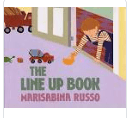
The Line Up Book, by Marisabina Russo

Sam is busy lining things up. This story can be used to teach line order as well as categories of objects.

Materials

  • Pictures of items found in different rooms of house.
  • 3 Skeins of yarn
  • Roll of masking tape
  • Clothes pins that clip shut and yarn for clothes line
  • Several rulers

Vocabulary

  • Line

Before Reading the Story

Open up the cover of the book so that the children can see the line of objects that Sam has made. Ask them to name what is in the front of the line (the duck), what is at the end of the line? Continue asking what is beside the turtle, behind the boot, in front of the cement truck?

Mathematics/Number & Operations; begins to associate number concepts, vocabulary, quantities, and written numerals in meaningful ways.

Reading the Story

On the page where Sam begins lining up books, ask the children what they think Sam is doing? On the page where Sam is in the living room and needs one more thing, ask the children if they can guess what he might use to finish his line?

Literacy/Book Knowledge & Appreciation; demonstrates abilities to retell and dictate stories from books and experience; to act out stories in dramatic play; and to predict what will happen next in a story.

After Reading the Story

Ask the children if they can remember the first thing Sam used to make his line? What did he used second? Third? Fourth? Fifth? Last?

Literacy/Book Knowledge & Appreciation; demonstrates abilities to retell and dictate stories from books and experience; to act out stories in dramatic play; and to predict what will happen next in a story.

Discovery

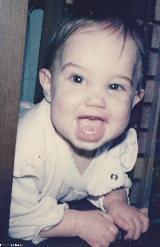
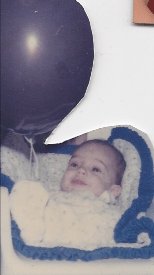
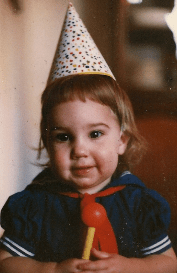
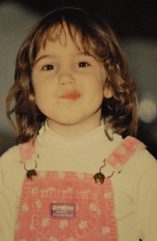
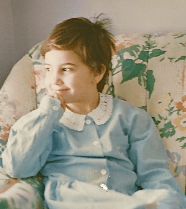
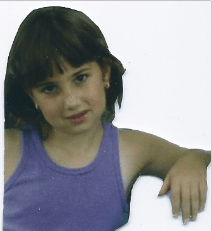
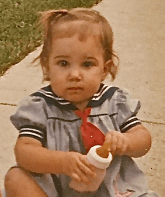
Put out the timeline pictures of the little girl. Can the children put them in correct order? Let them talk about things they thought they could do when they were the age of the girl in the picture.

Mathematics/Patterns & Measurement; shows increasing abilities to sort, put in a series, and regroup objects according to one or two attributes such as shape or size. AND Science/Scientific Knowledge; develops growing awareness of ideas and language related to attributes of time and temperature.

Music and Movement

Make lines on the floor using masking tape. The children can begin at one end of a line and walk backwards, jump, tip toe, etc. to the other end.

Physical Health & Development/Gross Motor Skills; shows increasing levels of proficiency, control, and balance in walking, climbing, running, jumping, hopping, skipping, marching, and galloping.

On pieces of paper write numbers one through however many children are in your class. Put the numbers in a line. Ask a child to go stand on number 1, ask the the next child to go stand on number 2, through all the numbers. Mix up the order you call the children so that they get practice standing on all the numbers over time.

Mathematics/Number & Operations; begins to associate number concepts, vocabulary, quantities, and written numerals in meaningful ways. AND Mathematics/Number & Operations; develops increasing ability to count to 10 and beyond.

Teach the children the Peanut Butter & Jelly Song. Make up actions to go along with the words. https://www.youtube.com/watch?v=L39J7jCoVKY

Creative Arts/Music; participates with increasing interest and enjoyment in a variety of music activities, including listening, singing, finger plays, games, abd performances.

Blocks

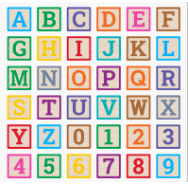
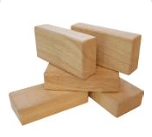
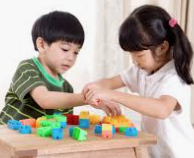
Put out the wood alphabet blocks today and a poster showing each of the letters. The children then match the block to the appropriate square on the poster. How many letters can they name?

Literacy/Alphabet Knowledge; shows progress in associating the names of letters with their shapes and sounds.

Art

Use the line card and cut into individual strips for the children to use for cutting practice. http://www.attentionworksheets.com/wp-content/uploads/2013/03/IMAGES-Scissor-Skills-Worksheets-COLLECTION-1.pdf

Physical Health & Development/Fine Motor Skills; grows in hand-eye coordination in building with blocks, putting together puzzles, reproducing shapes and patterns, stringing beads, and using scissors.

Put out several rulers and colored pencils. SHow the children how to hold the ruler on the paper to make a straight line. Encourage them to fill the paper with many straight lines.

Physical Health & Development/Fine Motor Skills; progresses in abilities to use writing, drawing, and art tools, including pencils, markers, chalk, paint brushes, and various types of technology.

Library and Writing

Use the line card and let the children follow along with markers or pencils.

Physical Health & Development/Fine Motor Skills; progresses in abilities to use writing, drawing, and art tools, including pencils, markers, chalk, paint brushes, and various types of technology.

Sand and Water

Damp sand and things that the children can use to draw and make lines in the sand (unsharpened pencil, plastic fork, pizza cutter, play dough cutters, etc. As they play, ask them if they can make a straight line, a curved line, a zig-zag line, and a loopy line. Can they write the letters of their name in the damp sand?

Language Development/Listening & Understanding; understands an increasingly complex and varied vocabulary. AND Literacy/Early Writing; experiments with a growing variety of writing tools and materials, such as pencils, crayons, and computers. AND Literacy/Early Writing; progresses from using scribbles, shapes, or pictures to represent ideas, to using letter-like symbols, to copying or writing familiar words such as their own name.

Dramatic Play

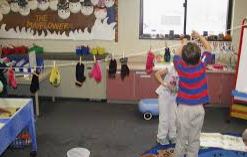
Add a clothes line to the center today using yarn and clothes pins that clip. If it is winter add mittens for the children to clip[ on the line. Otherwise have the children clip on doll clothes.

Physical Health & Development/Fine Motor Skills; develops strength, dexterity, and control needed to use tools such as scissors, paper punch, stapler, and hammer.

Math and Manipulatives

Have the children name and sort pictures from different rooms in the house.

Approaches to Learning/Reasoning & Problem Solving; develops increasing abilities to classify, compare and contrast objects, events, and experiences.

Outdoor Play

Make an obstacle course for the children to follow. Use the skein of yarn to go under, over, and around objects on the playground. Explain to the children that they are to follow the yarn to know where to go next.

Language Development/Listening & Understanding; shows progress in understanding and following simple and multiple-step directions.

Transitions

As you line up to go to outside or to the bathroom tell the children that ___ is first and then ___ can be second. Have all the children count the children as they line up.

Mathematics/Number & Operations; develops increasing ability to count to 10 and beyond. AND Mathematics/Number & Operations; begins to associate number concepts, vocabulary, quantities, and written numerals in meaningful ways.

Resources
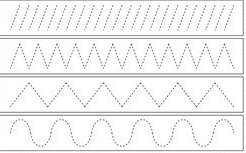
Use for cutting and markers
use for matching alphabet blocks
Use the pictures of the girl to put in chronological order.

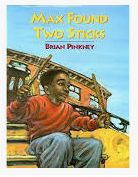
Max Found Two Sticks, by Brian Pinkney

Materials

  • Objects made from plastic, wood, and metal of various sizes and shapes. These will be used to hit with a stick and listen to the different sounds that the materials make. Think tin cans, shoe box, wood block, cubbie, empty paper towel tube, jewelry box, etc..
  • A timer that makes a ticking sound
  • Working stethoscope
  • 2 paint sticks per person or 2 pencils (paint sticks are free wherever you buy house paint)
  • More paint sticks for art
  • Bring in a basket of natural materials such as sticks of various barks, acorns, corn husks, stones both smooth and rough, leaves with strong ridges.
  • Pre-writing page per child

Vocabulary

  • Stripes (a long narrow band or strip, typically of the same width throughout its length, differing in color or texture from the surface on either side of it).

Before Reading the Story

Explain to the children that today you are going to read a story that uses your sense of hearing. Do the children know what the five senses are? Do they know that you use your ears for hearing? Talk about some sounds that you like (my cat purring, when my brother laughs, music) and some sounds you do not like (when my Mom yells at me, when the timer says turn off the tv, I get scared when I hear the siren). Explain that in the story today a boy named Max makes sounds with two sticks. Let’s find out what kinds of sounds he can make.

Approaches to Learning/Initiative & Curiosity; grows in eagerness to learn about and discuss a growing range of topics, ideas, and tasks.

Reading the Story

When you get to the pages where Max plays his sticks and makes various patterns (pat…pat, tat. pat…pat, tat. pat…pat,tat. or Putter-putter…pat tat, putter-putter pat tat). Stop and have the children try to repeat these also. Expect it to take at least three tries. Say them slowly so they make patterns with sound.

Mathematics/Pattern & Measurement; enhances abilities to recognize, duplicate, ande extend simple patterns using a variety of materials.

After Reading the Story

Remind the children that in the story Max did not want to talk that day. It was just a listening day. Ask the children to sit very quietly and just listen. After a moment ask them to name some of the sounds they heard. Explain that when it is very quiet, you can hear many more sounds with your ears. Did any of the sounds the children hear make a pattern? Help them repeat it. (Yes Francois, the clock said tik,tik,tik,tik,tik.

Science/Scientific Skills & Methods; begins to participate in simple investigations to test observations, discuss and draw conclusions, and form generalizations.

Have the children cover their eyes while you hide the timer. Make sure to turn it on so that it is ticking. The children uncover their eyes and listen carefully and then point to the center/area where they are hearing the ticking coming from.

Science/Scientific Skills & Methods; begins to use senses and a variety of tools and simple measuring devices to gather information, investigate materials, and observe processes and relationships.

Discovery

Give the children rhythm sticks or pencils. Have them hit them on a variety of objects to make different sounds. Talk about the various sounds. Which item makes the loudest sound, which sound do you like best, which item makes the softest sound?

Science/Scientific Skills & Methods; begins to participate in simple investigations to test observations, discuss and draw conclusions, and form generalizations.

Show the children how to tap out patterns by counting 1-2-3 or 1-2-1-2, etc.

Mathematics/Pattern & Measurement; enhances abilities to recognize, duplicate, ande extend simple patterns using a variety of materials.

Music and Movement

Give the children sticks, pencils, or even blocks and tap to the Hap Palmer song, Put Your Sticks in the Air.https://www.youtube.com/watch?v=z8lK7cvJWME. Or try, Tap Your Sticks https://www.youtube.com/watch?v=nLfEW3SwpdI

Mathematics/Pattern & Measurement; enhances abilities to recognize, duplicate, ande extend simple patterns using a variety of materials.

Pull out your musical instruments today and let the children tap along to songs of their choice. When you finish one song, have the children pass their instrument to the right. This allows children to experiment with several different instruments during a music setting.

Creative Arts/Music; experiments with a variety of musical instruments.

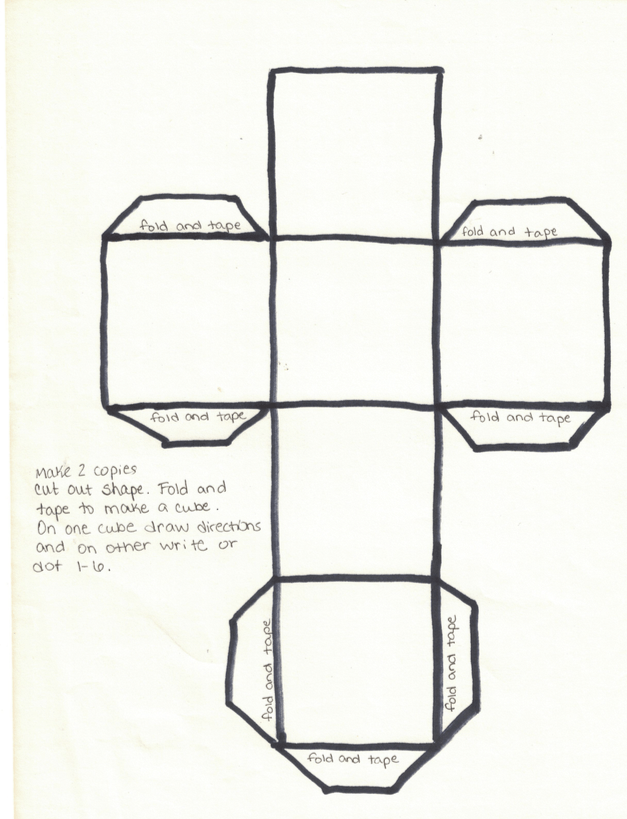
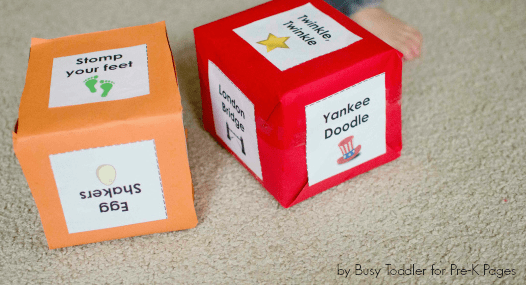
Make Music Cubes. On one write the name of six familiar songs. On the other write six actions (IE jump and turn, stomp your foot, clap your hands). Let the children take turns rolling the dice and then as a class do the actions to the song that was rolled.

Literacy/Early Writing; develops understanding that writing is a way of communicating for a variety of purposes. AND Social & Emotional Development/Cooperation; develops increasing abilities to give and take in interactions; to take turns in games and using materials; and to interact without being overly submissive or directive.

Blocks

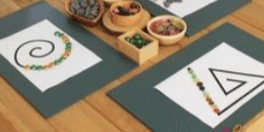
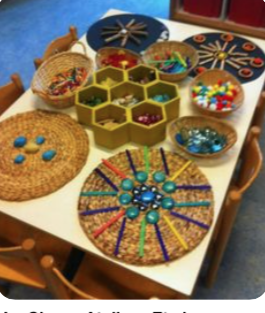
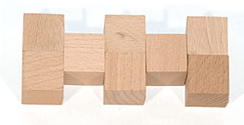
Any type of pattern play that you have.

Mathematics/Pattern & Measurement; enhances abilities to recognize, duplicate, ande extend simple patterns using a variety of materials.

Art

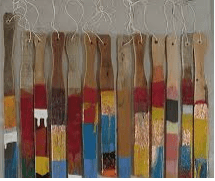
Give each child a paint stick. Add paint into small containers or egg cartons. Have the children use watercolor brushes (they are smaller and so will be able to produce more details). Tell them that today we are going to make stripes. Show them how to make stripes across the paint stick. One day one, paint one side and on the next day paint the other. When dry, hang these from the ceiling. (My children especially liked when we hung them over the lunch table).

Creative Arts/Art; begins to understand and share opinions about artistic products and experiences. AND Language Development/Listening & Understanding; shows progress in understanding and following simple and ,multiple-step directions.

Library and Writing

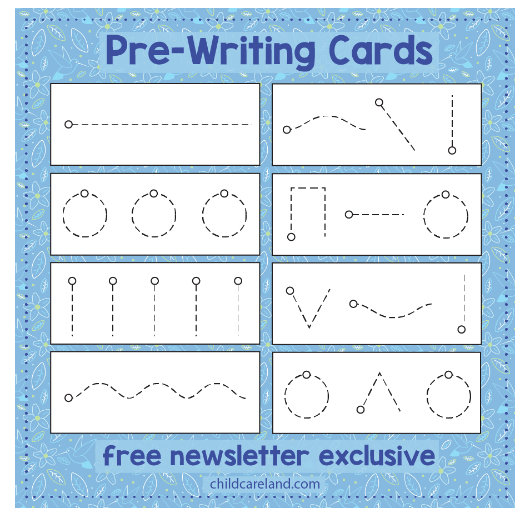
Give each child a pre-writing page and markers to follow the lines.

Physical Health & Development/Fine Motor Skills; progresses in abilities to use writing, drawing, and art tools, including pencils, markers, chalk, paint brushes, and various types of technology.

Sand and Water

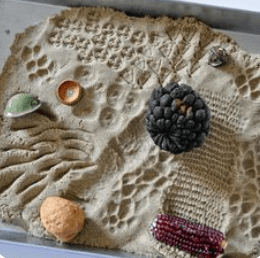
Add damp sand to the center today. Bring in a basket of natural materials such as sticks of various barks, acorns, corn husks, stones both smooth and rough, leaves with strong ridges. Let the children mash these into play dough to see the patterns that they make.

Science/Scientific Skills & Methods; begins to participate in simple experiments to observe and discuss common properties, differences and comparisons among objects and materials.

Dramatic Play

Add your doctor kit to the center today. If you have a working stethoscope, add it to the center. Show the children how to use it and quietly listen to each others heartbeat.

Science/Scientific Skills & Methods; begins to use senses and a variety of tools and simple measuring devices to gather information, investigate materials, and observe processes and relationships.

Math and Manipulatives

Any kind of pattern type play. (My class really enjoyed parquetry shapes and patterns. Check out this web page for ideas). See Resources for more ideas. https://www.prekinders.com/pattern-blocks/

Mathematics/Pattern & Measurement; enhances abilities to recognize, duplicate, ande extend simple patterns using a variety of materials.

Outdoor Play

Bring some of your sticks outside for the children to bang on the fence, the ground, the tricycle, wagon, etc.. Making music sounds and patterns.

Mathematics/Pattern & Measurement; enhances abilities to recognize, duplicate, ande extend simple patterns using a variety of materials.

Transitions

Dismiss the children by what is on their clothing. If you are wearing stripes, shapes, letters, numbers, pockets, zipper, buttons, etc..

Language Development/Listening & Understanding; understands an increasingly complex and varied vocabulary.

Resources
paint stick art
Ideas for pattern play

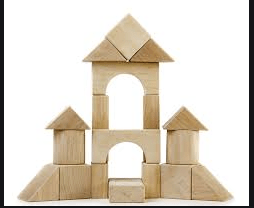
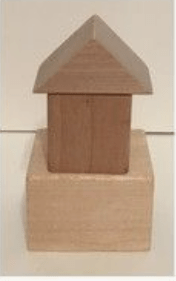
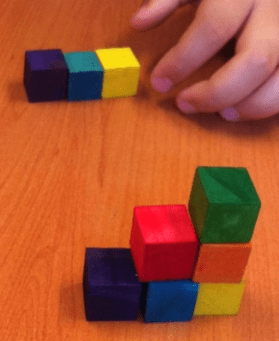
Take pictures of several block structures and see if the children can copy them using the blocks.

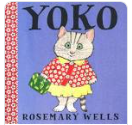
Yoko, by Rosemary Wells

Yoko’s mother packs her a special lunch filled with Yoko’s favorite foods. Sadly, her friends make fun of her for bringing something different. Find out how her teacher plans a special meal so that everyone can celebrate their differences. WIll her friends try her food? Read the book to find out.

Materials

Lunch bag or lunch box

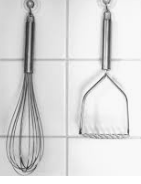
Hand held egg beater, whisks, ladle.

Printable menu cut and staple, or cover with contact paper and use markers to write on

Pictures of children acting kind/not kind

For a Cooking Project if school allows; Crescent roll, unbaked, one per child. Cinnamon and sugar Soften stick of butter or margarine

Vocabulary

Delicious (Really super yummy tasting)

Sushi (a kind of food made with rice and other stuff rolled and then cut into slices)

Before Reading the Story

Bring your lunch bag to the carpet today and ask the children if they know what it is? Ask them to share with you some of their favorite lunches. (I like when cook makes macaroni and cheese. I like sandwiches with ketchup. Soup). Talk about how everybody has their favorite foods and that is good. Tell the children that once you thought you did not like a certain food (your choice) because you thought it looked funny but then you tried it and it was delicious. (One time my Mom gave me sweet potato fries but they were orange and looked funny. She said try just one bite and I did and they were delicious!) Explain that it’s not fair to say you do not like something until you have tried it once because you just might decide it’s delicious just like I did.

Social & Emotional Development; Self-Concept; begins to develop and express awareness of self in terms of specific abilities, characteristics, and preferences.

Reading the Story

On the page where Yoko’s mother is spreading the steamed rice on the bamboo mat, ask the children if they know what she is making? Show the children a picture of a real sushi roll.

Language Development/Speaking & Communicating; uses an increasingly complex and varied spoken vocabulary.

On the page where Yoko’s friends are teasing her about her lunch and Valerie says, “Everybody out!” Ask the children to look at Yoko’s face and ask how do you think Yoko is feeling? Why? (Her friends were mean, no one liked her lunch). What might you have said to Yoko to make her feel less sad? What do you think her teacher is going to do?

Social & Emotional Development/Social Relationships; progresses in responding sympathetically to peers who are in need, upset, hurt, or angry; and in expressing empathy and caring for others. AND Literacy/Book Knowledge & Appreciation; demonstrates progress in abilities to retell and dictate stories from books and experiences; to act out stories in dramatic play; and to predict what will happen next in a story.

On the page where no one had even tried one piece of Yoko’s sushi, ask the children what they think is going to happen next?

Literacy/Book Knowledge & Appreciation; demonstrates progress in abilities to retell and dictate stories from books and experiences; to act out stories in dramatic play; and to predict what will happen next in a story.

After Reading the Story

In the story, Timothy was a good friend, why?

Social & Emotional Development/Social Relationships; progresses in responding sympathetically to peers who are in need, upset, hurt, or angry; and in expressing empathy and caring for others. AND Literacy/Book Knowledge & Appreciation; demonstrates progress in abilities to retell and dictate stories from books and experiences; to act out stories in dramatic play; and to predict what will happen next in a story.

Discovery

Explain to the children that today you are going to try a new recipe with the children On a small paper plate give each child one triangle of crescent roll, a small pat of butter and a plastic knife. Have the children spread the softened butter on the crescent roll. Next let them sprinkle a little bit of sugar and a little bit of cinnamon onto their crescent roll. Have them roll it up and send to the kitchen to be baked according to the directions. As you work, ask the children if they can guess what the various ingredients are? Does it look and smell delicious to you? Remind them that just like in the story, everyone needs to at least try one bite. When they are cooked, use them for snack or as part of your lunch.

Language Development/Listening & Understanding; shows progress in understanding and following multiple-step directions. AND Social & Emotional Development; Self-Concept; begins to develop and express awareness of self in terms of specific abilities, characteristics, and preferences.

Music and Movement

Sing, My Friend is Different and so am I. https://www.youtube.com/watch?v=gO6FhOrbYIE

Sing Peace. https://www.youtube.com/watch?v=F62L1TaDIUk

Creative Arts/Music; participates with increasing interest and enjoyment in a variety of music activities, including listening, singing, finger plays, games, and performances.

Sing, Everybody Do This to Shortnin Bread https://www.youtube.com/watch?v=ugoxTWwqFCI

Everybody do this do this do this

Everybody do this just like me.

(Do an action and everybody does it along with you. Pick a child and have them pick a new action-jump, turn around, kick foot in air, etc).

Everybody do this do this do this

Everybody do this just like ________

Physical Health & Development/Gross Motor Skills; shows increasing proficiency, control, and balance in walking, climbing, running, jumping, hopping, skipping, marching, and galloping.

Play the song What I Am and let the children dance along. https://www.youtube.com/watch?v=cyVzjoj96vs

AND Believe in Yourself https://www.youtube.com/watch?v=U59I0YTtVGg

Creative Arts/Movement; expresses through movement and dancing what is felt and heard in various musical tempos and styles.

Blocks

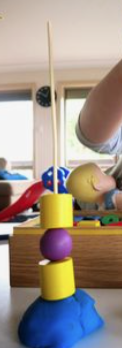
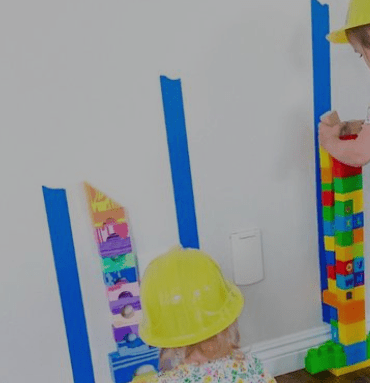
Tape several strips of masking tape to the block center wall. Challenge the children to build one as tall as the mark on the wall. After they are finished, ask them if they can count how many blocks it took them to build their tower?

Physical Health & Development/Fine Motor SKills; grows in hand-eye coordination needed in building with blocks, putting together puzzles, reproducing shapes and patterns, stringing beads, and using scissors. AND Mathematics/Number & Operations; begins to use one-to-one correspondence in counting objects and matching groups of objects.

Art

Put out playdough today and pieces of pipecleaner about 1-inch long in several colors. Show the children how to flatten out the playdough and then put the pieces of pipe cleaner on top and roll it into sushi rolls. Give them plastic knives to cut the ‘sushi’ into slices.

Creative Arts/Dramatic Play; participates in a variety of dramatic play activities that become more extended and complex. AND Physical Health & Development/Fine Motor Skills; develops strength, dexterity, and control needed to use tools such as scissors, stapler, paper punch, and hammer

Library and Writing

Ask each child to answer, “What is a Friend?” Write their answers on the bottom of a piece of paper and encourage them to draw their response.

Literacy/Early Writing; begins to represent stories and experiences through pictures, dictation,and in play.

Sand and Water

Add water and liquid soap to the table today. Add a hand held egg beater, whisks , and ladles for the children to make bubbles. Comment on the various tools and ask which one the child likes using most. Not everyone agrees on their favorite but we are still friends and can cooperate with each other.

Social & Emotional Development; Self-Concept; begins to develop and express awareness of self in terms of specific abilities, characteristics, and preferences.

Dramatic Play

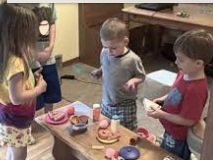
Set up a simple restaurant play by adding a cash register, menus, and scribble pad.

Social & Emotional Development/Knowledge of Families & Communities; develops growing awareness of jobs and what is required to perform them.

Math and Manipulatives

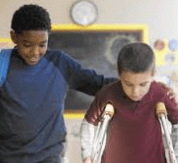
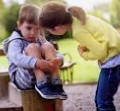
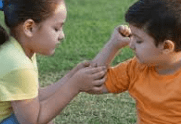
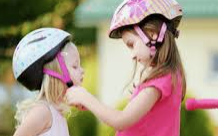
Put out two paper plates or pieces of paper. On one draw a happy face and on the other draw a sad face. Print and cut out the pictures of children being kind/not being kind and let the children sort them. Talk about one or two of the pictures with a child and let them tell you what they see and /or their own experience with kind and not so kind acts.

Mathematics/Patterns & Measurement; shows increasing ability to match,sort, put in a series, and regroup objects according to one or two attributes such as shape or size. AND Social & Emotional Development/Social Relationships; progresses in responding sympathetically to peers who are in need, upset, hurt, or angry; and in expressing empathy and caring for others.

Outdoor Play

Do the song Everybody Do This but with larger outdoor movements

Physical Health & Development/Gross Motor Skills; shows increasing proficiency, control, and balance in walking, climbing, running, jumping, hopping, skipping, marching, and galloping.

Draw in the dirt with sticks or on the cement with chalk. Encourage the children to work on drawing their letters or shapes.

Physical Health & Development/FIne Motor Skills; progresses in abilities to use writing, drawing, and art tools, including pencils, markers, chalk, paint brushes, and various types of technology.

Transitions

Dismiss the children to the next activity by the clothes that they are wearing. If you are wearing stripes, have numbers on your shirt, have a pocket, your shoes have buckles, your shirt is sleeveless, etc..

Language Development/Listening & Understanding;understands an increasingly complex and varied vocabulary.

Resources

menu idea
My friend plays soccer with me/writing
tape on wall for blocks
sushi roll

restaurant play