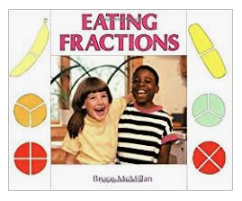
Eating Fractions, by Bruce McMillan

Fractions are a hard concept for many children to learn. This is an easy and delicious way to teach the children the vocabulary of fractions.

Materials

  • Enough tangerines or sectioned oranges for everyone to have an equal piece for tasting.
  • Pictures of many food samples (from magazines, the internet, or photos)
  • One pool noodle cut into pieces (see the video under After Reading the Story)
  • Plastic Easter eggs. About 4-6
  • 1 index card per child with their first and last name written upon it

Vocabulary

  • Fraction (the parts that make up the whole object)
  • Whole (an entire object)
  • Part (a piece of an object)
  • Half (one of two equal parts of the whole)

Before Reading the Story

           Bring a tangerine or sectioned orange to the rug time.  Ask the children if they know what it is called, where it comes from, what color, etc?   Do all of this as you unpeel the fruit.  Show the children that the fruit is divided into parts.  Explain that all together it is whole.  Break the fruit in half.  Show the children how the two halves make a whole.  Show the children how the fruit can be divided into smaller pieces.  Once it is all apart (count the parts), show the children how it all fits back together to be a whole.  Make sure you have enough pieces for each child to taste (you might have to bring an extra tangerine or two depending upon your group size).  The children can talk about the taste, smell, texture, and juice of the fruit as they sample.

Science/Scientific Skills & Methods; begins to use senses and a variety of tools and simple measuring devices to gather information, investigate materials, and observe processes and relationships.

Reading the Story

            On each page count the number of pieces.

Mathematics/Numbers & Operations; begins to associate number concepts, vocabulary, quantities, and written numerals in meaningful ways.

After Reading the Story

Bring out the pool noodle that you have cut and labeled. https://www.youtube.com/watch?v=ASCXwetA9Ik&t=10s. For preschoolers I would use 1-1/4 to start. Have one child hold the ‘1’ piece in the front of the classroom. Hold up one of the ‘1/2’ pieces and ask the children how many of the ‘1/2’ pieces it will take to make the ‘1’? Ask two children to come up and hold the ‘1/2’ pieces up to the ‘1’ piece. Show the children the 2 in 1/2. Now hold up a ‘1/3’ piece and point to the 3. Ask the children to guess how many pieces of the ‘1/3’ it will take to make the ‘1’? Do this for the ‘1/4’ piece also. Now ask the children to count how many children are in your group time. Ask them how many children it would take to make your whole group? Write the fraction onto a piece of paper (1 classroom=1/12) and tack it to the wall.

Discovery

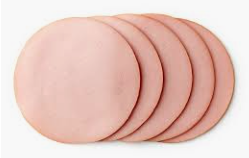
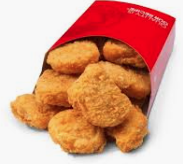
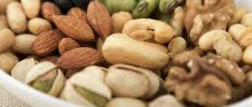
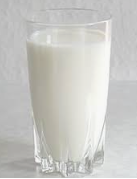
            Share with the children the various food pictures.  Discuss with them the importance of eating a variety of foods.  Ask the children to name the food items and sort by food groups.  Ask them to sort by the food that they like to eat and do not like to eat.  Sort the foods by ones that are crunchy and ones that are soft. 

Mathematics/Patterns & Measurement; shows increasing abilities to match, sort, put in a series, and regroup objects according to one or two attributes such as shape or size.

Music and Movement

Teach the first verse of the Fractions Song by Mr.R. https://www.youtube.com/watch?v=DnFrOetuUKg As the children get comfortable with fractions you can introduce them to the remainder of the song.

Mathematics/Geometry & Spatial Sense; progresses in ability to put together and take shapes apart.

Blocks

Bring the pool noodle parts to the center for the children to manipulate and play with. Encourage them to use blocks in the same manner.

Mathematics/Geometry & Spatial Sense; progresses in ability to put together and take shapes apart.

            Show the children how to take small shaped blocks and make larger shapes. (2 small rectangle blocks put side by side makes a square block, 4 triangle blocks put together also makes a square block).  Encourage the children to manipulate the blocks to make new shapes.  How many blocks did it take?  Note the wholes and halves as you construct.

Mathematics/Geometry & Spatial Sense; progresses in ability to put together and take shapes apart.

Art

           Make many circles in several sizes.  Cut the circles up into halves and quarters.  Show the children how they can collage the parts and make whole circle shapes.

Mathematics/Geometry & Spatial Sense; progresses in ability to put together and take shapes apart.

Library and Writing

For older children write their first and last name on an index card. Show them that the first name is one half of their name and their last name is the other half of their name. Encourage them to practice writing their whole name by copying onto a piece of paper with a marker or pencil.

Literacy/Early Writing; progresses from using scribbles, shapes, or pictures to represent ideas, to using letter-like symbols, to copying or writing familiar words such as their own name.

Put the book into the center and as the children look at it, help them to count how many parts make the whole.

Mathematics/Number & Operations; begins to make use of one-to-one correspondence in counting objects and matching groups of objects.

Sand and Water

            Put plastic eggs into the table with sand.  The children can use the egg halves to scoop and pour.  They can put two halves together to make a whole egg and bury it under the sand.

Mathematics/Geometry & Spatial Sense; progresses in ability to put together and take shapes apart. AND Mathematics/Number & Operations; develops increased abilities to combine, separate and name “how many” concrete objects

Dramatic Play

            As children move about the center today ask them to name the various plastic foods that you have.

Language Development/Speaking & Communicating; uses an increasingly complex and varied spoken vocabulary.

Math and Manipulatives

            Give the children pieces of paper.  Show them how to fold them in half vertically and then open up the paper.  Show them how to fold the paper in half horizontally and then open the paper up.  Give the children scissors and show them how to cut the paper in half and then into quarters.  Ask the children to then put the pieces back together to make a whole piece of paper.

Mathematics/Geometry & Spatial Sense; progresses in ability to put together and take shapes apart. AND Physical Health & Development/Fine Motor Skills; develops growing strength, dexterity, and control needed to use tools such as scissors, paper punch, stapler, and hammer.

Outdoor Play

            Play Red Rover.  Tell the children that you have to divide the class in half.  Half goes to one side of the playing field and half goes to the other side of the playing field.  Take turns calling children from one half/side over and then from the other.  The child must follow the movement direction to come over (Red Rover, Red Rover let Kerry skip over.  Red Rover, Red Rover let Roger walk backwards over).  The child comes over and joins hands with the rest of the children on that half. 

Physical Health & Development/Gross Motor SKills; shows increasing levels of proficiency, control, and balance in walking, climbing, running, jumping, hopping, skipping, marching, and galloping.

Transitions

            As the children go to the next activity, ask them if they can name a food from a food group.  Can you name a meat?  Can you name a fruit?  Or you can use your pictures of food and hold up two at a time asking, which is the fruit, which is the meat?

Approaches to Learning/Reasoning & Problem Solving; develops increasing abilities to classify, compare, and contrast objects, events, and experiences.

Resources
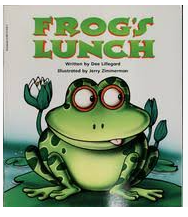
Frog’s Lunch, Dee Lillegard

This is a very short and simple story that is fun to teach nutrition and planning a good lunch as well as having some frog fun.

Materials

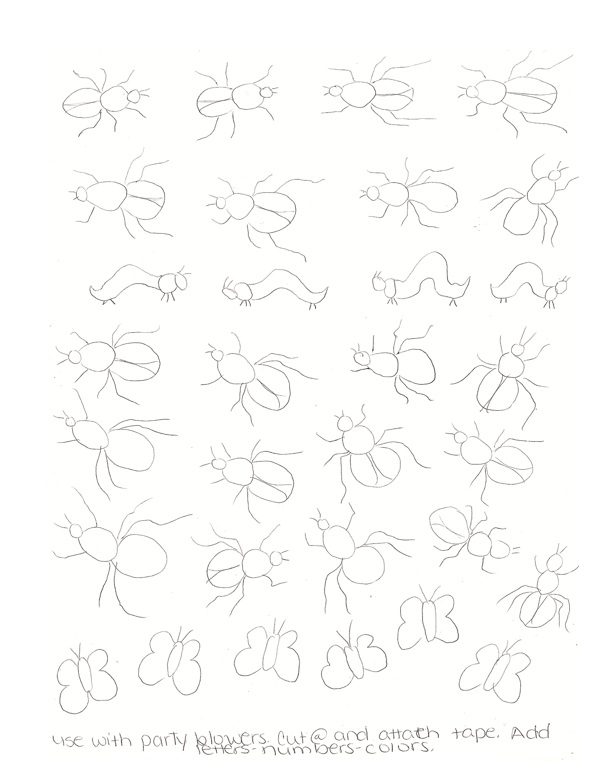
  • Several copies of the insects page
  • Scarf with a picture of a fly attached to one corner
  • A party blower per child (I have found these at the Dollar Store in the party isle.
  • Masking tape
  • Yardstick or tape measure
  • Shape frogs and shapes

Vocabulary

  • Lily pad (a plant that grows in the water that frogs like to sit on).
  • Carnivore  (a meat eating or animal eating creature)

Before reading the Story

Tell the children that you have been thinking about lunch.  I wonder what it is going to be?  Let the children guess. Ask the children if they know how to find out what lunch will be today (the menu, ask the cook)?  Ask the children what their favorite school lunch is.  Write down their responses on a piece of paper and hang it near the lunch table.

Literacy/Print Awareness & Concepts; recognizes a word as a unit of print, or awareness that letters grouped to form words, and words are separated by spaces.

Reading the Story

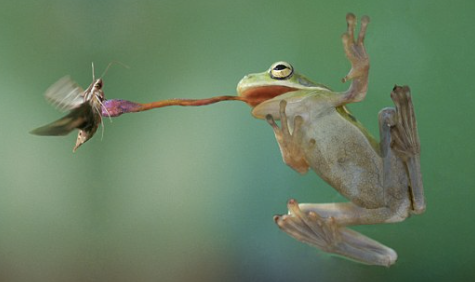
Read the title of the story and then ask the children if they know what frogs eat for lunch? Say “I wonder how they get their lunch”? Let the children comment for a moment about what they know about frogs’ diet and then begin the book.

Science/Science Knowledge; expands knowledge of and abilities to observe, describe, and discuss the natural world, materials, living things, and natural processes.

After Reading the Story

Ask the children what did the frog have to do to catch his lunch? (He had to sit so still, He had to wait, He had to stay on the lilypad).

Literacy/Book Knowledge & Appreciation; demonstrates progress in abilities to retell and dictate stories from books and experiences; to act out stories in dramatic play; and to predict what will happen next in a story.

Explain to the children you’re going to play a game called Frog’s Lunch.  Use a scarf and attach a picture of a fly to one corner of it .  Explain to the children that they will pretend to be the frog and the scarf is the fly.  Put a pillow or small blanket on the floor to be the lilypad and have a child sit upon it. Tell the child that he/she is the frog and must sit very, very still until it is just the right moment to grab the fly. You, the teacher, are the fly. Hold the scarf over the child’s head and slowly circle it around the child’s head. The other children can make the buzzing noise of the fly. The child who is the frog must try to catch the fly as it circle by. Let the children take turns being the frog.

Physical Health & Development/Fine Motor Skills; grows in hand-eye coordination in building with blocks, putting together puzzles, reproducing patterns and shapes, stringing beads, and using scissors.

Discovery

In the story, the eyes are very important to the frog in order to catch his lunch.  Put out any kaleidoscope, color paddles, fly eyes, binoculars, magnifying glass, and toilet paper tubes that you have. Encourage the children to look through each and talk with them about how it changes how and what they see.

Science/Scientific Skills & Methods; develops increasing ability to observe and discuss common properties, differences, and comparisons among objects and materials.

Music and Movement

Teach the children Five Little Speckled Frogs. https://www.youtube.com/watch?v=fF32P24lUCA

Let 5 children come to the front of the room and be the frogs. As the children sing and count down, the 5 can take turns jumping into the pool. Sing until everyone gets a turn to be a frog.

Creative Arts/Music; participates with increasing interest and enjoyment in a variety of music activities, including listening, singing, finger plays, games, and performances. AND MAthematics/Number & Operations; demonstrates increasing interest and awareness of numbers and counting as a means for solving problems and determining quantity.

Blocks

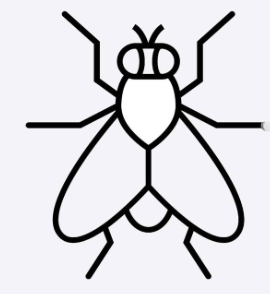
Help the children make a frog pond out of blocks. Fill the frog pond with paper cut out insects from the resource page. Gently unroll the party blowers and attached a piece of rolled over masking tape to the end. Show the children how to blow the blower and catch an insect by having it stick to the tape. Make the insects large enough that you can mark them with a letter. Challenge the children to try to catch a letter fly that is in their name. You can also use this for numbers or colors.

Literacy/Alphabet Knowledge; identifies at least 10 letters of the alphabet, especially those in their own name. AND Approaches to Learning; Engagement & Persistence; grows in abilities to persist in and complete a variety of tasks, activities, projects, and experiences.

Art

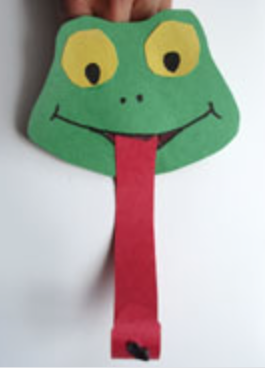
Cut out simple frog heads and have the children add eyes and a long tongue. Make it larger that the one shown in the resource section. Now encourage the children to draw insects. (Real insects have three body parts, 6 legs, wings, and antennas). Have the children cut around their insect and glue it to the end of the long tongue.

Science/Scientific Skills & Methods; develops growing abilities to collect, describe, and record information through a variety of means, including discussion, drawings, maps, and charts. AND Mathematics/ Geometry & Spatial Sense; progresses in ability to put together and take apart shapes.

Library and Writing

Have the children watch Sid The Science Kid video, https://www.youtube.com/watch?v=ARD1MAh434w. Encourage the children to draw a nutritious meal that has parts from each of the food groups.

Physical Health & Development/Health Status & Practices; shows growing independence in hygiene, nutrition, and personal care when eating, dressing, washing hands, brushing teeth , and toileting.

Sand and water

If you have small frog counters, add plastic lids to be lilypads. How many frogs can the child add to the lilypad before it begins to sink?

Mathematics/Number & Operations; beins to make one-to-one correspondence in counting objects and in matching groups of objects.

Dramatic Play          

Encourage the children to make a healthy meal using the plastic foods from the center. Add some plastic insects that they can embellish their meal with just for fun.  You could also add lunch boxes or lunch sacks. Today might be a good day to encourage the boys to use the dramatic play center.

Creative Arts/ Dramatic Play; participates in a variety of dramatic play activities that become more extended and complex. AND Physical Health & Development/Health Status & Practices; shows growing independence in hygiene, nutrition, and personal care when eating, dressing, washing hands, brushing teeth , and toileting.

Math and Manipulatives

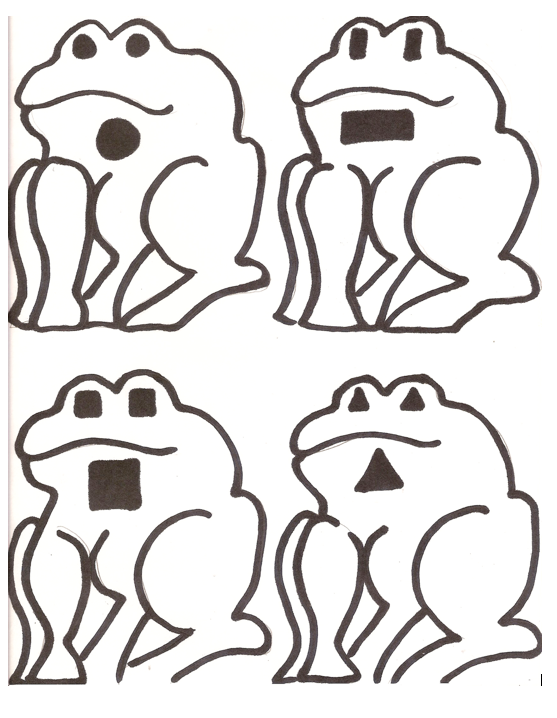
Cut out the frogs with shapes on their bellies and the objects from the resources.  The children match the objects to the correct frog by shape.

Mathematics/Geometry; Spatial Sense; begins to recognize, describe, compare, and name common shapes, their parts and attributes.

Outdoor play

Play Frog in the Middle.  Bring a beanbag out to the playground.  Have two children play toss with the beanbag back and forth.   The third child stands in between the two tossers and tries to intercept and catch the beanbag.  The child in the middle is the frog and the beanbag is his lunch that he must catch.  Once he catches it, the children can change places.

Physical Health & Development/Health Status & Practices; participates actively in games, outdoor play, and other forms of exercise that enhance physical fitness.

Explain to the children that frogs are good jumpers. Frogs can jump an average of two feet/24 inches. Mark 2 feet/24 inches on the ground and challenge the children to see if they can jump as far as a frog. Practice jumping from a standing still position, a frog position, and a running broad jump. Use the yardstick to measure how far the children can jump from each position.

Mathematics/Patterns & Measurement; shows progress in using standard and non-standard measures for length and area of objects.

Transitions

Play Categories as the children go off to the next activity.  Define carnivore for the children as a meat eating or animal eating creature like a frog and people.  The first category is name other animals that are carnivores.  If you use up this category, ask the children to name some foods that a carnivore might eat (bugs, hamburgers, etc).

Approaches to Learning/Reasoning & problem Solving; develops increasing ability to find more than one solution to a question, task, or problem.

Resources

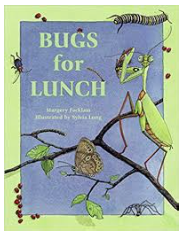
Bugs for Lunch, by Margery Facklam

Bugs for lunch?  Well yes, depending on what type of creature you are.  Reading this poetic story introduces the children to many animals that eat bugs for their lunch.

Materials

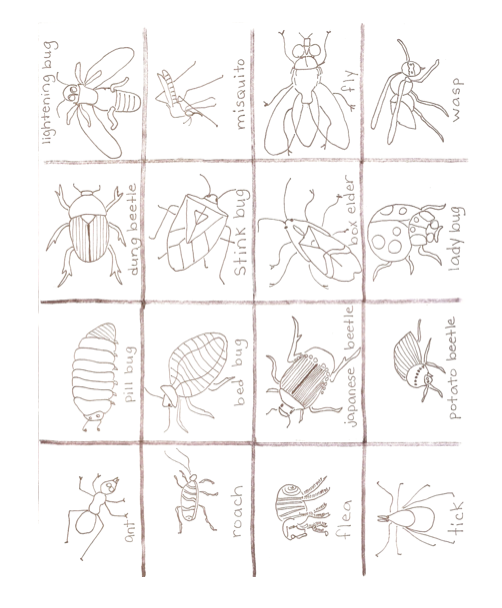
  •             Insect lotto boards
  •             Poker  chips or small plastic circles

Vocabulary

  •             Bugs (another name for insect.)
  •             Entomophagy (a person who eats bugs)

Before Reading the Story

Ask the children to name some of their favorite lunch foods.  Afterwards tell the children that you are going to read a book called Bugs For Lunch.  Ask if they have ever eaten any bugs.  Most children will laugh and say gross.   Ask the children if they know who does eat bugs for lunch?  Give them a moment to reply and then introduce the story. 

Science/Scientific Knowledge; expands knowledge of and abilities to observe, describe, and discuss the natural world, materials, living things, and natural processes.

Reading the Story

Point out the variety of bugs on each page and name those that you can. Those that you do not know, look for inside an insect identification book.  Have the children repeat the many varied names of the insects. 

Literacy/Book Knowledge & Appreciation; shows growing interest and involvement in listening to and discussing a variety of fiction and non-fiction, and poetry.

After Reading the Story

Do a walk through of the book and see if the children can recall the names of all the animals that eat bugs.  Tell the children that in many parts of the world people eat insects and they say that they taste good!  People say that they are crunchy.  Ask the children to help you list other foods that are crunchy. 

Mathematics/Patterns & Measurement; begins to make comparisons between several objects based on a single attribute.

Science

Bring in any bug homes (bee hive,cocoon) or dead insects that you might have for the children to look at through the magnifying glasses.  Bring in an insect identification book.  Take this out onto the playground with you and take bug boxes to capture the insects to better examine. 

Science/Scientific Skills & Methods; begins to use senses and a variety of tools and simple measuring devices to gather information, investigate materials, and observe processes and relationships.

Music and Movement

            Sing Five Little Speckled Frogshttps://www.youtube.com/watch?v=ziGG_L9C12o

Five little speckled frogs,

Sitting on a speckled log

Eating the most delicious bugs, yum, yum

One jumped into the pool where it was nice and cool

Then there were four more speckled frogs, glub, glub.

(Sing down 4, 3, 2, 1–Then there were no more speckled frogs. Glub, glub)

Mathematics/Number & Operations; develops increasing ability to count in sequence to 10 and beyond.    

Blocks

 Have the children use the blocks to make a pond.  Using two poker chips, show the children how to slide one poker chip off the edge of the other to make it jump like a frog into the pond.  

Physical Health & Development/Fine Motor Skills; grows in eye-hand coordination in building with blocks, putting together puzzles, reproducing shapes ad patterns, stringing beads and using scissors.

Art

Encourage the children to draw insects.  As they draw remind them that insects have 6 legs and 3 body parts, etc. If they are drawing a spider, remind them that spiders have 8 legs. 

Mathematics/Number & Operations; begins to associate number concepts, vocabulary, quantities, and written numerals in meaningful ways.  AND Science/Scientific Skills & Methods; develops growing abilities to collect, describe, and record information through a variety of means, including discussion, drawings, maps, and charts.

Sand and Water

 Add dirt to the table today and plastic insects.  Bring in a variety of items that the children can use to make an insect/bug environment.  Include rocks, sticks, leaves, bark, etc. 

Science/Scientific Skills & Methods; develops growing abilities to collect, describe, and record information through a variety of means, including discussion, drawings, maps, and charts.  AND Literacy/Book Knowledge & Appreciation; demonstrates progress in abilities to retell and dictate stories from books and experiences; to act out stories in dramatic play; and to predict what will happen next in a story.

Library and Writing

Play insect bingo.  Help the children read the names of each insect. (Make copies of the insect page. Cut out the pictures and glue 8 of the 12 pictures onto a clean piece of paper, one card of 8 per child.  Cut out one set of 12 insects to use for the call cards.  Pick up a card and name, or have a child name the insect.  If the child has it on their piece of paper they may cover it with a marker. The first to cover all 8 insects shouts bingo). 

Social & Emotional Development/Cooperation; develops increasing abilities to give and take in interactions; to take turns in games and using materials; and to interact without being overly submissive or directive.

Dramatic Play

Bring some plastic insects to the center and encourage the children to cook some delicious meals that crunch and munch. 

Literacy/Book Knowledge & Appreciation; demonstrates progress in abilities to retell and dictate stories from books and experiences; to act out stories in dramatic play; and to predict what will happen next in a story.  AND Approaches to Learning/Initiative & Curiosity; approaches tasks and activities with increased flexibility, imagination, and inventiveness.

Math and Manipulatives

Use the book to go through pictures with the children and count the number of insects on each page. Give the children time to discuss the variety of bugs and they are alike and different. 

Mathematics/Number & Operations; develops increasing ability to count in sequence to 10 and beyond.   AND Science/Scientific Skills & Methods; develops increased ability to observe and discuss common properties, differences, and comparisons among objects and materials.

Outdoor Play

Look for bugs on the playground and put into bug catchers to observe.  If you find a mound of roly poly bugs, put them onto a tray and see what happens to them when they uncurl themselves.  If you find ants, see if the children can find the ant trail.  If you find a spider, have the children carefully examine the spider web.  Encourage the children to talk about what the see and ask them questions about what the insect is doing, going, what they might eat, how many legs, etc..

Science/Scientific Knowledge; expands knowledge of and abilities to observe, describe, and discuss the natural world, materials, living things, and natural processes.   AND Approaches to Learning/Initiative & Curiosity; grows in eagerness to learn about and discuss a growing range of topics, ideas, and tasks.

Transitions

Encourage the children to fly like an insect or crawl like an insect to the next activity

Approaches to Learning/Initiative & Curiosity; chooses to participate in an increasing variety of tasks and activities.  

Resources