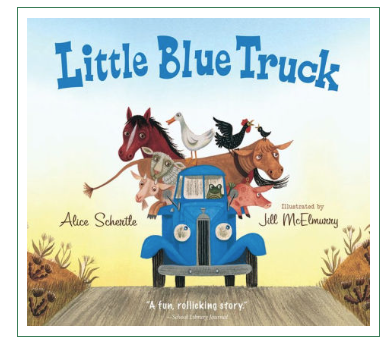
Little Blue Truck Leads the Way, by Alice Schertle

Little Blue truck is bringing lettuce into the city.  The city is big and moves quickly.  In this story Little Blue Truck saves a  rush hour nightmare and gets the lettuce delivered to the people.

Materials

  • Several small paper plates
  • 5-8 Matchbox or other smaller type car
  • Rhyming word cards
  • Night and day cards
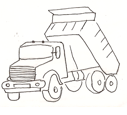
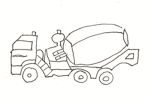
  • Truck Picture
  • Several dish towels or old bath towels

 Vocabulary

  • Wrangle-to argue
  • Transportation-a way to get from here to there

Before Reading the Story

Tell the children that your story today is about a truck that is going to the city. Explain that a truck is a kind of transportation. Ask the children to think of all the different kinds of transportation that they can. Write them on a sheet of paper and hang it on the wall.

Language Development/Listening & Understanding;understands an increasingly complex and varied vocabulary.  AND Mathematics/Patterns & Measurement; Begins to make comparisons among several objects based on a single attribute.

 Reading the Story

On the first page with words (Horn went Beep) read the sign City Limits to the children and ask them if they can tell what time of day it is. Point out the stars; the auto lights, the city lights, and skunks are generally nocturnal. When you get to the page with the double decker bus, stop and ask the children how it makes them feel (I think he’s mad! It looks mean. It’s got frowny teeth.). On the page with the traffic jam and everybody starts to shout and wrangle, ask the children what they think is going to happen. On the page where the mayor is handing out the boxes of lettuce, ask the children if they know why the truck was in the city (it is delivering lettuce from the farm to the store)

Science/Scientific Knowledge; expands knowledge of and abilities to observe, describe, and discuss the natural world, materials, living things, and natural processes.  AND Literacy/Book Knowledge & Appreciation; demonstrates progress in abilities to retell and dictate stories from books and experiences; to act out stories in dramatic play; and to predict what will happen next in a story.

 After Reading the Story

Turn to the page where there is the traffic jam and all the vehicles are in a tangle. Ask the children if they can remember what the faces of the many cars and trucks looked like (frowns, anger, mean). If not flip back a page or two so the children can see the vehicle faces. Ask them why they think the vehicles all looked so angry (they were stuck in traffic and nobody can move). Ask has this ever happened to you? Now ask who can remember how the problem was fixed (they all took turns, they cooperated). Give some examples of how the children have taken turns recently or cooperated with each other to get a job done (Remember when everybody clogged the drinking fountain yesterday? We had to get in line and take turns. This morning when Clarissa came to school, she waited until Lee hung his coat up before she tried to get past him). Remind the children that we take turns and cooperate with each other to stay safe and so everybody can have fun at school. This conversation has lead to discussing bullying in the classroom. If your class goes in this direction, allow them to talk about it without naming names. “I hear it makes you mad when someone pushes you out of the way”. “I hear it upsets you when another child takes a toy away from you”. If your discussion goes in this direction, make sure to let the children know that they can ask you or any other adult for help.

Literacy/Book Knowledge & Appreciation; demonstrates progress in abilities to retell and dictate stories from books and experiences; to act out stories in dramatic play; and to predict what will happen next in a story.  AND Social & Emotional Development/Cooperation; shows increasing abilities to use compromise and discussion in working, playing, and resolving conflicts with peers.

Discovery

Have the children sort the day and night cards.

Mathematics/Patterns & Measurement; Begins to make comparisons among several objects based on a single attribute.

Music and Movement

Put on music that is both fast and slow and let the children dance to it. There is a fun song called Freeze by Greg and Steve (available on YouTube).

Creative Arts/Movement; shows growth in moving in time to different patterns of beat and rhythm in music.

In the story the marching band joined the parade. Give the children instruments and have your own parade around the classroom. Can the children play their instruments very fast? Very slow? Over their heads? Behind their backs? While walking on tip toe? While sliding side to side?

 Creative Arts/Music; experiments with a variety of musical instruments.

Blocks

Challenge the children to make a city out of blocks. If you have a road map, put it onto the floor and encourage the children to make city skyscrapers along it. If you do not have a road, use a piece of chalk or masking tape to mark out several roads on the floor for the children to build around.

Approaches to Learning/Engagement & Persistence; grows in abilities to persist in and complete a variety of tasks, activities, projects, and experiences.  AND Physical Health & Development/Fine Motor Skills; grows in hand-eye coordination in building with blocks, putting together puzzles, reproducing shapes and patterns, stringing beads, and using scissors.

 Art

Let the children paint with small cars today. Put out large sheets of construction paper and plates of paint in various colors. Put a small car (matchbox) in each color of paint. The children drive the car through the paint and then onto their picture.  While they are painting, talk to them about where they might be driving their car and about auto safety rules.

Social & Emotional Development/Knowledge of Families & Communities; begins to express and understand concepts and language of geography in the contexts of the classroom, home, and community.  AND Physical Health & Development/Health Status & Practices; builds awareness and ability to follow basic health and safety rules such as fire safety, traffic and pedestrian safety, and responding appropriately to potentially harmful objects, substances, and activities.

Sand and Water

Put baby dolls in with water today.  Add several towels for the children to dry the babies after they give them a bath.

Creative Arts/Dramatic Play; participates in a variety of dramatic play activities that become more extended and complex.

Library and Writing

Put out many non-fiction books about transportation that you might have.

Literacy/Book Knowledge & Appreciation; shows growing interest in reading related activities; such as having a favorite story read; choosing to look at books; drawing pictures based on stories; asking to take books home; going to the library; and engaging in pretend reading with other children.

Remind the children that in the story that there were many rhyming words, read a page or two to the children so they can hear the rhyming. Put out rhyming word cards for the children to sort and match.

Literacy/Phonological Awareness; progresses in recognizing matching sounds and rhymes in familiar words, games, songs, stories, and poems.

 Dramatic Play

Put out some props that the children can use to pretend to fix cars and trucks. A chair can become a car and a box as a toolbox with some of the following items inside; flashlight, rag, screwdriver, old keys, gloves, an air pump, and a wrench.

Social & Emotional Development/Knowledge of Families & Communities; develops growing awareness of jobs and what is required to perform them.

 Math and Manipulatives

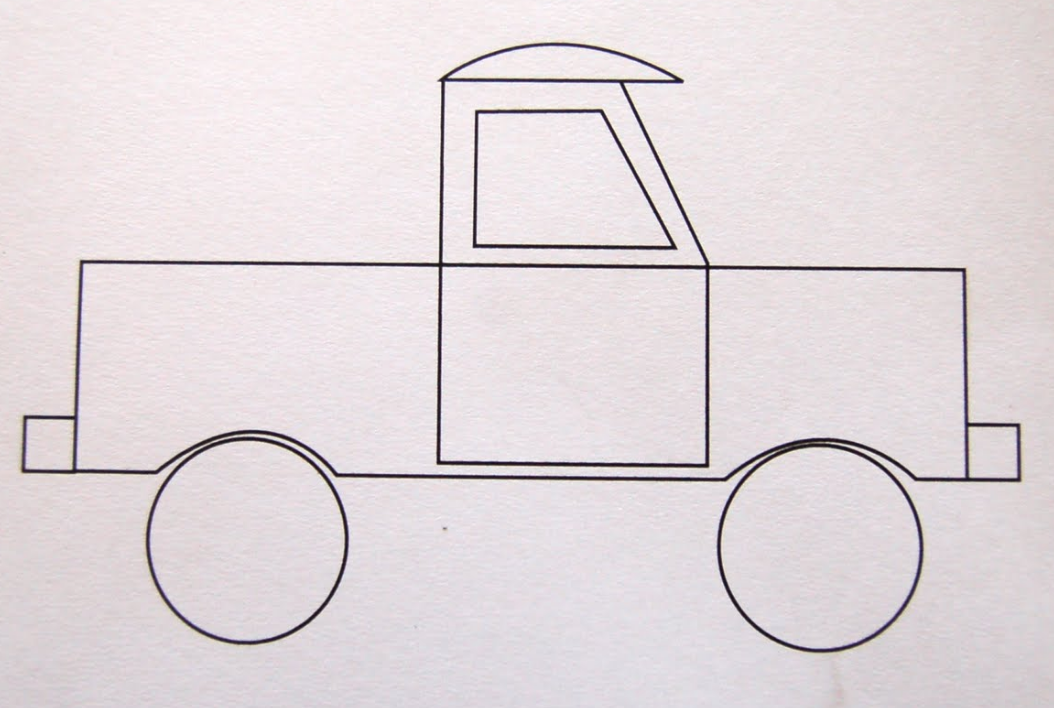
Give each child a little blue truck picture. They can color it and then cut out pictures of things that they would like to deliver to the school. This works well if you give the children old school supplies catalogs. It’s fun to see what things the children would like to deliver to the school.

Physical Health & Development/Fine Motor Skills; develops growing strength, dexterity, and control needed to use tools such as scissors, paper punch, stapler, and hammer.

Outdoor Play

Play Follow the Leader. As you lead the children around the playground doing various gross motors, find places where you can have a traffic jam. At this point have another become the leader and everybody follow them about. When you are ready for a new leader, find a crowded place and have another traffic jam. (On my playground there are several trees near the fence. If everybody tries to get around and beside these trees, it gets very crowded).

Social & Emotional Development/Cooperation; develops increasing abilities to give and take in interactions; to take turns in games and using materials; and to interact with others without being overly submissive or directive.

Transitions

As the children line up, ask the first child to step into line. Ask the next child to get first in line. Ask the next child to get last in line. Ask the next child to get first in line, etc. until all the children are lined up by being called to go either first or last.

Mathematics/Geometry & Spatial Sense; builds an increasing understanding of directionality, order, and positions of objects, and words such as up, down, over, under, top, bottom, inside, outside, in front, behind.

 Dear Parent, today we read a story where everybody was in a hurry and became angry. Remember that there are times when it is healthy to slow down and take your time. When everybody works together, it all works out better in the end.

Resources
Screen Shot 2018-11-04 at 11.49.58 AM
Screen Shot 2018-11-04 at 12.39.06 PM
Screen Shot 2018-11-04 at 12.39.38 PM
Screen Shot 2018-11-04 at 12.41.17 PM
Screen Shot 2018-11-04 at 12.40.53 PM
Screen Shot 2018-11-04 at 12.43.03 PM
Screen Shot 2018-11-04 at 12.42.35 PM
Screen Shot 2018-11-04 at 12.43.21 PM
Screen Shot 2018-11-04 at 12.46.12 PM
Screen Shot 2018-11-04 at 12.45.39 PM
Screen Shot 2018-11-04 at 12.45.08 PM
Screen Shot 2018-11-04 at 12.44.41 PM
Screen Shot 2018-11-04 at 12.44.18 PM
Screen Shot 2018-11-04 at 12.43.55 PM
Screen Shot 2018-11-04 at 12.28.57 PM
Screen Shot 2018-11-04 at 12.29.25 PM
Screen Shot 2018-11-04 at 12.29.07 PM
Screen Shot 2018-11-04 at 12.31.11 PM
Screen Shot 2018-11-04 at 12.31.22 PM
Screen Shot 2018-11-04 at 12.31.33 PM
Screen Shot 2018-11-04 at 12.31.42 PM
Screen Shot 2018-11-04 at 12.35.19 PM
Screen Shot 2018-11-04 at 12.35.08 PM
Screen Shot 2018-11-04 at 12.33.40 PM
Screen Shot 2018-11-04 at 12.33.33 PM
Screen Shot 2018-11-04 at 12.33.21 PM
Screen Shot 2018-11-04 at 12.33.11 PM
Screen Shot 2018-11-04 at 12.35.35 PM
Screen Shot 2018-11-04 at 12.35.27 PM

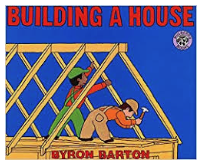
Building a House, by Bryon Barton

 This simple text story and wonderful bright pictures makes it easy for children to see all that goes into building a house. 

Materials

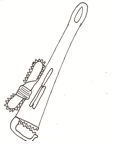
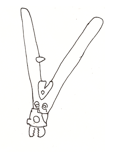
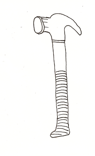
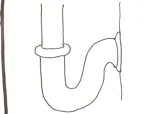
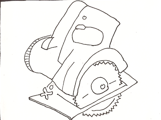
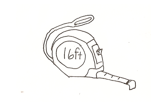
  •             Pictures of tools
  •             Several large boxes, the bigger the better!
  •             A sharp knife/Exacto blade
  •             5 paintbrushes 2-3 inch width and also rollers
  •             Pictures of animal homes
  •             Block center blueprints
  •             Box of graham crackers, can of frosting, string licorice cut into                small pieces

Vocabulary

Before Reading the Story

Open the book up to the page that reads,” The house is built”.   Ask the children to help name all the parts of a house (window, door, roof, wall, chimney, and step).  Ask the children if they know who the people are that help to build houses, perhaps a parent does some sort of construction.  Explain to the children that it takes lots of people to help build a house.  Turn to the front cover and introduce the book.

Social & Emotional Development/Knowledge of Families & Communities; develops growing awareness of jobs and what is required to perform them.

Reading the Story

 Take your time on each page and talk about what the people are doing.  Talk about the tools and name the objects.  Point out all the work that goes into building a house.

Social & Emotional Development/Knowledge of Families & Communities; develops growing awareness of jobs and what is required to perform them.  AND Approaches to Learning/Initiative & Curiosity; grows in eagerness to learn about and discuss a growing range of topics, ideas, and tasks.

After Reading the Story

Ask  the children if they can remember the kinds of work/ers that build the house.  If they are having trouble recalling do a walk through of the book one more time and see if the children can recall what is happening on each page.  Show the children the last page where the family is moving in.  Ask the children to think about where things go on the inside of the house.  Where would you put the oven (kitchen)?  Where would you put the bed, your toothbrush, the TV, the car, etc)? 

Literacy/Book Knowledge & Appreciation; shows growing interest and involvement in listening to and discussing a variety of fiction and non-fiction and poetry. AND Approaches to Learning/Reasoning & Problem Solving; develops increasing abilities to classify, compare, and contrast objects, events, and experiences.

Discover

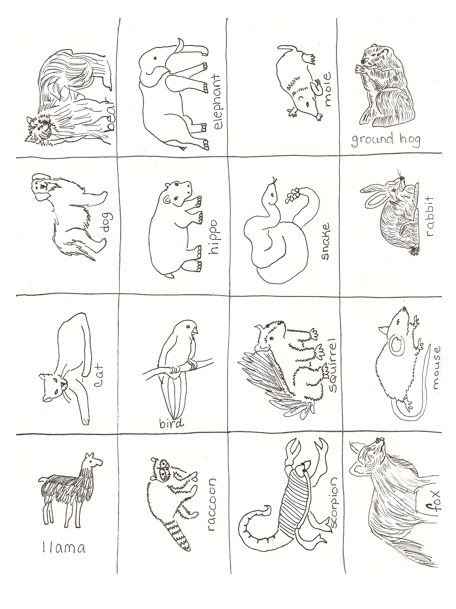
Make two copies of the animal in their homes cards and cover the back so the children cannot see through the paper.  Use these to play Memory with the children.  Mix all the cards and lay out on the table picture side down.  The children take turns picking up two cards.  If they match, they get to keep them.  If they do not match they must put the cards back on the table picture side down where they found them.  Have the children take turns picking up 2 cards until all the pairs have been found.

Social & Emotional Development/Cooperation; develops increasing abilities to give and take in interactions; to take turns in games and using materials; and to interact without being overly submissive or directive.

Music and Movement

Teach the finger play, Houses.

This is a nest for the Bluebird            Cup both hands, palms up fingers together        
 This is the hive for the bee                 Make a fist with one hand
 This is a hole for the rabbit                Make a hole placing fingers to thumb
 And this is a house for me.                 Fingertips from both hands together to make a peak

Language Development/Listening & Understanding; demonstrates increasing ability to attend to and understand conversations, stories, and poems

Blocks

Make block blueprints and put in center along with hard hats.  To keep these for repeated use, cover them with contact paper.  As the children build with the blocks today, encourage them to read the blueprints and see if they can make the structure using your classroom blocks.  I have included several examples under resources but this works best when you use your own classroom blocks and the skill levels of your children to build.

Literacy/Early Writing; develops understanding that writing is a way of communicating for a variety of purposes.  AND Physical Health & Development/Fine Motor Skills; grows in hand-eye coordination in building with blocks, putting together puzzles, reproducing patterns and shapes, stringing beads, and using scissors.

Art

Explain to the children that you are going to build houses.  Give each child 3 graham crackers and a tiny bit of frosting.  First show them how to carefully break the graham crackers in half to get 6 squares and then them how to spread the frosting on the edges of the cracker to use for paste.  Put on the walls and the roof.  Use small pieces of licorice strings to embellish with windows and doors.  Glue embellishments on with frosting.

Approaches to Learning/Engagement & Persistence/grows  in abilities to persist and complete a variety of tasks, activities, projects, and experiences.  AND Creative Arts/Art; gains ability in using different art media and materials  in a variety of ways for creative expression and representation.

Sand and Water

Add dampened sand today and encourage the children to dig burrows and make caves.  

Creative Arts/Art; gains ability in using different art media and materials  in a variety of ways for creative expression and representation.

Library and Writing

Have the children to draw a picture of their house. Ask the children to tell you three things about their house (the door is red, my room is upstairs, I got a window that looks at the street).  Write their responses at the bottom of the page.  Put all the pictures in a book form and title it Whose House?  As you read the pages, the children can guess whose house it is.

Literacy/Early Writing; begins to represent stories and experiences through pictures, dictation, and in play.  AND Literacy/Book Knowledge & Appreciation; shows growing interest in reading-related activities, such as asking to have a favorite books read;  choosing to look at books; drawing pictures based on stories; asking to take books home; going to the library; and engaging in pretend reading with other children.

Dramatic Play

Put out any play tools you have and let the children pretend to build a house.  Add flashlight, tape measure or ruler, and hard hats.

Creative Arts/Dramatic Play; participates in a variety of dramatic play activities that become  more extended and complex.

Math and Manipulatives

 On index cards write numbers 1-5.  Use the tool pictures and ask the children to name the item.  Repeat back the object clapping out the syllables.  Ask the child to count the syllables while they repeat/clap the word. Put the item above the correct number index card.  How many items have one syllable, two syllables, etc..

Literacy/Phonological Awareness; shows growing ability to hear and discriminate separate syllables in words.  AND Mathematics/Number & Operations; begins to make use of one-to-one correspondence in counting objects and matching groups of objects,

Outdoor Play

Bring out any large boxes that you have collected. Put paint into large enough containers that the children can easily get the paintbrushes and rollers into it.  Put the boxes with the opening facing down.  Allow the children to paint the boxes to make houses. With the children decide where the teacher will cut the windows and doors once the paint dries.  Let the children use the houses on the playground.

Social & Emotional Development/Cooperation; develops increasing abilities to give and take in interactions; to take turns in games and using materials; and to interact without being overly submissive or directive.  AND Physical Health & Development/Fine Motor Skills; progresses in abilities to use writing, drawing, and art tools, including pencils, markers, chalk, paint brushes, and various types of technology. 

Transitions

Hold up a tool card.  Can the child name the tool?  Can they tell how the tool is used or pantomime using the tool?  Let the children take turns naming tools as they go to their next activity.

Language Development/Speaking & Communicating; develops increasing abilities to understand and use language to communicate information, experiences, ideas, feelings, opinions, needs, questions, and for other varied purposes.

Dear Parent- Today we read a story about building a home.  Take a walk through your house today and see if your child can name all the different rooms and their purpose.  Or, open up your home tool box and show your child the various tools that you use to keep up and maintain your home.  If possible, give your child a scrap of wood so that they may experience hammering, screwing, and sawing.

Resources

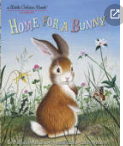
Home for a Bunny, by Margaret Wise Brown

            It is spring time and Bunny is looking for a home somewhere under something.  Along the way he meets several animals but none have a home for a bunny.  Finally he meets another bunny and together they find the perfect home for bunnies.

Materials

  • 10-12 animal pictures who live under and above the ground
  • Cotton balls
  • Rabbit shape

Vocabulary

  • Bunny (another name for a rabbit)
  • Habitat (the different kinds of places that animals live)
  • Bog (a wet grassy place near a pond)
  • Burrow (a tunnel underground where rabbits and other animals live)

Before Reading the Story

           Ask the children if they know what a bunny is.  Show them the cover of the book and read the title.  Ask them if they know where a good place for a bunny to live is.  Tell the children that bunnies usually sleep all day in their burrows and then come out at night.  Bunnies can sit so quietly that they hardly move at all.  Ask the children if they can sit as still as a bunny.

Science/Scientific Knowledge; expands knowledge of and abilities to observe, describe, and discuss the natural world, materials, living things, and natural processes. AND Language Development/Speaking & Communicating; develops increasing abilities to understand and use language to communicate information, experiences, ideas, feelings, opinions, needs, questions, and for other varied purposes.

Reading the Story

After Reading the Story

            Talk about the different homes in the story and who lived in them (a tree, a bog, a log).  Ask the children where people live (in a house, an apartment, a trailer).   Ask what kinds of things you find in a people house. 

Language Development/Speaking & Communicating; develops increasing abilities to understand and use language to communicate information, experiences, ideas, feelings, opinions, needs, questions, and for other varied purposes.

Discovery

            Sort animals by those that live under the ground and those that live above the ground.

Mathematics/Patterns & Measurement; shows growth in matching, sorting, putting in a series, and regrouping objects according to one or two attributes such as color, shape, or size.

Music and Movement

            Teach the children the finger play, Here is a Bunny

Here is a bunny with ears so funny                          Hold up 2 fingers like a peace sign

And here is his hole in the ground                          Make a circle with your other hand

When a noise he hears, he pricks up his ears             Stretch bunny ears on hand

And jumps in his hole in the ground                       Put bunny hand through circle hand

Language Development/Listening & Understanding; demonstrates increasing ability to attend to and understand conversations, stories, songs, and poems.

           Put on some music and do the Bunny Hop https://www.youtube.com/watch?v=UgLL_q5FMCU

Left foot out, left foot out

Right foot out, right foot out

Jump forward, Jump backwards

Jump forward three times.

Creative Arts/Movement; shows growth in moving in time to different patterns of beats and rhythm in music.

Blocks

           Challenge the children to make bunny tunnels/burrows.

Approaches to Learning/Initiative & Curiosity; approaches tasks and activities with increased flexibility, imagination, and inventiveness.

Art

           Cut out simple bunny shape.  Put watered glue into bowls and add paint brushes.  The children paint the glue onto the bunny shape and then pull cotton balls apart to decorate.

Language Development/Listening & Understanding; shows progress in understanding and following simple and multiple-step directions. AND Creative Arts/Art; develops growing abilities to plan, work independently, and demonstrate care and persistence in a variety of art projects.

Library and Writing

            Ask the children to draw their home.  When they are finished, write their address on a piece of paper and encourage them to copy the numbers.  The teacher can help write the street name.

Social & Emotional Development/Knowledge of Families & Communities; develops ability to identify personal characteristics, including gender and family composition. AND Mathematics/Number & Operations; begins to associate number concepts, vocabulary, quantities, and written numerals in meaningful ways.

Sand and Water

            Add dampened sand to the table and dig bunny holes.

Approaches to Learning/Initiative & Curiosity; approaches tasks and activities with increased flexibility, imagination, and inventiveness.

Dramatic Play

            House play today.  This would be a good day to let the children use rags and water to clean the shelves and make the dramatic play area clean and a perfect home for children.

Social & Emotional Development/Self-Concept; develops growing capacity for independence in a range of activities, routines, and tasks.

Math and Manipulatives

            Let the children build with small blocks or Legos and make homes.  Put out small people or animals that they can put inside their homes.

Approaches to Learning/Reasoning & Problem Solving; develops increasing ability to find more than one solution to a question, task, or problem. AND Physical Health & Development/Fine Motor Skills; grows in hand-eye coordination in building with blocks, putting together puzzles, reproducing shapes and patterns, stringing beads, and using scissors.

Outdoor Play

           Play bunny tag on the playground.  The children hop on all fours like rabbits.  Put hoola hoops on the ground and the children can hop into their bunny holes where they are safe and can not be caught.

Physical Health & Development/Health Status & Practices; progresses in physical growth, strength, stamina, and flexibility.

Transitions

            Play I’m thinking of an animal. (I’m thinking of an animal that lives in a barn and gives us milk to drink.  I’m thinking of an animal that lives in the trees of the jungle and eats bananas and swings from its tail.)

Language Development/Listening & Understanding; demonstrates increasing ability to attend to and understand conversations, stories, songs, and poems.

Resources