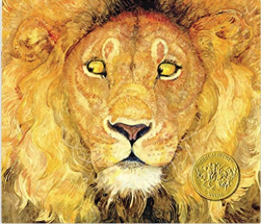
The Lion & The Mouse, by Jerry Pinkney

This wordless picture book is beautifully illustrated and tells the story about a mouse who was saved by a kind lion from becoming the lions dinner and how later the tiny mouse was able to save the lion from a hunter’s net.

Materials

  • Kindness coupons
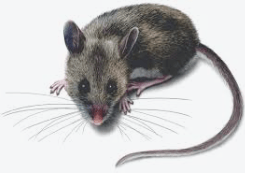
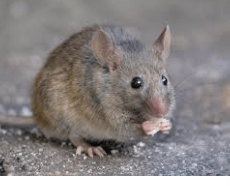
  • Picture of a lion and a mouse
  • 4 small fishnets or skimmer spoons

Vocabulary

  • Fable (a story that teaches a lesson)
  • Kindness (the act of doing something friendly, generous, or considerate for another)

Before Reading the Story

Tell the children that today’s story is about doing an act of kindness for another person or animal. Ask the children if they know what kindness means or looks like? Help the children if they are having trouble with the conversation by giving the definition of kindness and asking questions such as; have you ever done something nice for another person? Do you think that you can help a person who is bigger than you? Stronger than you? Ask the children how ift makes them feel when they do an act of kindness towards another? Explain that today’s story is about a wild lion and a little mouse. Introduce the story.

Language Development/Speaking & Communicating; develops increasing abilities to understand and use language to communicate information, experiences, ideas, feelings, opinions, needs, questions; and for other varied purposes.

Reading the Story

Stop and point out the loving act of kindness that took place on the page-on the page where the lion lets the mouse go and on the page where the mouse helps free the lion.

Language/Speaking & Communicating; uses an increasingly complex and varied spoken language.

One the first page, ask the children if they can tell at what time the story is taking place (night).  On the page with the Jeep, ask the children if they think they know what the men are doing in the jungle.  After they respond, on the next page show them how the sandbags will fall when someone or some animal steps on the rope.  Can they guess who’s foot has just stepped on the rope?  On the page with the roaring, ask the children if they know what the mouse is up to?  Do you think he is scared when he hears the roaring or do you think that he wants to help the lion?  WHY?

Literacy/Book Knowledge & Appreciation; demonstrates progress in abilities to retell and dictate stories from books and experiences; to act out stories in dramatic play; and to predict what will happen next in a story.

 After Reading the Story

Tell the children that this story is a fable. Fables teach lessons. Ask the children what they think the lesson of the story was? (Be nice, help others, even little people can help).

Approaches to Learning/Reasoning & Problem Solving; develops increasing abilities to classify, compare, and contrast objects, events, and experiences.

It might be fun to try to act this story out. Since it is a wordless book, the children can tell it in their own words and the actors can roar, scratch, and squeak.

Literacy/Book Knowledge & Appreciation; demonstrates progress in abilities to retell and dictate stories from books and experiences; to act out stories in dramatic play; and to predict what will happen next in a story.

Discovery

Put out the pictures of the lion and the mouse. Ask the children to tell you some of the similarities and differences that they see between the two animals. (They are both animals, they have 4 feet, they have tails, one is big and one is little, the lion has long fur)

Science/Scientific Skills & Methods; develops increased ability to observe and discuss common properties, differences, and comparisons among objects and materials.

Music and Movement

Teach the children the song Make New Friends minus the round. https://www.youtube.com/watch?v=r9NwEGSQ3r4

Play the Sesame Street Kindness Song and have the children repeat, “that’s kindness” with the characters. https://www.youtube.com/watch?v=enaRNnEzwi4

Creative Arts/Music;participates with increasing interest and enjoyment in a variety of music activities, including listening, singing, finger plays, agames, and performances.

Blocks

Encourage the children to work in cooperation with the others in the center.

Social & Emotional Development/Cooperation;shows increasing abilities to use compromise and discussion in working, playing, and resolving conflicts with peers.

Art

Cut out large circles, about the size of a dinner plate. Draw a smaller circle inside, about the size of a lunch plate. Show the children how to use scissors and cut from the outside of the large circle to the line of the smaller circle. This could then become a mane and the children can draw a lion face with markers.

Physical Health & Development/Fine Motor Skills; develops strength, dexterity, and control needed to use tools such as scissors, paper punch, stapler, and hammer.

Sand and Water

Add the fishnets or skimmer spoons to the table today with water. Dump a set of sorters such as sorting bears into the water. Encourage the children to use the fish nets to scoop up all the red counters, the small counters, etc.

Mathematics/Geometry & Spatial Sense; shows growth in matching, sorting, putting in a series, and regrouping objects according to one or two attributes such as color, shape, or size.

Library and Writing

Tell the children that you will help them write and act of kindness that they will do for a family member or friend. Copy the name of the person that the child wants to do the act for onto a piece of paper. The child copy the name onto the kindness coupon. On the other side you can write what the child would like to do. (Mommy-I won’t fight with my brother. Grandma-I will read stories with you. Tony-I will let you ride my bike).

Literacy/Early Writing; progresses from using scribbles, shapes, or pictures to represent ideas to using letter-like symbols, to copying and writing familiar words such as their own name.

Dramatic Play

Add some yarn or string to the center and encourage the children to act out the story on their own.

Literacy/Book Knowledge & Appreciation; demonstrates progress in abilities to retell and dictate stories from books and experiences; to act out stories in dramatic play; and to predict what will happen next in a story.

Math and Manipulatives

Cut out 2 foot lengths of yarn or string. Fold in half and tie to a chair. The children can practice tying knots the rest of the length of yarn or string. Cut and tie similar lengths of ribbon. The children can use scissors to snip the ends up.

Physical Health & Development/Fine Motor Skills; develops growing strength, dexterity, and control needed to use tools such as scissors, paper punch, stapler, and hammer.

Outdoor Play

Practice your roars and squeaks.

Transitions

Tell the children about any acts of kindness that you saw happen in the class today. (I like the way Alison shared her scissors with Sean. I saw Ryan ask Paula if she wanted to build blocks with him. I noticed Roger was feeling sad and Bobby asked him if he was ok).

Social & Emotional Development/Social Relationships; shows progress in developing friendships with peers.

Resources

Use for kindness coupons

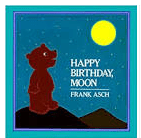
Happy Birthday Moon, by Frank Asch

            This is the story about a little bear who wants to share something special with the moon on its birthday.

Materials

  • Pictures of the moon in the sky at night to go with poem
  • Recipe card for Man in the Moon treats
  • Cream cheese and round crackers
  • Plastic knives to spread
  • Small box of raisins

Vocabulary

  • Echo (to repeat a sound)

Before reading the Story

            Talk to the children about what an echo is.  Sing an echo song (examples; There was a Man, Going on a Bear hunt).  Practice having the children echo back responses by naming letters while you hold up cards and say first, TEG, SFP, DBV

Literacy/Alphabet Knowledge; identifies at least 10 letters of the alphabet, especially those in their own name.

Tell the children that you are going to read a story and need their help to be the echo.

Reading the Story

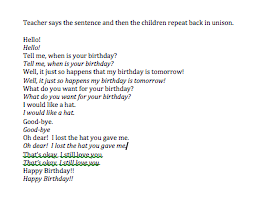
            As you read the story, stop when you get to the part where Bear shouts; “Hello!”  This time his own voice echoed off one of the mountains:” Hello!”  Tell the children that they are the echo now and repeat back all the things that Bear thinks the moon is saying.  Continue this way to the end of the story.  For older children you can write the echos on paper and hold up so the children can see the sentence as they echo back to you.

Language Development/Listening & Understanding; demonstrates increasing ability to attend to and understand conversations, stories, songs, and poems.

After Reading the Story

            Talk to the children about the moon.  When do you see the moon?  Does it always look the same?  The moon helps to light the sky at night.  What else helps to light the sky at night?  The moon looks like it is growing in the sky and then gets little again, this is called a moon cycle.  Read the poem, The Moon, anonymous.

Sometimes the moon is full           Hold up full moon picture

And shows a circle of light 

And sometimes the moon looks like          Hold up half moon picture

One half a ball at night.

Sometimes the moon is only                        Hold up new moon picture

A sliver and hardly more

But all the night the moon is out there

When you look out of your door

Science/Scientific Knowledge; develops growing awareness of ideas and language related to attributes of time and temperature. AND Language Development/Listening & Understanding; demonstrates increasing ability to attend to and understand conversations, stories, songs, and poems.

Discovery

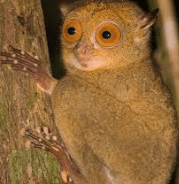
            Using books and magazines that depict nocturnal animal life. Help the children develop a list of animals that come out at night. Notice the eyes of many of the animals are large, better to see at night with.

Literacy/Book Knowledge & Appreciation; shows growing interest in reading-related activities, such as asking to have a favorite book read; choosing books to look at; drawing pictures based on stories; asking to take books home; asking to go to the library; and engaging in pretend reading with other children.

Music and Movement

Teach the children the chorus to I See The Moon. If you have time teach them the verses also. https://www.youtube.com/watch?v=d4ZOGGRGuTw

Teach songs with Echo like Frere Jacques https://www.youtube.com/watch?v=QblcSZcRDBA

Language Development/Listening & Understanding; demonstrates increasing ability to attend to and understand conversations, stories, songs, and poems.

Blocks

            In the story Bear climbed to the highest mountain.  Challenge the children to build a very tall structure. You might start this activity with the children using one inch cubes or small blocks instead of the unit blocks.

Approaches to Learning/Engagement & Persistence; grows in abilities to persist in and complete a variety of tasks, activities, projects, and experiences.

Art

            Cut out moon shapes from a manila folder.  Show children how to take 1 inch squares of tissue paper, crumple into small ball and glue it onto the moon shape.

Physical Health & Development/Fine Motor Skills; grows in hand-eye coordination in building with blocks, putting together puzzles, reproducing patterns and shapes, stringing beads and using scissors.

Sand and Water

            Put water in the table 2 inches deep.  Give the children lids, small plastic containers, and boats.  Show the children how to put counting bears on to the boats/containers, lids to make boats to float the bears.  How many bears can you put in a boat?

Mathematics/Number & Operations; begins to use one-to-one correspondence in counting objects and matching groups of objects. AND Physical Health & Development/Fine Motor Skills; grows in hand-eye coordination in building with blocks, putting together puzzles, reproducing patterns and shapes, stringing beads and using scissors.

Library and Writing

            Play the Man in the Moon only speaks in ‘m’ words.  With the children in a circle, go around taking turns thinking of words that start with the letter M.  Also try putting an ‘m’ sound as the first letter of each child’s name (Kerry=Merry, Roger=Moger)

Literacy/Phonological Awareness;showing growing awareness of beginning and ending sounds in words.

Dramatic Play

            Bedtime rituals.  Bring in blankets, pillows, books, night time pictures to hang on the wall.

Social & Emotional Development/Knowledge of Families & Communities; progresses in understanding similarities and respecting differences among people such as gender, race, special needs, culture, language, and family structures.

Math and Manipulatives

            Spread crème cheese on round crackers.  Add a man in the moon face using raisins.

Physical Health & Development/Fine Motor Skills; develops growing strength, dexterity, and control needed to use tools such as scissors, paper punch, stapler, and hammer.

Outdoor Play

            Let the children climb onto something tall (climber, box, log stump) and pretend that they are the moon.  Shout out a silly sentence and have them repeat it back to you

Language Development/Listening & Understanding; demonstrates increasing ability to attend to and understand conversations, stries, songs, and poems. AND Literacy/Book Knowledge & Appreciation; demonstrates ability to retell and dictate stories from books and experiences; to act out stories in dramatic play; and to predict what will happen next in a story.

Transitions

            Say a sentence and have the child repeat back to you.  This could be a long 12 syllable sentence of a silly sentence depending upon the child’s language skills.

Language Development/Listening & Understanding; demonstrates increasing ability to attend to and understand conversations, stries, songs, and poems

Resources
fox
owl
raccoon
lemur
sloth
jaguar
hedgehog
otter
armadillo
bat
wombat
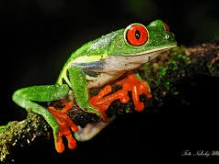
tree frog
snake
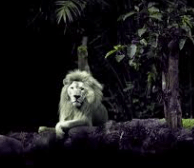
lion

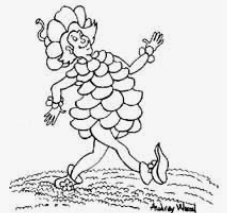
Silly Sally, by Audrey Wood

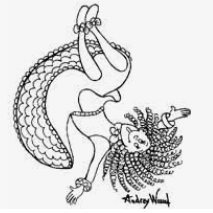
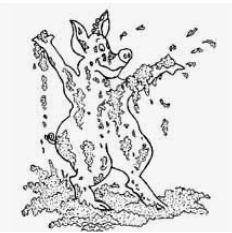
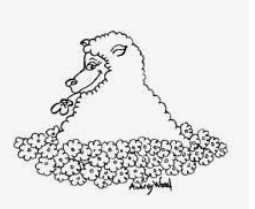
            Children seem to like this silly story about a girl named Sally who went to town walking backwards upside down.

Materials

  • A carnation flower or Queen Anne’s Lace. If no flower, a celery stalk
  • Food coloring
  • Pictures of Silly Sally characters

Vocabulary

  • Backwards (to not face the front but the back)
  • Upside down (where the upper part is where the lower part should be)
  • Silly (to be goofy or foolish)

Before Reading the Story

            Bring to the rug a variety of classroom objects with sets of two that begin with the same letter sound (car and crayon, pencil and purple piece of paper, block and bear counter).  Put out the set plus one other item (car, crayon, pencil).  Name the objects and ask the children which one has a different beginning sound.  Do this several times until the children get the hang of the game.  Then ask the children if they can think of two words that begin with the same letter sound.  Write the children’s responses on a piece of paper.

Literacy/Phonological Awareness; shows growing awareness of beginning and ending sounds in words.

Reading the Story

            On a second reading, have the children act out the actions.  They can walk backwards with their heads hung low instead of on their hands.

Language Development/Listening & Understanding; shows progress in understanding and following simple and multiple-step directions.

After Reading the Story

            Ask the children to answer questions about the story. Silly Sally went to town, walking which way upside down?  Silly Sally danced a jig with this very silly___?  Silly Sally played leap frog with this very silly ___?  Silly Sally sang a tune, with this very silly ___?  Silly Sally fell asleep with this very silly ___?  Along came Ned Buttercup walking ____?

Literacy/Book Knowledge & Appreciation; demonstrates progress in abilities to retell and dictate stories from books and experiences; to act out stories in dramatic play; and predict what will happen next in a story. AND Literacy/Phonological Awareness; progresses in recognizing matching sounds and rhymes in familiar words, songs, stories, and poems.

Discovery

            There are lots of flowers in the story.  Put a carnation or Queen Anne’s lace into a vase of water.  Add a few drops of food coloring and predict what the children think will happen.  Observe it for a day or two and see if their predictions come true.  You can talk about how all living things need water.  People drink water through their mouths.  Plants are also alive and need water.  They drink theirs through their roots and stems.

Science/Scientific SKills & Methods; begins to participate in simple investigations to test observations, discuss and draw conclusions, and form generalizations. AND Science/Scientific Knowledge; shows increased awareness and beginning understanding of changes in materials and cause-effect relationships.

Music and Movement

            Teach the children a tongue twister; Silly Sally snake slithered slowly down the slippery slope on a sunny summer’s day.

Literacy/Phonological Awareness;associates sounds with written words, such as awareness that different words begin with the same sound.

            Sing Down By the Bay. https://www.youtube.com/watch?v=-CSxGHve60E

Literacy/Phonological Awareness; progresses in recognizing matching sounds and rhymes in familiar words, games, songs, stories, and poems.

            Do the following finger-hand play.  Follow the movements accordingly.

Up and Down, round and round

I put my  fingers on the ground

Over, under, in between

Now my fingers can’t be seen!

Hands in front, hands behind

Now my  hands you  can not find!

Here’s my left hand, here’s my right

My hands and fingers are back in sight.

Mathematics/Geometry & Spatial Sense; builds an increasing understanding of directionality, order, and positions of objects, and words such as up, down, over, under, top, bottom, inside, outside, in front, behind.

 Blocks

            In the story there is a bridge that goes into town.  Encourage the children to make a bridge and line up the people or animals across it. Can they make a long bridge? A tall bridge? A bridge using only one size block? How many people fit onto their bridge? Can they make oine that will fit more?

Mathematics/Patterns & Measurement; begins to make comparisons between several objects based on a single attribute.

Art

            Tape pieces of drawing paper to the underside of the art table.  Put the markers or crayons in a basket under the table.  The children can lie on their backs under the table and draw upside down.

Creative Arts/Art; gains ability in using art media and materials in a variety of ways for creative expression and representation. AND Approaches to Learning/Initiative & Curiosity; chooses to participate in a increasing variety of tasks and activities.

Sand and Water

Put magnet letters into the sand today. Give the children spoons or tongs to search for the letters. As they pull a letter out, can they name it? Can they name another letter that rhymes with it?

Literacy/Alphabet Knowledge; identifies at least 10 letters of the alphabet, especially those in their own name. AND Literacy/Phonological Awareness; progresses in recognizing matching sounds and rhymes in familiar words, games, songs, and poems.

Library and Writing

            Bring out letters to trace or stamp.  Ask the children to find the first letter of their name and trace it/stamp it.  Ask them if they can think of a word that begins with that letter sound.  Write their name and the word beside one another.  As they trace more letters, ask them to think of two words that begin with that letter sound.

Literacy/Alphabet Knowledge; identifies at least 10 letters of the alphabet, especially those in their own name. AND Literacy/Phonological Awareness; progresses in recognizing matching sounds and rhymes in familiar words, games, songs, and poems

Dramatic Play

Add some silly hats and bow ties to the center.  Encourage the children to dress up silly.  Put the coat on backwards and two different shoes, add a bow tie and a silly hat.

Math and Manipulatives

Make a game using the Silly Sally pictures. Give each child a picture. Start by saying, “Everybody upside down”. The children turn their card so the figure is upside down to them. Continue playing by calling upside down or right side up. The children must move their picture accordingly. Try to trick them by calling upside down twice in a row, etc..

Language Development/Listening & Understanding; shows progress in understanding and following simple and multiple-step directions.

Outdoor Play

            Help the children to feel what it is like to walk on their hands, upside down.  Have them bend over, the teacher holds their ankles up in the air and they can try to walk on their hands several feet.

Physical Health & Development/Gross Motor Skills; shows increasing levels of proficiency, control, and balance in walking, climbing. running, jumping, hopping, skipping, marching, and galloping.

Transitions

            Send children off to the next activity with instructions to do a silly movement to get there.  As they go say, “Silly Serry went to town, walking on her knees.  Silly Soger went to town, jumping like a frog,” etc

Literacy/Phonological Awareness; progresses in recognizing matching sounds and rhymes in familiar words, games, songs, and poems.

Resources