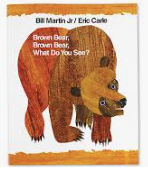
Brown Bear, Brown Bear, What Do You See? by Bill Martin Jr.

A classroom favorite that can be used to help reinforce colors as well as the importance of eyes.

Materials

  • Large blocks of frozen ice (freeze Tupperware’s ahead of time)
  •  Box of rock salt
  • Food coloring
  • Eyedroppers

Vocabulary

  • Glasses (those things people wear on their face to help them                    see better)
  • Ophthalmologist (a doctor who takes care of your eyes)

Before Reading the Story

Ask the children what we use our eyes for (to see things, to know what color it is, to read a book).  Share with the children some ways to keep your eyes safe (don’t rub them when something like sand gets inside, never look right at the sun, give your eyes plenty of rest at night).

Physical Health & Development/Health Status & Practices; builds awareness and ability to follow basic health and safety rules such as fire safety, traffic and pedestrian safety, and responding appropriately to potentially harmful objects, substances, and activities.

Reading the Story

This is such a nice predictable book that the children can easily join in the reading.

Literacy/Book Knowledge & Appreciation; shows growing involvement in listening to and discussing  a variety of ficvtion and non-fiction and poetry.

After Reading the Story

Cut out a shape for each child.  Use a variety of colors.  Give each child a color shape and tell them that they are going to go on a hunt to find something in the room that is the same color as their color shape. When everyone is back at the circle have them tell the color and the name of the object.

Approaches to Learning/Engagement & Persistence; grows in ability to persist in and complete a variety of tasks, activities, projects, and experiences.  AND Mathematics/Geometry & Spatial Sense; sows growth in matching, sorting, putting in a series, and regrouping objects according to one or two attributes such as color, shape, or size.

Discovery

 Ask the children if you can blindfold them. While blindfolded, have the children try a variety of activities such as putting several small objects into a container, picking up a pencil and drawing a picture, building with legos, buttoning a sweater, using a spoon to put cereal into their mouths, etc.  While they are trying these activities, talk to them about the importance of our eyes.  Remind them that our eyes allow us to see what we are doing and what things are.  People who cannot see with their eyes are blind.  Blind people need to learn about the world through their other senses.

Science/Scientific Skills & Methods; begins to participate in simple investigations to test observations, discuss and draw conclusions, and form generalizations.

Music and Movement

Chant the following poem, My Eyes Can See/Mis ojos pueden ver

            My eyes can see.                                     Mis ojos pueden ver
            My mouth can talk                                 Mi boca puede hablar
            My ears can hear                                    Mis oidos pueden o’ir
            My feet can walk.                                   Mis pies pueden andar
            My nose can sniff                                   Mi nariz puede olfatear
            My teeth can chew                                Mis dientes pueden masticar
            My lids can flutter                                  Mis parpados pueden pestanear
            My arms hug you                                    Mis brazos te pueden abrazar.

Have the children point to each body part as you read the poem slowly.  After repeating the poem, allow the children a moment to talk about their preferences of smell and taste if they choose.

Language Development/Listening & Understanding; demonstrates increasing ability to attend to and understand conversations, stories, songs, and poems.  AND Social & Emotional Development/Self-Concept; begins to develop and express awareness of self in terms of specific abilities, characteristics, and preferences,

Blocks

Use colored blocks to play today.  Encourage the children to name the colors as they build.  Can they sort the colors, build with only one color, make a color patterns?

Mathematics/Patterns & Measurement; shows increasing abilities to match, sort, put in a series, and regroup objects according to one or two attributes such as shape or size.

Art

Make cards that show a circle of red + circle of blue = ?    Make the cards to use the primary colors and also black and white.  Hang the cards  up beside the easel and let the children solve the color mysteries.

Science/Scientific Skills & Methods; begins to participate in simple investigations to test observations, discuss and draw conclusions. and form generalizations.

Library and Writing

Ask the children to think of an animal that they would like to draw.  Ask them what their favorite color is.  Give them a crayon in their favorite color and have them draw the animal.  Afterwards label their picture “________,_______ what do you see?  I see a (color)___(animal)___looking at me”.  These can be put together into your own class book.

Literacy/Book Knowledge & Appreciation; shows growing interest in reading-related activities, such as asking to have a favorite book read,; choosing to look at books; drawing pictures based on stories; asking to take books home; going to the library; and engaging in pretend-reading with other children.

If you have a camera you could let each child take a picture of something in the classroom.  On the top write, “______, ______what do you see”?  On the bottom write, “I see _______(a puzzle, the little doll, my lego car), that’s what I see”.

Literacy/Book Knowledge & Appreciation; shows growing interest in reading-related activities, such as asking to have a favorite book read,; choosing to look at books; drawing pictures based on stories; asking to take books home; going to the library; and engaging in pretend-reading with other children.

Sand and Water

 Put the large block of ice in the water table. Pour a little bit of rock salt over the top.  Put food coloring into small cups or bowls.  Show the children how to suck up the colored water into the eye dropper and then squeeze it out on top of the ice.  The colors will mix as the children experiment with the droppers.

Science/Scientific Skills & Methods; begins to use senses and a variety of tools and simple measuring devices to gather information, investigate materials, and observe processes and relationships.  AND Physical Health & Development/Fine Motor Skills; develops growing strength, dexterity, and control needed to use tools such as scissors, paper punch, stapler, and hammer.

Dramatic Play

Add sunglasses and glasses frames without the lenses.  Make a simple eye chart using a capital E facing up, down, left, and right.  The children can pretend to be an opthamologist and someone who needs glasses.

Creative Arts/Dramatic Play; participates in a variety of dramatic play activities that become more extended and complex.  AND Social & Emotional Development/Knowledge of Families & Communities; develops growing awareness of jobs and what is required to perform them.

Math and Manipulatives

 Sorting objects by color.

Mathematics/Geometry & Spatial Sense; shows growth in matching, sorting, putting in a series, and regrouping objects according to one or two attributes such as color, shape, or size.

Outdoor Play

Play I Spy by describing children and what they are doing. (I spy with my little eye someone digging in the sand with red pants and gym shoes on).  The child names the friend.

Approaches to Learning/Reasoning & Problem Solving; develops increasing abilities to classify, compare, and contrast objects, events, and experiences.

Transitions

Play I Spy with the children by describing objects in the room.  (I spy with my little eyes something that is made of plastic and it’s blue, and we sit on it at the table).

Approaches to Learning/Reasoning & Problem Solving; develops increasing abilities to classify, compare, and contrast objects, events, and experiences.
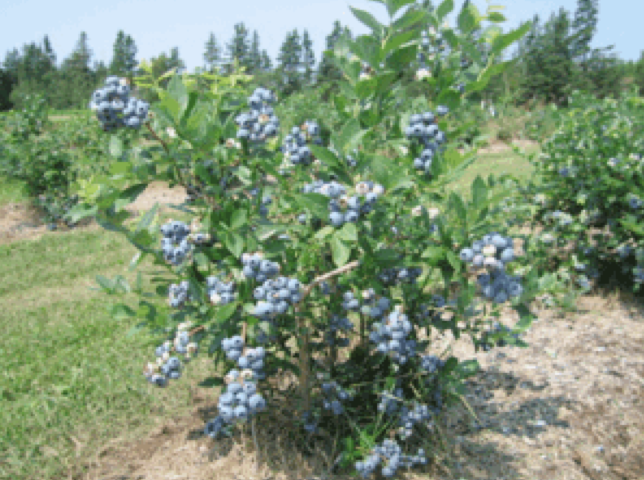
Blueberries for Sal, Robert McCloskey

What happens when a little girl and her mother go blueberry picking?  

Materials

  • A tin/metal bucket or bowl.   
  • Bubble solution and blowers
  • Blue food coloring
  • Variety of pictures of fruit plants to look at and discuss
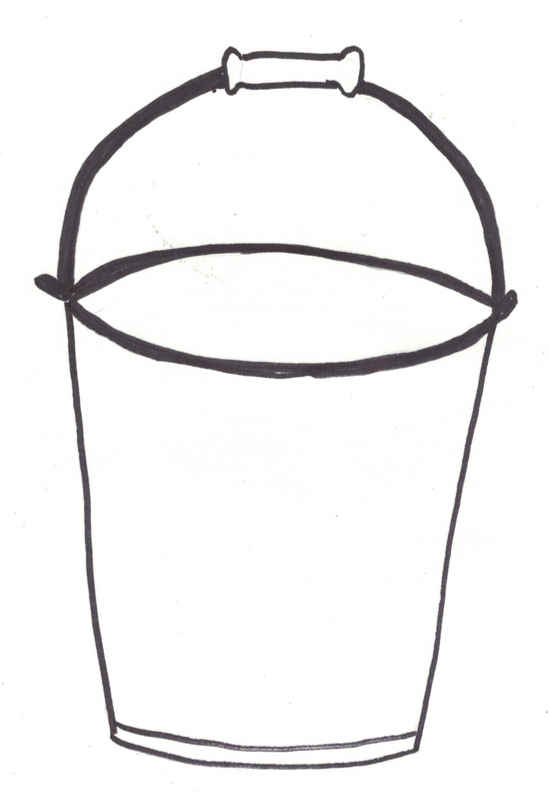
  • Picture of bucket for art
  • Dice

Vocabulary

  • Pail (another name for bucket)
  • Tin (a kind of metal)
  • Hustle (to hurry in a half walk and half run way)
  • Storing up food (eating extra because in the winter there will be none to eat)
  • Tremendous (very large)

Before Reading the Story

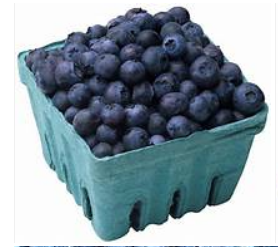
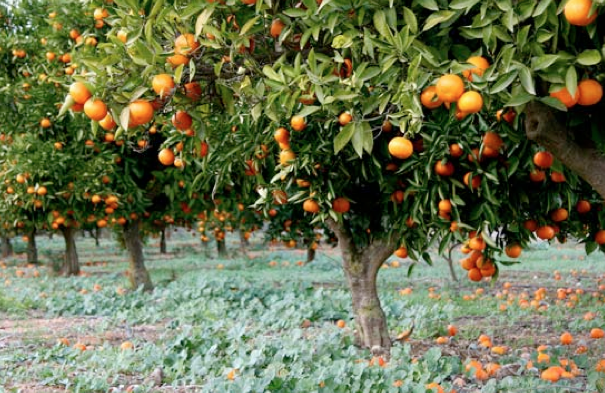
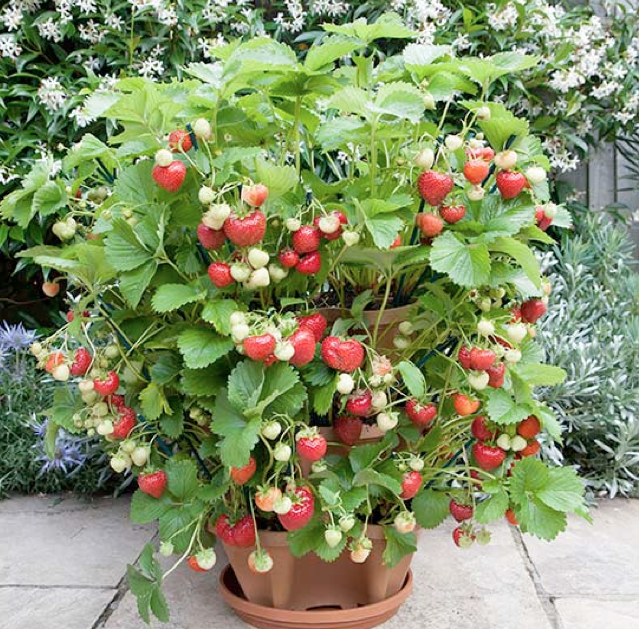
           Ask the children if they know where blueberries come from, do you think it is a fruit or a vegetable?   Ask them if they have ever picked their own blueberries or other fruit that perhaps grows in your area?  Look at the pictures of fruits on their plants and talk about how you would pick them, where they grow, and who likes to eat them.  Let the children share any experiences.  Explain that today’s story is about a crazy mix-up when a little girl goes with her mother to pick blueberries. 

Science/Scientific Knowledge; expands knowledge of and abilities to observe, describe, and discuss the natural world, materials, living things, and natural processes.

Reading the Story

            When you get to page 26 where Sal thinks it is her mother behind the rock, stop and ask the children if they can guess what they think is going to happen. 

Approaches to Learning/Reasoning & Problem Solving; grows in recognizing and solving problems through active exploration, including trial and error, and interactions and discussions with peers and adults.  AND Literacy/Book Knowledge & Appreciation; demonstrates progress to retell and dictate stories from books and experiences; to act out stories in dramatic play; and to predict what will happen next in a story.

After Reading the Story

            Ask the children questions about the story.  Why do you think Sal’s mother was afraid of little bear?  How do you think Sal felt when she was not sure where her mother was?  What do you think Sal and her mother made with the blueberries when they got home?  Who did Sal meet on Blueberry Hill? 

Literacy/Book Knowledge & Appreciation; demonstrates progress in abilities to retell and dictate stories from books and experiences; to act out stories in dramatic play; and to predict what will happen next in a story.  AND Approaches to Learning/Reasoning & Problem Solving; develops increasing abilities to classify, compare, and contrast objects, events, and experiences.
Discovery

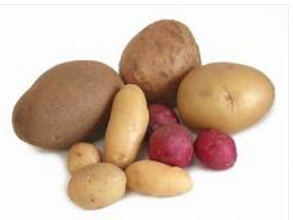
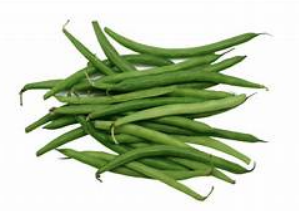
            Give the children pictures of a variety of fruits and vegetables to name and sort. 

Mathematics/Patterns & Measurement; shows growth in matching, sorting, putting in a series, and regrouping objects according to one or two attributes such as color, shape or size.

Art

            Give each child a small cup of bubble solution, which you have added 4-5 drops of blue food coloring.  The children can then blow bubbles at the bucket picture or a plain piece of white paper. As the bubbles pop on the paper they will leave a blue design.   Remind the children not to suck the bubble solution into their mouth. 

Creative Arts/Art; gains ability in using different art media and materials in a variety of ways for creative expression and representation.

Music and Movement

           Clap out simple clapping patterns and encourage the children to echo them back to you (clap, clap, hold clap). 

Mathematical Knowledge and skills; recognizes, duplicates, and extends simple patterns.

Sing The Bear Went Over The Mountain. https://www.youtube.com/watch?v=6-CGQXXNh0U.

The bear went over the mountain, The bear went over the mountain.

The bear went over the mountain   to see what he could see.

To see what he could see. To see what he could see.

The Bear went over the mountain to see what he could see.

And all that he could see, but all that he could see

Was the other side of the mountain, the other side of the mountain,

The other side of the mountain, was all that he could see.

Once the children have learned the melody, add musical instruments to accompany.

Creative Arts/Music; experiments with a variety of musical instruments.

Teach the children the poem, Time for Sleeping.

Now it’s time for sleeping,

 The bears go in their caves.

 Keeping warm and cozy,

 Time for lazy days.

 When the snow is gone,

 And the sun comes out to play

The bears will wake up from their sleep,

And then go on their way.

The children can act out the poem as you read it aloud.  You could use this poem to prepare to go outside or to transition to another part of your school.

Language Development/Listening & Understanding; demonstrates increasing ability to attend to and understand conversations, stories, songs, and poems. AND Approaches to Learning/Initiative & Curiosity; approaches tasks and activities with increased flexibility, imagination, and inventiveness. 

Sand and water

           Add blue food coloring to the water today and let the children scoop and pour water into buckets and small containers.  As the children are pouring, ask how many scoops from this container does it take to fill this other container/bucket.  Which container do you think will hold more water?

Mathematics/Number & Operations; begins to use language to compare numbers of objects with terms such as more, less, greater than, fewer, equal to.

Library and Writing

           Show the children how to roll play dough into tiny berry balls.  Have the children make many berry balls and then line them up on a piece of paper that has their name written on it.  (The children use the play dough to cover their names with berry balls) 

Literacy/Alphabet Knowledge; shows progress in associating the names of letters with their shapes and sounds.  AND Physical Health & Development/FIne Motor Skills; develops growing strength, dexterity, and control needed to use tools such as scissors, paper punch, stapler, and hammer.

Blocks

           Put several different size buckets or boxes into the block center.  Challenge the children to estimate how many blocks will fit into each container. Will more fit if the blocks are just tossed in or stacked neatly?  Do all the containers hold the same amount of blocks? 

Mathematics/Number & Operation; develops increasing abilities to combine, separate, and “name” how many concrete objects.

Dramatic Play

           Pretend to be cooking with blueberries today.  Give the children pieces of blue paper that they can rip or cut with scissors and put on the plates or in the pans to use as food.

Physical Health & Development/Fine Motor Skills; develops growing strength, dexterity, and control needed to use tools such as scissors, paper punch, stapler, and hammer.

Math and Manipulatives

           Give each child a bucket shape and show the children how to use blue or purple stamp pads to make “berries” with their finger. Have the children roll a dice and then add that many berries to their bucket.

Mathematics/Number & Operations; begins to make use of one-to-one correspondence in counting objects and matching groups of objects.  AND Mathematics/Number & Operations; begins to associate number concepts, vocabulary, quantities, and written numerals in a meaningful way.

Outdoor Play

            Give the children buckets and let them gather natural objects off your playground. (Our playground has many pine cones but you could gather leaves, pebbles, acorns, seed pods,etc).  Bring out magnifying glasses so the children can look closely at the objects they have collected.

Science/Scientific Skills & Methods; begins to use senses and a variety of tools and simple measuring devices to gather information, investigate materials, and observe natural processes and relationships.

Transitions

           Drop teddy bear counters or other hard objects into the metal bucket/bowl.  The children take turns listening to the number of items that were dropped (go kerplunk) in the bucket.  After trying their hand at listening and counting they may go to the next activity.

Mathematics/Number & Operations; begins to make use of one-to-one correspondence in counting objects and matching groups of objects.  AND Approaches to Learning/Engagement & Persistence; shows growing capacity to maintain concentration over time on a task, question, set of directions or interactions, despite distractions and interruptions.

Dear Parent, today we read a story about a little girl who went blueberry picking with her mother. As you prepare your supper tonight, take a moment and talk to your child about the fruits and vegetables that you are preparing.  Ask your child if he/she can name them and talk about how they grow (in a tree, on a vine, on a bush, under the ground.

Resources