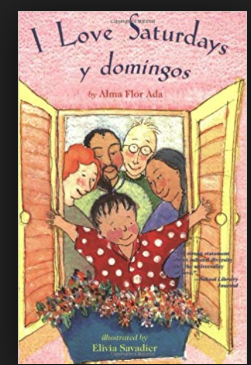
I Love Saturdays and domingos, by Alma FLor Ada

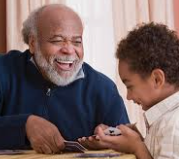
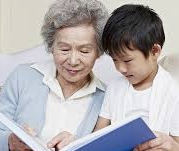
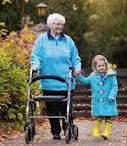
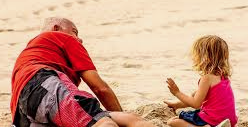
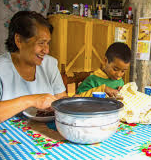
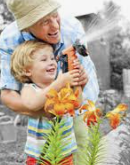
Most everyone enjoys the weekends.  In this story a little girl spends Saturdays with her grandparents who come from a European-American background and Sundays she spends with her grandparents who come from a Mexican-American background.  The activities they do are similar and yet different.  The little girl knows that both are good ways and that both sets of grandparents love her very much.

Materials

  • Gallon milk jug or piñata
  • People shaped cookie cutters or various sizes
  • Dollhouse if possible with furniture
  • Pictures of Grandparents and Grandchildren
  • Old and new pictures for sorting

Vocabulary

  • There are many Spanish words dispersed within the story. 
  • Abuelita y Abuelito  (Grandmother and Grandfather in Spanish)
  • Seashore (another word for the beach at the ocean)
  • Aquarium (a place where fish live)

Before Reading the Story

Ask the children if anyone has Grandparents who live by or visit them?  Allow the children to talk about their Grandparent experiences.  ( My Gradma came to my house for Christmas.  My Grandpa took me fishing).   Ask the children if anyone knows how they are related to you?  These are your parents, parents.  Your Mom and Dad are their babies, just like you are your Mom and Dad’s baby.

Language Development/Speaking & Communicating; develops increasing abilities to understand and use language to communicate information, experiences, ideas, feelings, opinions, needs, questions; and for other varied purposes.

Reading the Story

Practice reading the story so that you can properly pronounce the words in Spanish.  Invite someone who is bi-lingual to read the story for you today.

After Reading the Story

Go back through the pictures and talk about how each set of grandparents does something similar but a little different.  Explain that both ways are good because the little girl knows that each set of grandparents loves her very much.  After discussing all the things the grandparents did with the girl, ask the children to tell you something that they would like to do with a grandparent.  Write their answers on a sheet of paper and title it, My Grandparent List.  Hang it on the wall for parents to see.  (I wish my Grandma would bake me cookies, I wish my Grandparents would take me to the seashore).

Literacy/Print Awareness & Concepts; develops growing understanding of different functions of forms of print such as signs, letters, newspapers, lists, messages, and menus.

Discovery

Sort pictures of old and new objects.

Mathematics/Patterns & Measurement; shows increasing abilities to match, sort, put in a series, and regroup objects according to one or two attributes such as shape or size.

Music and Movement

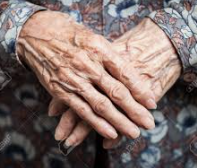
These are Grandma’s Spectacles finger play

These are Grandma’s spectacles , Make circles over eyes with fingers touching thumbs. And this is Grandma’s hat. Put hands on head to make a little hat. And here’s the way she folds her hands, Fold hands onto lap. To take a little nap. Rest chin on chest and pretend to snore.

Creative Arts/Music; participates with increasing interest and enjoyment in a variety of music activities, including listening, singing, finger plays, games, and performances.

Tell the children that you are going to pretend to go to Grandparents house.  Move across the room by jumping.  Have the children follow you.  Now take turns picking children to show other ways to move across the room to go to Grandparents home. (skip, backwards, crawl, tiptoe).

Physical Health & Development/Gross Motor SKills; shows increasing levels of proficiency, control, and balance in walking, climbing, running, jumping hopping, skipping, marching, and galloping.

Sing Mi Casa, My House  https://www.youtube.com/watch?v=NaTgmKVtf1o

Language Development/Listening & Understanding; understands an increasingly complex and varied vocabulary.

Sing We Are A Family by Jack Hartmann and teach the children the sign language that goes along.  https://www.youtube.com/watch?v=foptl0BeXnY

Language Development/Listening & Understanding; understands an increasingly complex and varied vocabulary.

Blocks

Encourage the children to build houses today for the people set.  Can they make beds and chairs that will fit the people from blocks?

Approaches to Learning/Reasoning & Problem Solving; develops increasing ability to find more than one solution to a question, task, or problem. AND Mathematics/Pattern & Measurement; shows progress in using standard and non-standard measures for length and area of objects.

Art

Cut or tear pictures of people from magazines and make a family collage.

Physical Health & Development/Fine Motor Skills; grows in hand-eye coordination in building with blocks, putting together puzzles, reproducing shapes and patterns, stringing beads, and using scissors.

Bring in various sizes of people cookie cutters for the children to use today.  As they play with the dough, talk to them about what they like to do with their family and grandparents.

Language Development/Speaking & Communicating; develops increasing abilities to understand and use language to communicate information, experiences, ideas, feelings, opinions, needs, questions; and for other varied purposes.

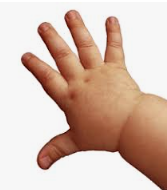
Allow the child to paint their hand using the easel paint and brushes.  Once their hand is covered with paint, they can make prints on the easel paper.  Suggest they paint their fingers different colors than their palm. Although this is messy, many children like this sensory experience.

Creative Arts/Art; begins to understand and share opinions about artistic products and experiences.

Sand and Water

Put damp sand in the table today along with small cars and boxes.  The children can pretend that the boxes are homes and drive their cars to Grandparents home. Ask them what they might see on the way to Grandparents home and encourage them to make these geographical structures in the sand. (When I go to Grandpa’s house there are mountains all around. My Grandparent lives near the lake).

Social & Emotional Development/Knowledge of Families & Communities; begins to express and understand concepts and language of geography in the contexts of the classroom, home, and community.

Library and Writing

Ask each child to tell you something that they like to, or would like to do, with their grandparent.  Write it on a piece of paper and then ask the child to illustrate it.  If they have no experience with a Grandparent, have them do the same activity using a parent of adult friend.

Literacy/Early Writing; begins to represent stories and experiences through pictures, dictation, and in play. AND Social & Emotional Development/Knowledge of Families & Communities; develops ability to identify personal characteristics, including gender and family composition.

Dramatic Play

Add pictures of Grandparents and Grandchildren to help stimulate play today.

Approaches to Learning/Initiative & Curiosity; grows in eagerness to learn about and discuss a growing range of topics, ideas, and tasks.

Bring in a variety of play telephones so the children can pretend to call their grandparents. Call out numbers for them to dial. Do they recognize the written numerals?

Mathematics/Number & Operations; begins to associate number concepts, vocabulary, quantities, and written numerals in meaningful ways.

Math and Manipulatives

Bring out the Unifix cubes and a dice today.  Have a child roll the dice and build a tower with that many Unifix cubes.  Go around the circle taking turns rolling the dice and adding that many cubes to their tower.  After five rolls, stop and compare the towers.  Who has the tallest tower? The shortest?  Do it again but this time have the children lay their stack down on the table as they build it.  Who has the longest, the shortest? Have the children count the number of Unifix cubes in their tower.

Mathematics/Geometry & Spatial Sense; builds an increasing understanding of directionality, order, and positions of objects, and words such as up, down, over, under, top, bottom, inside, outside, in front, and behind.

Outdoor Play

Trace around each child’s body using chalk on a sidewalk.  Let the children use the colored chalk to decorate their body if they choose. 

Social & Emotional Development/Self-Concept; begins to develop and express awareness of self in terms of specific abilities, characteristics, and preferences.

If possible, bring a piñata outside with you today.  Let the children take turns trying to hit it.  If you do not have a piñata, hang an empty gallon milk jug from a branch and pretend that it is a piñata.

Physical Health & Development/Gross Motor Skills; demonstrates increasing abilities to coordinate movements in throwing, catching, kicking, bouncing balls, and using the slide or swing.

Transitions

Play Name Something. Take turns asking the children something they like to do with their, parent, grandparent, friend, and alone.

Approaches to Learning/Reasoning & Problem Solving; develops increasing ability to find more than one solution to a question, task, or problem. AND Social & Emotional Development/Self-Concept; begins to develop and express awareness of self in terms of specific abilities, characteristics, and preferences.

Resources


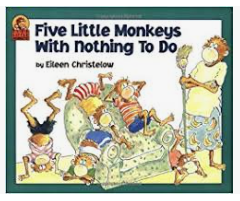
Five little Monkeys With Nothing To Do, by Eileen Christelow

            The five little  monkeys are bored but Mama keeps them busy helping to clean the house for Grandma Bessie.  When Grandma Bessie finally arrives, something is terribly wrong; I wonder who could have messed up the house?

Materials

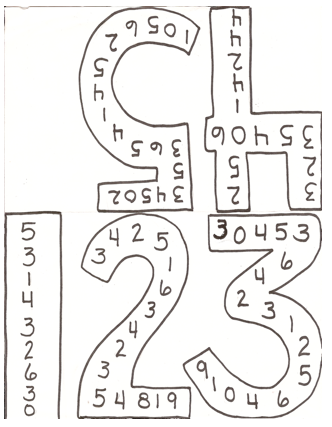
  • 1-5 shape search cards
  • Collect an assortment of food delivery boxes/liquor store boxes both large and small. 
  • Poster board with lines drawn from side to side six inches apart.

Vocabulary

  •             Swamp (where the ground is always wet and muddy)

Before Reading the Story

           Show the children the front of the book and ask if anyone knows what the mother is holding.  Ask “what you use a broom for”?  Have any of the children ever helped sweep the floor?  Ask what other kinds of chores do the children do at home?  Tell them that the story today is about five little monkeys who help get the house ready for their Grandma Bessie’s arrival.

Social & Emotional Development/Self-Concept; begins to develop and express awareness of self in terms of specific abilities, characteristics, and preferences.

Reading the Story

            Take your time so the children can really look at the pictures.  On page 24-31, ask the children what they see happening to the nice clean house. 

Literacy/Book Knowledge & Appreciation; shows growing interest and involvement in listening to and discussing a variety of fiction, non-fiction, and poetry.

After Reading the Story

            Ask the children who they think messed up the house.  Why is it important to clean up after ourselves?  How do we know where to put our toys at school?  (the shelves are labeled). 

Physical Health & Development/Health Status & Practices; builds awareness and ability to follow basic health and safety rules such as fire safety, traffic and pedestrian safety, and responding appropriately to potentially harmful objects, substances, and activities. AND Social & Emotional Development/Self-Control; demonstrates increasing capacity to follow rules and routines and use materials purposefully, safely, and respectfully.

Discovery

            Today would be a good day to review your hand washing techniques.  Put up a poster and observe that the children know how to follow the steps. 

Physical Health & Development/Health Status & Practices; shows growing independence in hygiene, nutrition, and personal care when eating, dressing, washing hands, brushing teeth, and toileting.

Music and Movement

            Do the classic finger play, 5 Little Monkeys Jumping on the Bed

5 little monkeys jumping on the bed, One fell off and bumped his head. Mamma called the Doctor and the Doctor said, No more monkeys jumping on the bed!

Continue to 4, 3, 2, 1.

Mathematics/Number & Operations; develops increasing ability to count in sequence to 10 and beyond.

Sing This Is The Way pantomiming different cleaning motions such as sweeping, making the bed, emptying the trash, washing the dishes. https://www.youtube.com/watch?v=f3PcUIbqKPg

Social & Emotional Development/Knowledge of Families & Communities; develops growing awareness of jobs and what is required to perform them.

Blocks

            Challenge the children to make shelves from the blocks to put center toys on for display.

Physical Health & Development/Fine Motor Skills; growis in hand-eye coordination in building with blocks, putting together puzzles, reproducing shapes and patterns, stringing beads, and using scissors.

Art    

            Finger paint directly onto the table.  Ask the children if they can draw a circle, square, triangle, house, etc.  Let the children help wash the table when you are all through.  This is a messy project but children seem to like the cleaning as much as the painting.  And cleaning up messes goes along so well with today’s story.

Social & Emotional Development/Knowledge of Families & Communities; develops growing awareness of jobs and what is required to perform them. AND Approaches to Learning/Engagement & Persistence; grows in abilities to persist in and complete a variety of tasks, activities, projects, and experiences.

Sand and Water

            In the story the monkeys went to the swamp where it is always wet and muddy.  Put dirt in the table today and let the children add water turning it to mud.

Science/Scientific Skills & Methods; begins to use senses and a variety of tools and simple measuring devices to gather information, investigate materials, and observe processes and relationships.

Library and Writing

           Make a copy of the 1-5 number cards and cover with contact paper, or print out a set for each child.  Ask the child to name the number of the card. Explain that the card has that many of the number hidden on it. Let the child circle to correct numbers, counting to make sure that on the number 4 card that they have circled four number 4’s, etc.

Mathematics/Number & Operations; begins to associate number concepts, vocabulary, quantities, and writen numerals in meaningful ways.

Dramatic Play

           Give the children damp paper towels and allow them to help clean the center, or better yet, the whole room!

Approaches to Learning/Engagement & Persistence; grows in abilities to persist in and complete a variety of tasks, activities, projects, and experiences.

Math and Manipulatives

            Cut out pictures of toys from educational catalogs.  Ask the children to glue them onto the shelves (poster board with lines).  Keep the shelves neat, glue on the lines.

Physical Health & Development/Fine Motor Skills; growis in hand-eye coordination in building with blocks, putting together puzzles, reproducing shapes and patterns, stringing beads, and using scissors. AND Language Development/Listening & Understanding; shows progress in understanding and following simple and multiple-step directions.

Outdoor Play

           Fold or tape the ends of the boxes you collected so that it will remain closed.  Let the children use these as large blocks for building outside.  The more boxes you have, the better the creative building.

Transitions

            Ask the children what they would like to do and have them tell you using full sentences.  (OK little monkey Kerry, what are you going to do when we get outside?)

Language Development/Speaking & Communicating; progresses in clarity of pronunciation and towards speaking in sentences of increasing length and grammatical complexity.

enlarge and cut out each individual number shape

Feast for 10, by Cathryn Falwell

            This family is off to the grocery store to get all the fixings for a special feast.  Follow them through the store as they pick out the foods they will need.

Materials

  • Ahead of time send a note home asking parents to send in empty clean food packages of their child’s favorite food items.
  • Grocery cart picture
  • Grocery store flyers
  • Paper or fabric grocery bags

Vocabulary

  • Feast (a large special meal where everybody comes together to eat)
  • Prepare (to get something ready)
  • Plump (a little bit fat)
  • Pie (a baked dessert with a crust)

Before Reading the Story

           Ask the children who they eat their meals with at home (I eat with the TV set on, I eat with my brother, I eat with my family).  Hold up the book and ask the children if they can tell where the family is.  Ask the children why people go to the grocery store (To buy food, to get candy).  How do you remember what you need to buy at the grocery store? (My Mom does, you write it down).

Language Development/Speaking & Communicating; progresses in abilities to initiate and respond appropriately in conversation and discussion with peers and adults. AND Social & Emotional Development/Knowledge of Families & Communities; develops ability to identify personal characteristics, including gender and family composition.

Reading the Story

            As you read, draw attention to the numbers found on each page.

Mathematics/Number & Operations; begins to associate number concepts, vocabulary, quantities, and written numerals in meaningful ways.

After Reading the Story

Put many plastic foods into a basket.  Recite the following poem as you give children a turn to follow your directions.

A tisket, a tasket, a lovely shopping basket.

Can you find the carrot?  The carrot?  The carrot?

(pick different foods for the children to find in the basket)

Language Development/Listening & Understanding; shows progress in understanding and following simple and multiple-step directions.

Discovery

           Hang a food pyramid near your lunch table. When your meal comes, talk to the children about where each food item belongs on the pyramid.

Physical Health & Development/Health Status & Practices; builds an awareness of basic health and safety rules such as fire safety, traffic and pedestrian safety, and responding appropriately to potentially harmful objects, substances, and activities.

Music and movement

           Teach the children the tune to Choo’n Gums’ verse https://www.youtube.com/watch?v=lUXN0yynPxI

My Mother gave me a nickel,

To buy a pickle

But I didn’t buy a pickle

I bought some chewing gum

 (Give each child a food picture and when it’s their turn they can name the food picture they have.  Pass a nickel around as you sing the song)

Language Development/Listening & Understanding; understands an increasingly complex and varied vocabulary.

Sing to chorus of Take Good Care of Yourself. https://www.youtube.com/watch?v=wOS5eNg4J-4

Physical Health & Development/Health Status & Practices; builds an awareness of basic health and safety rules such as fire safety, traffic and pedestrian safety, and responding appropriately to potentially harmful objects, substances, and activities.

            Ask the children if they can curl like spaghetti, wiggle like jello, melt like a ice cream, and be sticky like peanut butter.

Approaches to Learning/Reasoning & Problem Solving; develops increasing ability to find more than one solution to a question, task, or problem. And Language Development/Listening & Understanding; understands an increasingly complex and varied vocabulary.

Blocks

           Bring in some clean and empty food containers (box of cereal and can of beans).  Let the children add these to their blocks to build with.  Encourage them to read the letters on the various labels.

Physical Health & Development/Fine Motor Skills; grows in hand-eye coordination in building with blocks, putting together puzzles, reproducing shapes and patterns, stringing beads, and using scissors. AND Literacy/Alphabet Knowledge; identifies at least 10 letters of the alphabet, especially those in their own name.

Art

            Give children a grocery cart page.  They can either draw foods in the basket or cut from magazines.

Physical Health & Development/Fine Motor Skills; grows in hand-eye coordination in building with blocks, putting together puzzles, reproducing shapes and patterns, stringing beads, and using scissors. AND Literacy/Early Writing; begins to represent stories and experiences through pictures, dictation, and in play.

Library and Writing

            Work with the children to cut out the labels from the food packages that the children bring in.  Mount them to the wall and label it Our Favorite Foods.  Hang a nutrition pyramid beside it and help the children locate where the foods go on the pyramid.

Physical Health & Development/Fine Motor Skills; grows in hand-eye coordination in building with blocks, putting together puzzles, reproducing shapes and patterns, stringing beads, and using scissors. AND Physical Health & Development/Health Status & Practices; builds an awareness of basic health and safety rules such as fire safety, traffic and pedestrian safety, and responding appropriately to potentially harmful objects, substances, and activities.

Sand and Water

            Put plastic fruits and vegetables in the water table for the children to wash.

Social & Emotional Development/Cooperation; increases abilities to sustain interactions with peers by helping, sharing, and discussion.

Dramatic Play

           Add grocery lists. (What would you like to buy at the grocery store today? What kinds of items does your parent buy?) Add grocery store flyers and coupons.  Add some brown paper grocery sacks.    If you have enough food packages you could set up a small grocery store.

Literacy/Early Writing; develops understanding that writing is a way of communicating for a variety of purposes. AND Social & Emotional Development/Self-Concept; begins to develop awareness of self in terms of specific abilities, characteristics, and preferences.

Math and Manipulatives

           Let the children look for numbers on the grocery store fliers.  Have them look for the number of the year old they are and circle it with a marker. How many numbers can they name by sight?

Mathematics/Number & Operations; demonstrates increasing interest and awareness of numbers and counting as a means for solving problems and determining quantity.

Outdoor Play

            Dampen the sand and make a feast with lots of sand cakes.

Creative Arts/Dramatic Play; participates in a variety of dramatic play activities that become moore extended and complex.

Transitions

            Have the children try to recall the foods that the family bought in the grocery store.

Literacy/Book KNowledge & Appreciation; demonstrates progress in abilities to retell and dictate stories from books and experiences; to act out stories in dramatic play; and to predict what will happen next in a story.

This is a good story to read before going on a grocery store field trip.  Go and buy the items you need to purchase a cooking project.

Resources