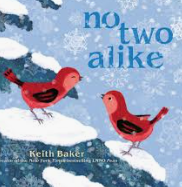
No Two Alike, by K. Baker

Two little birds fly through a winter’s’ day noting that all things are different, no two are just alike.

Materials

  • Patterns to make birds
  • Shape cut outs, enough for every child in your classroom to have one.  Each cutout needs to be different from any other (think different colors, one might have stripes, etc).  Take each shape cut out, and cut it in half.  Keep the sets of shape cut outs in two piles.
  • The day before, freeze food colored water into ice cube trays. 

Vocabulary

Before Reading the Story

Put a line of tape down the middle of your circle/group area. Label one side Yes and the other side No. Tell the children that you are going to play a yes or no listening game. Ask questions that are either yes or no. The children must go and stand on the side of the tape line that goes along with their answer. (Do you have a pet or no pet? Did you take a shower last night? Do you have a big brother or no big brother? Do you like meatloaf?, Are you wearing the color blue?).

Language Development/Listening & Understanding; understands an increasingly complex and varied vocabulary.

Reading the Story

On the very last page where the two feathers are floating through the air, stop and ask the children if they can see how they are almost alike, but not quite.

Language Development/Listening & Understanding; demonstrates increasing ability to attend to and understand conversations, stories, songs, and poems.

After Reading the Story

Hold up an Almost Alike card set from the resources.  Say, “No two alike, almost but not quite”.  Then ask the children to tell you what they see that is different.

Approaches to Learning/Reasoning & problem Solving; develops increasing abilities to classify, compare, and contrast objects, events, and experiences.

Discovery

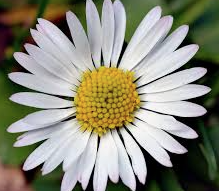
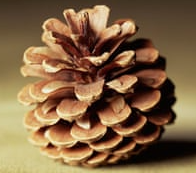
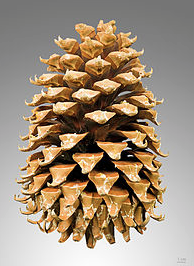
Bring in a collection of some natural object found in your region (acorns, rocks, flowers, shells).  Put these out with a magnifying glass for the children to look at and compare how the are alike and different.

Science/Scientific Skills & Methods; develops increased ability to observe and discuss common properties, differences, and comparisons among objects and materials. AND Approaches to Learning/Reasoning & Problem Solving; develops increasing abilities to classify, compare, and contrast objects, events, and experiences.

Music and Movement

https://www.youtube.com/watch?v=FClGhto1vIg  Sing one of these things is not like the other Verse.  Then ask the children to help tell which one is different.  Use items that are similar in your classroom.

Science/Scientific Skills & Methods; develops increased ability to observe and discuss common properties, differences, and comparisons among objects and materials.

Get your shape cut outs.  Tape one half of them onto the floor throughout the room.  Put the other half into an empty basket or cubby.  Have the children pick a shape half out of the basket.  Tell the children that when you put the music on they are to walk around the room looking for the other half of their shape cut out.  Remind them that though there might be 5 circles, no two are exactly alike so they need to look carefully at their shape cut out.  Put the music on, giving the children ample time to look around the room for their half of the shape cut out.  Turn the music off and the children must go and stand on their shape.  Check to make sure everyone is on the correct shape cutout.  Gather the half shapes the children are holding and pass them out to different children.  Play as long as the children are interested.

Language Development/Listening & Understanding; shows progress in understanding and following simple and multiple-step directions.

Blocks

Challenge the children to build alike structures by taking turns adding a block to their own structure and then the next child copies it.  The second child then adds a new block to his structure and the first child copies it.  Encourage the children to go back and forth like this for a minimum of 5 exchanges.  When they are finished, ask are they just alike or not quite?

Social & Emotional Development/Cooperation; develops increasing abilities to give and take in interactions; to take turns in games or using materials; and to interact without being overly directive or submissive.

Art

Ahead of time, cut out the patterns to make birds.  Put these on the table along with your glue.  Let the children collage using the varied shapes to make birds in any manner that they choose. Add markers to embellish.

Creative Arts/Art; progresses in abilities to create drawings, paintings, models, and other art creations that are more detailed, creative, or realistic.

Sand and Water

Add the food colored ice cubes to the water table today with water.  As the children play, ask them to observe what is happening to the ice cubes and to the water around the ice cubes. 

Science/Scientific Methods & Skills; begins to participate in simple investigations to test observations, discuss and draw conclusions, and form generalizations.

Library and Writing

Let the children practice writing their name today.  Note how everyone’s name is different and everyone writes their letters a little different from each other.  No two are alike.

Literacy/Early Writing; progresses from using scribbles, shapes, or pictures to represent ideas, to using letter-like symbols, to copying or writing familiar words such as their own name.

Dramatic Play

Put out the baby dolls today.  As the children care for their dolls, ask them if they can see how they are alike and how they are different. (My baby is littler that his.  My baby is soft and yours is hard.  My baby has dark skin like Julian and your baby has white skin like me.  My baby gots eyes that close).

Approaches to Learning/Reasoning & Problem Solving; develops increasing abilities to classify, compare, and contrast objects, events, and experiences.

Math and Manipulatives

Play an adding game with the children.  Use cubes or counters to make different addition equations. (Here are three red bears plus 2 blue bears. How many bears in all)?

Mathematics/Number & Operations; develops increased abilities to combine, separate, and name “how many” concrete objects.

Outdoor Play

Bring out the parachute or a large bed sheet.  Have everybody hold along the edges so that you can make the parachute go up and down by moving your arms up and down.  Say the following; (Child, Child what do you say?  Run/Jump/Gallop round the chute today.  The child then follows the direction and runs around the parachute.  You could also say to run under the chute today.

Language Development/Listening & Understanding; shows progress in understanding and following simple and multiple-step directions. AND Physical Health & Development/Health Status & Practices; participates actively in games, outdoor play, and other forms of exercise that enhance physical fitness.

Transitions

Continue using the Almost Alike cards as directed in After Reading the Story.

Approaches to Learning/Reasoning & problem Solving; develops increasing abilities to classify, compare, and contrast objects, events, and experiences.

Resources

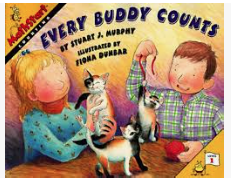
Every Buddy Counts, by Stuart J. Murphy

            What do you do when you wake up feeling lonely, crummy, yucky, and sad?  Count your friends and you will feel better!  This is a nice counting book to share with your children.

Materials

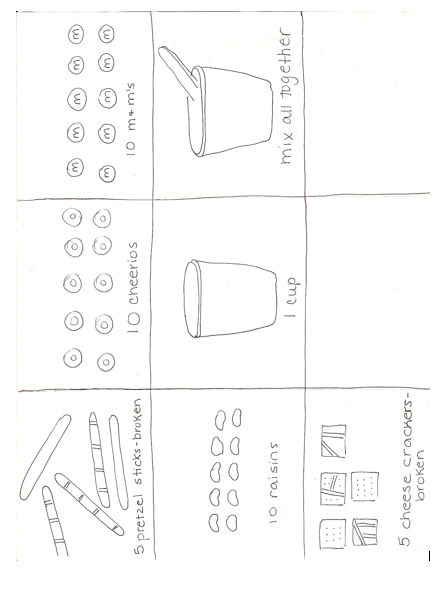
  • Rebus Gorp recipe cards
  • Gorp ingredients for the class
  • Dice

Vocabulary

  • More and less

Before Reading the Story

           Do several fingerplays or songs that require some counting (5 Little Ducks, 1,2,3,4,5 I Caught a Fish Alive).

Mathematics/Number & Operations; develops increasing ability to count in sequence to 10 and beyond.

Reading the Story

            As you read the book, stop and have the children help count (Example; On the page for 7, count the aunts and uncles and the cars.  Are there more people or more cars?  On the eight page after counting the playmates, ask what the girl is holding in her hand, What is it used for?)

Literacy/Book Knowledge & Appreciation; shows growing interest and involvement in listening to and discussing a variety of fiction and non-fiction and poetry. AND Mathematics/Number & Operations; begins to make use of one-to-one correspondence in counting objects and matching groups of objects.

After Reading the Story

            Bring in a dice.  Take turns rolling the dice and having the children count how many dots.  Then let the child choose a movement for everyone to do that many times. (Kerry you rolled 3.  Kerry wants to do 3 kicks, everybody kick and count 1,2,3.)

Mathematics/Number & Operations; begins to make use of one-to-one correspondence in counting objects and matching groups of objects. AND Physical Health & Development/Health Status & Practices; participates actively in games, outdoor play, and other forms of exercise that enhance physical fitness.

Discovery

            Make gorp using the rebus cards to count out ingredients.

Literacy/Print Awareness & Concepts; develops growing understanding of different functions of forms of print such as signs, letters, newspapers, lists, messages, and menus. AND Mathematics/Number & Operations; begins to make use of one-to-one correspondence in counting objects and matching groups of objects.

Music and Movement

            Have the children start in a squatting position and begin to count 1-10.  As they count, they begin to stand up slowly until they get to 10 and are on tip toe with hands in the air.  Now start a 10 and work down to 1 getting smaller and smaller as they count.

Mathematics/Number & Operations; develops increasing ability to count in sequence to 10 and beyond.

            Teach the children the finger play 1,2,3,4,5 I Caught a Fish Alive.

           1,2,3,4,5                                    Hold up fingers as you count

           I caught a fish alive                      Point towards yourself

           6, 7, 8,9,10                                Hold up fingers as you count

           Then I threw him back again!    Pretend to throw fish

           What made you let him go?         Shrug shoulders up

           Because he bit my finger so!        Hands on hips with mad face

           Which finger did he bite?             Look of  surprise

           The little pinkie on the right        Hold up little pinkie and look sad

Language Development/Listening & Understanding; demonstrates increasing ability to attend to and understand conversations, stories, songs, and poems.

Blocks

          Challenge the children to make a set of stairs using 10 blocks.  What else can you make using only 10 blocks?

Approaches to Learning/Reasoning & Problem Solving; develops increasing ability to find more than one solution to a question, task, or problem.

Art

            Have the children trace around their hands, or they can trace around their friends hands.  Encourage them to embellish their hands with fingernails, rings, and bracelets or watches at the wrist.  When they are finished decorating their hands, show them how to write the numbers 1-10 and put a number above each finger.

Literacy/Early Writing; experiments with a growing variety of writing tools and materials, such as pencils, crayons, and computers. AND Mathematics/Number & Operations; begins to associate number concepts, vocabulary, quantities, and written numerals in meaningful ways.

Library and Writing

            Put out a variety of flannel board shapes and let the children make patterns or count.

Mathematics/Patterns & Measurements; enhances abilities to recognize, duplicate, and extend simple patterns using a variety of materials.
Sand and Water

            Put sand or water in the table.  Ask the children to use a measuring cup and count how many scoops it takes to fill a bowl.  Use several size measuring cups and a variety of containers to fill.  Which containers hold the most?  Which container holds the least?

Mathematics/Number & Operations; begins to use language to compare numbers of objects with terms such as more, less, greater than, fewer, equal to.

Math and Manipulatives

            Make a counting book with the children.  Give each child a paper with a number on it.  The children can draw or cut out pictures of objects to represent their number.  Do numbers 1-10.

Mathematics/Number & Operations; begins to make use of one-to-one correspondence in counting objects and matching groups of objects.

Dramatic Play

            Have the children set the table for two, three, and four.  They will have to count to make sure they have enough dishes and silverware.

Mathematics/Number & Operations; begins to make use of one-to-one correspondence in counting objects and matching groups of objects.

Outdoor Play

           Play Mother-May-I?  All the children stand at one side of the area.  The children take turns asking “Mother may I take (3) (jumps)?  Mother then says yes, or no you may only take (2) jumps.  The children work their way across to the other side of the play yard counting different movements. (Slides, tippy toe walks, giant steps, skips, jumps, twirls).

Mathematics/Number & Operations; begins to make use of one-to-one correspondence in counting objects and matching groups of objects. AND Physical Health & Development/Gross Motor Skills; shows increasing levels of proficiency, control, and balance in walking, climbing, running, jumping, hopping, skipping, marching, and galloping.

Transitions

            Have the children count how many steps it takes to get from point A to point B.

Mathematics/Number & Operations; demonstrates increasing interest and awareness of numbers and counting as a means for solving problems and determining quantity.

Cut out and put into order for children to follow recipe for Gorp

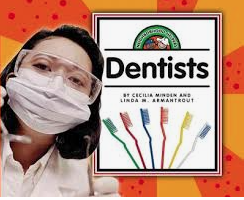
Dentists, by Cecila Minden

            This book answers the Who, What, When, Where, and Why of being a dentist.  This is a good book to use for further study of dentists.

Materials

  • Vinegar
  • Baking soda
  • Small bowls
  • Old toothbrushes
  • 3-4 dirty pennies per child
  • Camera
  • Pictures of foods cut from magazines, off the Internet, or from a nutrition set

Vocabulary

  • Pediatric (a doctor whose patients are only children)
  • Cavity (a hole that occurs in your tooth from decay and not brushing)
  • Explorer (the pick like tool that dentists use)
  • Operatory (the special room that you see the dentist in that has his tools)

Before Reading the Story

           Begin a discussion about the many different kinds of jobs that are in your area.  Ask the children what they think they would like to be.  If no one says they want to be a dentist, ask them if they ever thought that a dentist would be a good job to have?  Introduce the book.

Social & Emotional Development/Knowledge of Families & Communities; develops awareness of jobs and what is required to perform them.

Reading the Story

            This book has a lot of information that might be too much for preschool aged children.  Use this to do a picture walk and touch upon highlights on each page.  When the book talks about the education needed to be a dentist, make sure to tell the children that they have to continue to work hard at school and let them know that you are proud of them. 

Literacy/Book Knowledge & Appreciation; shows growing interest and involvement in listening to and discussing a variety of fiction and non-fiction books and poetry.

After Reading the Story

            Go back through the pages with the children asking who, what, where, when, and why questions and see which children are able to answer.  

Literacy/Book Knowledge & Appreciation; demonstrates progress in abilities to retell and dictate stories from books and experiences; to act out stories in dramatic play; and to predict what will happen next in a story. And Physical Health & Development/Health Status & Practices; builds awareness and ability to follow basic health and safety rules.

Discovery

Pour a small amount of baking soda and vinegar into several bowls to make a paste like consistency.  Have the children drop 3-4 dirty pennies into the baking soda and vinegar mixture.  Show them how to use the toothbrush to scrub the penny.  The combination of baking soda and vinegar will begin to clean the penny.  Talk about how the mixture is like your toothpaste and the penny is like your teeth.  Make the pennies shine. 

Science/Scientific Skills & Methods; begins to use senses and a variety of tools and simple measuring devices to gather information, investigate materials, and observe processes and relationships. AND Physical Health & Development/Fine Motor Skills; develops growing strength, dexterity, and control needed to use tools such as scissors, paper punch, stapler, and hammer.

Music and Movement

           Sing the Toothbrush Song to the tune of Here We Round the Mulberry Bush. https://www.youtube.com/watch?v=UFrEVhOPwvc

We use our toothbrush to clean our teeth, clean our teeth, clean our teeth.

We use our toothbrush to clean our teeth after we eat.

Physical Health & Development/Health Status & Practices; builds awareness and ability to follow basic health and safety rules.

            Have the children sit in a circle and put on some lively music.  The children can pass a toothbrush around the circle and when the music stops the child holding the toothbrush must name something that you use your teeth for.  Expect children to repeat answers, which is o.k. because they are understanding that teeth are important.  If the children cannot think of something that they use their teeth for you can pantomime eating, chewing, talking, smiling, and biting. 

Approaches to Learning/Reasoning & Problem Solving; develops increasing ability to find more than one solution to a question, task, or problem.

Art

            Show the children how to form cubes with play dough by squeezing a ball on the sides and top.  Encourage the children to make a row of play dough cubes and gently stick them together.  Give the children Popsicle sticks or toothpicks and tell them to pretend that these are the “explorer” that the dentist uses.  Poke between the teeth, on top of the teeth, underneath the teeth. 

Creative Arts/Dramatic Play; shows growing creativity and imagination in using materials and in assuming different roles in dramatic play situations. AND Approaches to Learning/Engagement & Persistence; grows in abilities to persist in and complete a variety of tasks, activities, projects, and experiences. AND Mathematics/Geometry & Spatial Sense; builds an increasing understanding of directionality, order, and positions of objects, and words such as up, down, over, under, top, bottom, inside, out-side, in front, and behind.

Library and Writing

            Remind the children that Dentists have to be good readers and writers.  On index cards write the word Dentist and tooth.  Encourage the children to copy the words onto a piece of paper. 

Literacy/Early Writing; progresses from using scribbles, shapes, or pictures to represent ideas, to using letter-like symbols, to copying or writing familiar words such as their own name.

Make a book titled, “Whose Teeth?”  Take two pictures of the child.  One will be a picture of the child’s face as he/she is smiling.  The other will be just of the child’s smile so that you can see minimal amount of the face.  On the front page put the picture of the smile only and write, “Whose smile?”  On the back of the page put the picture of the child’s smiling face.  Ask the children to tell you something that makes them smile and write it under their picture.  (I smile when my Mom makes me pizza!  I smile when my Grandpa comes to my house). 

Language Development/Speaking & Communicating; develops increasing abilities to understand and use language to communicate information, experiences, ideas, feelings, opinions, needs, questions; and for other varied purposes.

Blocks

            Challenge the children to use the blocks to make a letter T for tooth and a letter D for Dentist. Encourage them to try to make letters in their names.  

Literacy/Alphabet Knowledge; shows progress with associating th names of letters with their shapes and sounds.

Dramatic Play

            Give the children some of the materials that you use at large group time (dry erase board, flannel board, an attendance sheet, etc.) and let the children play school. 

Creative Arts/Dramatic Play; participates in a variety of dramatic play activities that become more extended and complex.

Math and Manipulatives

            On a piece of paper draw a tooth and give it a happy face.  On another piece of paper draw a tooth and give it a sad face.  Let the children use the pictures of food that you have brought and sort them by food that is good for your teeth on the happy tooth and food that is not good for your teeth on the sad tooth. 

Mathematics/Patterns & Measurement; shows growth in matching, sorting, putting in a series, and regrouping objects according to one or two attributes such as shape or size.

Outdoors

           Look for small rocks on the playground that look kind of like teeth.  Collect them in a bucket.  At the end of your outdoor time, help the children to count the number of ‘teeth’ that you have collected. 

Mathematics/Number & Operations; begins to make use of one-to-one correspondence in counting objects and matching groups of objects.

Transitions

            As children leave to go to the next center, ask them if they think they might like to be a dentist, make a graph of yes and no. 

Mathematics/Number & Operations; begins to associate number concepts, vocabulary, quantities, and written numerals in meaningful ways. AND Social & Emotional Development/Self-Concept; begins to develop and express awareness of self in terms of specific abilities, characteristics, and preferences.

As the children go to brush their teeth today say the following poem from the Colgate web site.

(Kerry’s)/_______ off the brush his/her teeth

The front, the sides, the back

He’ll/she’ll clean away and move away

The yucky, yucky plaque.

Dear Parent-

           Today we learned about what it takes to become a Dentist.  Ask your child if they think they would like to become a Dentist.  If they say yes, ask them why?  If the say no, ask them if they know what they would like to become?