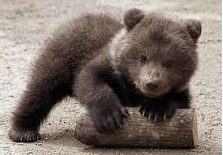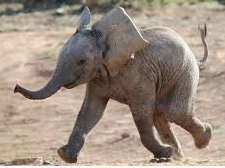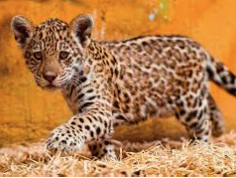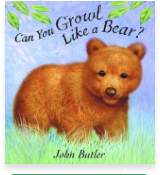
Can You Growl Like A Bear? By John Butler

The illustrations are both large and lovely allowing the children to get a close up view of a variety of animals.  The children will enjoy making the animals noises as you read through the pages.   My classroom enjoyed using this book before naptime as the children and animals settle down for sleep.

Materials

  • Pictures of animals
  • A scarf for each child
  • Several boxes shoebox sized to one large enough a child could sit in
  • Counting bear instruction sheet. Make several copies

Vocabulary

  • Tramping (walking with big heavy steps)
  • Basking  (lying in the sun enjoying how it feels)
  • Slinking  (creeping, tiptoeing)

Before Reading the Story

Go through the book ahead of time and make sure you have thought how you will present each animal sound to the children.

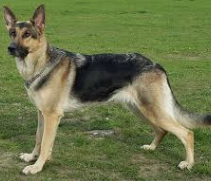
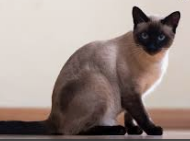
Make up riddles about animals that the children are familiar with. Give several hints and then use the animals’ voice/sound as the final clue. (I’m thinking of an animal that likes to be pet, has long whiskers, and says meow. I’m thinking of an animal that lives near the water and catches insects with its long tongue. It says rivett).

Approaches to Learning/Reasoning & Problem Solving; develops increasing abilities to classify, compare, and contrast objects, events, and experiences.

Reading the Story

On the very first pages where the author asks us to “Listen to the animals…Speak up loud and clear”, ask the children if they can name all the animals on the two pages.  After each page, stop and allow the children to make the animal noises as they present themselves on each page.  Give the children an opportunity to comment about any animal page (I saw an elephant at the zoo and he was really, really, big).

Approaches to Learning/Initiative & Curiosity; grows in eagerness to learn about and discuss a growing range of topics, ideas, and tasks.

After Reading the Story

Tape the pictures of the real animals onto the flannel board.  Keep them in an orderly fashion and close together as you are going to cover all the pictures and remove one so the children cannot see which you have removed.  Show the children the board with one removed; can anyone identify the removed animal?  When it has been identified, have all the children make the animals sound and continue playing Who’s Missing? Until the children grow tired of it.

Language Development/Speaking & Communicating; uses an increasingly complex and varied spoken vocabulary.

Discovery

Put the book and the picture cards from After Reading the Story into the center today for the children to look at and talk about.  Add any other animal picture cards that you might have.  Ask the children to sort the cards by those animals with four few and those who do not have four feet, those with fur, or those that are carnivores.

Mathematics/Patterns & Measurement; shows growth in matching, sorting, putting in a series, and regrouping objects according to one or two attributes such as shape or size.

Music and Movement

In the book the bear was rolling in the snow.  Put out a nap mat, large pillow, etc. and tell the children that they are going to do rolls like a bear in the snow.  Have one child at a time come up and roll across the nap mat/pillow.  After they have had a turn rolling, ask if anyone would like to try to do a somersault?  https://www.google.com/search?client=safari&rls=en&ei=lGYPXdm2OeHl_Qbo-br4Bw&q=how+to+do+a+somersault+kid&oq=how+to+do+a+somersault&gs_l=psy-ab.1.1.0l10.3413.10293..12878…0.0..0.101.1557.21j1……0….1..gws-wiz…..0..0i67j0i131.lISOND5GaPE#kpvalbx=1    You might have to help a child by gently pushing them over once they are in a safe position.

Physical Health & Development/Health Status & Practices; progresses in physical growth, strength, stamina, and flexibility.

Find a CD that has a variety of musical tempos.  Give each child a scarf to hold and turn on the music.  Show the children how to use the scarf to move up and down to the music.  Can they make a circle with the scarf above their head that moves with the music?  What other ways can they use to scarf and move to the music?  Can they throw the scarf up in the air and catch it?  Explore using scarfs to music.

Creative Arts/Movement; shows growth in moving in time to different patterns of beat and rhythm in music.

Blocks

Put out any wild animals you have today and encourage the children to make a zoo.  Can they put all the like kinds of animals in one pen?  Which pen has the most animals?  Which has the least? 

Mathematics/Patterns & Measurement; shows growth in matching, sorting, putting in a series, and regrouping objects according to one or two attributes such as shape or size. AND Mathematics/Number & Operations; demonstrates increasing interest and awareness of numbers and counting as a means for solving problems and determining quantity.

Art

If you have plastic animal stencils tape these to your easel paper today.  The children can fill in the shapes with paint.

Sand and Water

Put dry sand in the table today and add any small objects that you have that are made with metal (colored disks with metal edges, magnet marbles, magnet alphabet letters/numbers, old keys, or large washers).  Bury the objects in the sand and give the children magnet wands to search through the sand for objects.  Put out a small bowl for them to put their collection into.  If using letters/numbers, can the child identify the items that they found in the sand?  If using disks/washers, can the child count how many objects they found in the sand?

Mathematics/Number & Operations; begins to use one-to-one correspondence in counting objects and matching groups of objects. AND Literacy/Alphabet Knowledge; identifies at least 10 letters of the alphabet, especially those in their own name.

Library and Writing

Play word lines with the children.  Give each child a piece of blank paper and a marker.  Explain that you are going to practice making lines that go from the left side of the paper to the right side of the paper.  On each child’s paper mark an L for the left, and an R for the right.  Now tell them that they are going to have to listen carefully for the direction and then make a line as you call it.  You should do the same thing so that the children can have a model.  Say, draw a line from L-R that is dotted.  Draw a line from L-R that is wavy.  Continue making different kinds of lines.  You can then have the children take turns suggesting what kinds of lines to draw. Kinds of lines include; dotted, wavy, thin, zigzag, diagonal, straight, curved, spiral, thick, parallel, straight, vertical, horizontal.

Language Development/Listening & Understanding; shows progress in understanding and following simple and multiple-step directions. AND Language Development/Listening & Understanding; understands an increasingly complex and varied vocabulary . AND Literacy/Early Writing; experiments with a growing variety of writing tools and materials, such as pencils, crayons, and computer.

Dramatic Play

Encourage bedtime rituals by adding boxes that the children can use for beds and blankets.  Add stuffed animals and books for the children to read to each other and their animals.

Creative Arts/Dramatic Play; shows growing creativity and imagination in using materials and in assuming different roles in dramatic play situations. AND Literacy/Book Knowledge & Appreciation; shows growing interest in reading-related activities, such as asking to have a favorite book read; choosing to look at books; drawing pictures based on stories; asking to take books home; going to the library; and engaging in pretend-reading with other children.

Math and Manipulatives

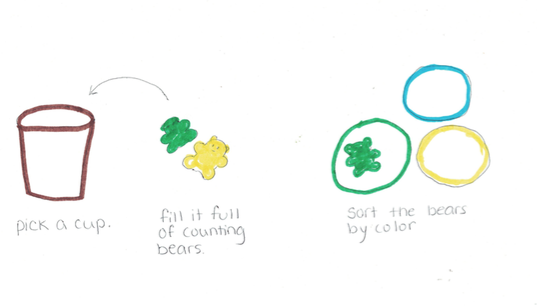
Use counting bears to play a sorting game.  Make copies of the instructions and read them with the children.  Then let the children begin.  Can they follow the directions without teacher direction? 

Language Development/Listening & Understanding; shows progress in understanding and following simple and multiple-step directions. AND Mathematics/Geometry & Spatial Sense; shows growth in matching, sorting, putting n a series, and regrouping objects according to one or two attributes such as color, shape, or size.

Outdoor Play

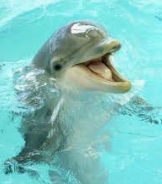
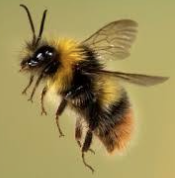
Do lots of animal’s walks outside today.  If you have a climbing structure, swing like the chimp, pretend to swim quickly around the playground like a dolphin, float from one spot to another like the bee, tramp with big steps like the elephant, and slink slowly like the leopard.  What other animal walks can you include?  Ask the children to help think up other animal movements.  (How might a horse move, or a squirrel?).

Physical Health & Development/Gross Motor Skills; shows increasing levels of proficiency, control, and balance in walking, climbing, running, jumping, hopping, skipping, marching, and galloping.

Transitions

Play Which is Bigger?  Use two animals and ask the children to name, which is bigger, a bear or a cat?  A bumblebee or an ant?   Use, which is smaller, taller, and shorter.

Mathematics/Number & Operations; begins to associate number concepts, vocabulary, quantities, and written numerals in meaningful ways. AND Approaches to Learning/Reasoning & Problem Solving; develops increasing abilities to classify, compare, and contrast objects, events, and experiences.

Resources


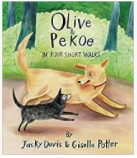
Olive & Pekoe in Four Short Walks, by J. Davis & G. Potter

Pekoe and Olive are friends even though they are very different. Olive is old and Pekoe is young. They find they have many opposites but they can still be friends and enjoy spending time together.

Materials

  • Young and old animal match pictures
  • Package of dot or star stickers
  • Sheets of sandpaper
  • Foil
  • Several shoebox sized boxes and stuffed animals of pets

Vocabulary

  • Appreciates (to understand and welcome the gesture)
  • Regrets (wishes had not done something)
  • Impressed (Interested or excited about something)
  • Chipmunk (a little animal kind of like a squirrel)

Before Reading the Story

Start a discussion about how no two people are just alike.  Pick two children in your classroom and have them stand up.  Explain that both the children might be the same sex and the same age but that does not mean that they are alike.  Ask the two children several questions about themselves that you know will make for different responses.  (Jamal says he likes broccoli but Andrew does not, Susan says she has two brothers but Lisa has only one sister).   Explain to the class that these two can and are friends even though they are different.  Ask the children if this is ok?  Of course it is!  Everybody is different and likes different things, that’s what makes having friends so much fun.  Sometimes we like the same things and sometimes we do not.  Introduce the story by saying that today’s story is about two friends who are different in many ways but are still good friends.

Social & Emotional Development/Knowledge of Families & Communities; progresses in understanding similarities and respecting differences among people such as genders, race, special needs, culture, language, and family structure.

Reading the Story

On page 6 when Pekoe brings the stick to Olive, explain that Olive appreciates the gesture because she understands that Pekoe is just being a good friend even if she does not really like playing with sticks.  On page 9, ask the children what they think the dogs will eat for snack?  Then ask several children what they like to eat for snack, note that not everyone likes the same things but they can still be friends.  On page 16, note the dogs faces, ask the children how do you think they are feeling?  Introduce the word disappointed.  Ask the children why they think Pekoe and Olive are disappointed.  (They cannot play outside, They have to go home, They wanted to play together).  On page 20 ask the children if they can see where the chipmunk went?  Do the same on page 22 and 25.  On page 28 ask the children to look at the dogs faces.  Why do you think they look so angry?  How does it make you feel when other children fight with you?  On page 31 comment on how Olive is being a good friend to Pekoe by standing up to the bully dog with him.

Language Development/Speaking & Communicating; develops increasing abilities to understand and use language to communicate information, experiences, ideas, feelings, opinions, needs, questions,; and for other varied purposes.

After Reading the Story

Explain again to the children that no two people, or dogs, are alike.  Note that in the story Pekoe and Olive are opposite in several ways.  Ask the children if they can recall any ways that the two dogs are different.  (Pekoe is fast and Olive is slow, Pekoe likes sticks and Olive does not really like them, Pekoe is afraid of the thunderstorm and Olive just does like to get wet, Pekoe wants to chase chipmunks, Olive just wants to watch, Pekoe wants to play with the other dogs, Olive just wants to watch, Pekoe is a puppy and Olive is an old dog). 

Literacy/Book Knowledge & Appreciation; demonstrates progress in ability to retell and dictate stories from books and experiences; to act out stories in dramatic play; and to predict what will happen next in a story.

Make a graph that includes all the pets that the children in your classroom have.  Then ask the children if their pet is a puppy or an old dog, a kitten or an old cat, etc.?   Mark each animal with a Y for young and an O for old.  Count how many of each pet there is and then count how many are young versus old. 

Mathematics/Number & Operations; demonstrates increasing interest and awareness of numbers and counting as a means for solving problems and determining quantities. AND Approaches to Learning/Reasoning & Problem Solving; develops increasing abilities to classify, compare, and contrast objects, events, and experiences.

Give the children a few moments to talk about any pet that they might have.  What does your pet like to do with you?

Approaches to Learning/Initiative & Curiosity; grows in eagerness to learn about and discuss a growing range of topics, ideas, and tasks. AND Language Development/Speaking & Communicating; develops increasing abilities to understand and use language to communicate information, experiences, ideas, feelings, opinions, needs, questions,; and for other varied purposes.

Discovery

Make a match game using pictures of young and old like animals.

Approaches to Learning/Reasoning & Problem Solving; develops increasing abilities to classify, compare, and contrast objects, events, and experiences.

Music and Movement

Remind the children that in the story, Pekoe and Olive were opposite in many ways.  Sing the Opposites Songhttps://www.youtube.com/watch?v=TW4OQxUVjiE

Language Development/Listening & Understanding; demonstrates increasing ability to attend to and understand conversations, stories, songs, and poems.

Sing I have a Dog his Name is Ragshttps://www.youtube.com/watch?v=pjiH_pj1_Lw

Creative Arts/Movement; expresses through movement and dancing what is felt and heard in various musical tempos and styles.

Tell the children that they are going to go on a listening walk.  Give a direction and see if the children can follow it.  Walk in front of the window, walk past the door, walk along the wall, walk around the table, walk to a corner of the room, walk beside a friend.

Mathematics/Geometry & Spatial Sense; builds an increasing understanding of directionality, order, and positions of objects, and words such as up, down, over, under, top, bottom, inside, outside, in front, behind.

Blocks

Encourage the children to work cooperatively in their structures today.  Remind them that nobody is the boss but that each child involved gets to help make decisions on how the structure will be built.  As the children are building, ask them to point out the part of the structure that they helped design.  Compliment the children on working together even though they all had different ideas and opinions.

Social & Emotional Development/Cooperation; develops increasing abilities to give and take in interactions; to take turns in games or using materials; and to interact without being overly submissive or directive.

Art

Attach sheets of sandpaper and sheets of foil to the easel.  Allow the children to experiment painting on the two surfaces; Rough and Smooth, opposites.

Creative Arts/Art; begins to understand and share opinions about artistic products and experiences.

Sand and Water

Tell the children that float and sink are opposites.  Put water in your table today along with a variety of objects that float or sink.  Put out two containers, one to hold the objects that float and one to hold the objects that sink.  Challenge the children to gather objects from around the room and hypothesis whether it will float or sink.

Science/Scientific Skills & Methods; begins to participate in simple investigations to test observations, discuss and draw conclusions, and form generalizations.

Library and Writing

Remind the children that today’s story was called Olive and Pekoe in Four Short Walks.  Suggest to the children that they are going to take a pretend walk and to imagine where they might be going (to the park, the zoo, the beach, the grocery store).  Give each child five to ten dots or star stickers.  Have them stick them anywhere on their piece of paper.  Now have them draw a line using a marker from dot to dot/star to star.  As they connect the dots/stars, ask them to tell you what they might see on their walk.  Write their responses on the bottom of the page or beside each dot/star.

Literacy/Early Writing; begins to represent stories and experiences through pictures, dictation, and in play.

Dramatic Play

Set up a pet store or veterinary clinic today using boxes and stuffed animals.  Add a cash register for pet store or your doctor kit for veterinary play.

Creative Arts/Dramatic Play; participates in a variety of dramatic play activities that become more extended or complex.

Math and Manipulatives

Explain to the child that more and less are opposites.  Put out two sets of like objects and ask the child which has more?  Which has less?  Start with sets that are easy to see the differences (3 cubes and 7 cubes).  Continue playing this way until the child seems comfortable being able to recognize which set has more and which set has less.  Then put out one set of objects and ask the child to make a set with more and a set with less.  With older children they can make sets for each other.  Encourage the children to count the number of objects in each set.

Mathematics/Number & Operations; begins to use language to compare numbers of objects with terms such as more, less, fewer, greater than, equal to.

Outdoor Play

If possible, take your children on a walk around the neighborhood or school.  Talk about the many things that you see along the way.

Approaches to Learning/Initiative & Curiosity; grows in eagerness to learn about and discuss a growing range of topics, ideas, and tasks.

Transitions

Ask a child to name their favorite food.  Now ask the rest of the children to raise their hand if they like that food too.  Ask a child to name their favorite color, now ask the class to raise their hand if that is their favorite color also.  Continue asking the children to name a favorite something (animal, snack, TV show, song, center, etc.).  After each, remind the children that for some it might be their favorite but for others it is not and yet, we can still all be friends.

Social & Emotional Development/Self-Concept; begins to develop and express awareness of self in terms of specific abilities, characteristics, or preferences.

Resources

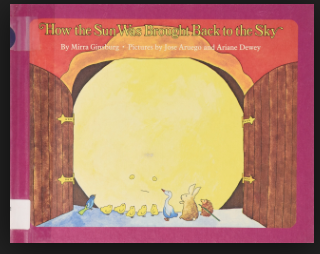
How the Sun Was Brought Back to the Sky, by Mirra Ginsburg

            For three long days the sun has not come out to shine its warmth and light upon the earth.  Follow the adventures of 5 little chicks to set out to see if they can help the sun begin to shine again. 

Materials

  • 2-4 beach balls.
  • Several pair of sunglasses, sun hats, and empty sunscreen container

Vocabulary

Before Reading the Story

            Bring a pair of sunglasses, a hat, and an empty sunscreen container to the carpet.  Hold up the items and ask the children what they all have in common (these two are red, they came from your house, my Dad has those).  After the children have had the opportunity to guess.  Tell the children that they all help keep you safe when you are in the sun.  Explain how each item keeps your safe.  Ask, who uses each item?

Language Development/Speaking & Communicating; develops increasing abilities to understand and use language to communicate information, experiences, ideas, feelings, opinions, needs, questions, and for other varied purposes. AND Physical Health & Safety/Health Status & Practices; builds awareness and ability to follow basic health and safety rules such as fire safety, traffic and pedestrian safety, and responding appropriately to potentially harmful objects, substances, and activities.

            Ask the children who likes sunny days?  What do you like to do on sunny days?  Show the children the cover of the book.  Tell them that today’s story is about the sun.  Look at the sun’s face, how do you think he is feeling?  I wonder what made him so sad.  Read the title.  I wonder where the sun had been? Let’s find out.

Literacy/Book Knowledge & Appreciation; demonstrates abilities to retell and dictate stories from books and experiences; to act out stories in dramatic play; and to predict what will happen next in a story. AND Science/Scientific Knowledge; develops growing awareness of ideas and language related to the attributes of time and temperature.

Reading the Story

            On the page that shows the animals climbing the mountain, take a moment to show the children what a long way the chicks have traveled to try to help the sun.

After Reading the Story

            Talk with the children about how the animals helped the sun to shine again.  Do you think that they were being good friends?  Do you ever help your friends or your parents?  When you help people it makes them feel loved.

Social & Emotional Development/Social Relationships; progresses in responding sympathetically to peers who are in need, upset, hurt, or angry; and in expressing empathy for others.

Discovery

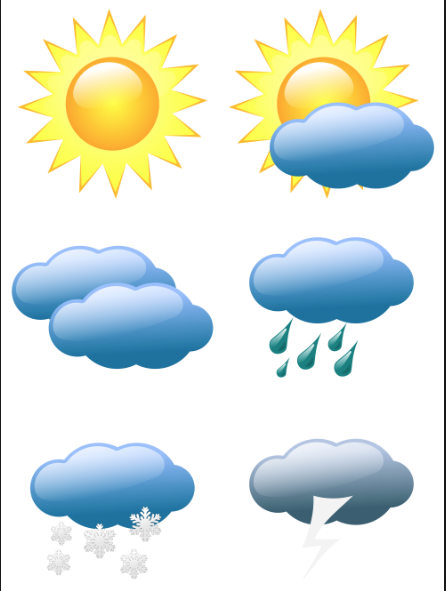
            Make small weather signs that will fit onto your calendar.  Count how many sunny days there are in a week, a month.

Science/Scientific Knowledge; develops growing awareness of ideas and language related to the attributes of time and temperature. AND Mathematics/Number & Operations; demonstrates increasing interest and awareness of numbers and counting as a means for solving problems and determining quantity.

Music and Movement

            Teach the children the song, Mister Sun https://www.youtube.com/watch?v=hlzvrEfyL2Y

Mister Sun, Sun, Mister Golden Sun

Please shine down on me.

Mister  Sun, Sun, Mister Golden Sun

Hiding behind the tree.

These little children are asking you

To please come out so we can play with you

Mister Sun, Sun, Mister Golden Sun

Please shine down on me.

            Sing You Are My Sunshine https://www.youtube.com/watch?v=dh7LJDHFaqA

You are my sunshine, my only sunshine.

You make me happy when skies are grey

You’ll never know dear

How much I love you

Please don’t take my sunshine away.

Creative Arts/Music; participates with increasing interest and enjoyment in a variety of music activities, including listening, singing, finger plays, games, and performances.

Blocks

            Cut out a yellow circle from construction paper.  Put this on the floor of blocks and suggest to the children that they use the blocks to make rays coming off the sun in a pattern. (You might have to make the first ray to get them started).

Mathematics/Patterns & Measurement; enhances abilities to recognize, duplicate, and extend simple patterns using a variety of materials.

Art

            Give each child a piece of yellow construction paper.  Ask them to trace around a paper plate and then cut out the circle.  Ahead of time cut out plenty to yellow triangles.  The children can collage the triangles around their circle to make a sun shape. 

Physical Health & Development/Fine Motor Skills; develops strength, dexterity, and control needed to use tools such as scissors, paper punch, stapler, and hammer.

Library and Writing

Talk to the children for a moment about what they like to do on sunny days. (I like to play outside, I drink lemonade, I wear my baseball hat). Encourage the children to draw a picture about what they like to do. Under the picture write, Dear Mr. Sun, Please come out so I can _________________. Have the child then sign their name.

Literacy/Early Writing; begins to represent stories and experiences through pictures, dictation, and in play.

Sand and Water

            In the story the animals polished the sun.  Put a small amount of water in to the table.  Add sponges or rags and beach balls.  The children can pretend to be polishing the sun.

Literacy/Book Knowledge & Appreciation; demonstrates abilities to retell and dictate stories from books and experiences; to act out stories in dramatic play; and to predict what will happen next in a story.

Dramatic Play

            Bring in sunglasses and sun hats for the children to use in their play.  Clean and empty sunscreen bottle. Watch and listen to see if the children recall your talk about sun safety in their play.

Physical Health & Safety/Health Status & Practices; builds awareness and ability to follow basic health and safety rules such as fire safety, traffic and pedestrian safety, and responding appropriately to potentially harmful objects, substances, and activities.

Math and Manipulatives

            Have the children collect all your old crayons and peel the paper off of them.  Sort the crayons into a muffin tin or paper drinking cups according to colors.  Place the muffin tin out on a hot sunny day (this is a summer activity).  Observe over the next hours to see if the crayons have melted.  If not, this experiment can also be done by placing the muffin tin in the oven.  Bring inside and let cool down some so that a large crayon starts to form in each muffin tin.  Turn the crayons out and let them finish cooling. Save them to use on another day.

Physical Health & Development/Fine Motor Skills; develops strength, dexterity, and control needed to use tools such as scissors, paper punch, stapler, and hammer. AND Science/Scientific Knowledge; develops growing awareness of ideas and language related to the attributes of time and temperature.

Outdoor Play

            Step out into the sunshine, now step into the shade.  Can you feel a difference, see a difference? (The sun will feel warmer and makes everything very bright).

Science/Scientific Knowledge; develops growing awareness of ideas and language related to the attributes of time and temperature.

Transitions

          Cut out a simple sun shape. On the wall where all the children can see, tape a piece of rectangular construction paper. Move the sun about the construction paper and ask the children to tell you where/what position the sun is in. Encourage the children to use whole sentences. (The sun is under the rectangle. The sun is behind the rectangle. The sun is on top of the rectangle.

Mathematics/Geometry & Spatial Sense; builds an increasing understanding of directionality, order, and positions of objects, and words such as up, down, under, over, top, bottom, inside, outside, in front, and behind.

Resources