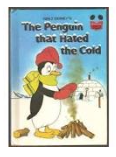
The Penguin Who Hated the Cold, by Barbara Brenner

            This is a silly little story about a penguin named Pablo who hated the cold.  He’ll do anything to find a warm place to live.  Follow him on his adventure from the cold Antarctic to the warm tropics.  This book is a great jumping board for teaching opposites.

Materials

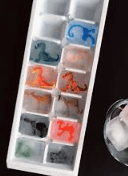
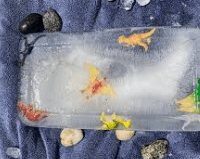
  •             Night before, freeze small animal counters into cubes and blocks of ice.
  •             Hot water bottle
  •             2 large boxes of jello
  •             1 banana, 1 apple or pear, several strawberries, blueberries, grapes, and cherries
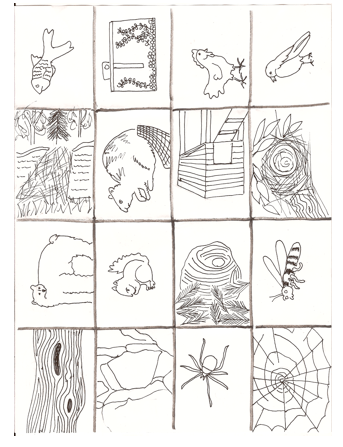
  •             Animal homes cards
  • Finger paint

Vocabulary

  •             Chilly (always feeling cold)
  •             Hate (to really, really not like something)

Before Reading the Story

            Talk with the children about the weather outside (this story is best read in the winter or the summer).  Ask the children what kinds of things they like to do in the cold winter weather (make snowballs, sled, eat snow, dig) and then ask them what kinds of things they like to do in the hot summer weather (swim, ride bicycles, roll in grass, pick flowers).  Tell them that winter and summer are opposites.  Hot and cold are opposites.  Introduce the story by saying that today we are going to read a story about a penguin named Pablo.   Penguins live where it is always cold.  Pablo does not like the cold though, at all!  Pablo wants to go where it is warm.  Let’s find out if he gets there.

Approaches to Learning/Initiative & Curiosity; grows in eagerness to learn about and discuss a growing range of topics, ideas, and tasks.

Reading the Story

            Stop on each page where Pablo says goodbye to his friends.  Do you think that he will get to a place where it is always warm? 

Literacy/Book Knowledge & Appreciation; demonstrates progress in abilities to retell and dictate stories from books and experiences; to act out stories in dramatic play; and to predict what will happen next in a story.

After Reading the Story

            Make a graph and have the children mark if they like the cold weather or the hot weather better.  Count the total and write the numbers underneath.

Social & Emotional Development/Self-Concept; begins to develop and express awareness of self in terms of specific abilities, characteristics, and preferences. AND Mathematics/Number & Operations; demonstrates increasing interest and awareness of numbers and counting as a means for solving problems and determining quantity.

Discovery

            Make float and sink jello.  Have the children help cut the fruits into bite sized pieces.  Make the jello according to the directions.  Let the children take turns dropping the fruit into the jello and predict if it will float or sink.  Let the jello cool and eat.

Science/Scientific Skills & Methods; begins to participate in simple investigations to test observations, discuss and draw conclusions, and form generalizations.

Music and Movement

            Fill the hot water bottle up with water and use it to play hot potato. Have the children sit in a circle. One child starts to pass the hot water bottle to the child beside him when the music starts. The children continue to pass the bottle until the music stops. When the music stops, the teacher asks the child holding the water bottle to name something that is either hot or cold.

Approaches to Learning/Reasoning & problem Solving; develops increasing ability to find more than one solution to a question, task, or problem.

            Show children how to use two blocks to pretend ice skate.  Put on music and slide around the carpet.

Physical Health & Development/Gross Motor Skills; shows increasing proficiency, control, and balance in walking, climbing, running, jumping, hopping, skipping, marching, and galloping.

            Sing the Opposite Song to the tune of Pop Goes the Weasel. https://www.youtube.com/watch?v=PrUdD2dX8e4

Everything I always say,

You always say the opposite.

When I say _________,

You say ___________!

Good opposites that go with this story are; cold-hot, forwards-backwards, up-down, outside-inside, on-off, float-sink

Creative Arts/Music; participates with increasing interest and enjoyment in a variety of music activities, including listening, singing, finger plays, games, and performances.

Blocks

            Ask the children if they can make a house to keep Pablo warm.  If you have a stuffed penguin, this would be a good center to put it in.

Approaches to Learning/Engagement & Persistence; demonstrates increasing ability to set goals and develop follow through on plans.

Art

            Put out finger paint.  Instead of using hands to paint, give the children ice cubes to move the paint about the paper.

Creative Arts/Art; gains ability in using different art media and materials in a variety of ways for creative expression and representation.

Sand and Water

            Put the animals in the frozen ice blocks into the table.  Ask the children to see if they can get the animals out. Allow them to experiment with objects from around the classroom.

Science/Scientific Skills & Methods; begins to participate in simple investigations to test observations, discuss and draw conclusions, and form generalizations.

Library and Writing

            Depending upon the season you are in (summer or winter), ask the children to tell you a sign of the season and draw a picture about.  With older children they may be able to draw and tell about an opposite season also.  (Summer; sunny, swim, flowers, shorts, sandals/Winter; snow, sled, no leaves, mittens, boots).

Literacy/Early Writing; begins to represent stories and experiences through pictures, dictation, and in play.

Dramatic Play

            Put out dress ups that are opposite the season you are experiencing.  For summer you could put out bathing suit, sunglasses, and towels.  For winter you could put out boots, mittens, and scarves.

Literacy/Early Writing; begins to represent stories and experiences through pictures, dictation, and in play.

Math and Manipulatives

            Make a set of animal homes cards and let the children see if they can put the animals in their proper home.

Science/Scientific Knowledge; expands knowledge of and abilities to observe, describe, and discuss the natural world, materials, living things, and natural processes.

Outdoor Play

            Roll in the grass or snow.

Physical Health & Development/Health Status & Practices; progresses in physical strength, stamina, and flexibility.

Transitions

Call out one half of an opposite and see if the children can name back the other half to you. If you have opposite cards, these help children as many children do not have a strong grasp of what an opposite is.

Approaches to Learning/Initiative & Curiosity; chooses to participate in an increasing variety of tasks and activities.

Resources
ways to freeze objects into ice

The Golden Egg Book, by Margaret Wise Brown

            A little bunny finds an egg, what could be inside?  How will he find out?  This is a classic first mystery story for children.

Materials

  • Pictures of 5 animals that come from eggs
  • One hard boiled egg
  • Lots of plastic Easter eggs
  • Enough plastic eggs for everyone in the class to hold one.  Fill them with rice, penny, paperclip, etc.  You will need two of each egg.  Tape them closed so the children can not open them.
  • Duck-Rabbit flannel
  • Pre-made egg shapes 1-10 and many paperclips.
  • Several plastic cups, a piece of string and small sponge for each, a bowl of water.

Vocabulary

  •  Mystery (something secret)

Before Reading the Story

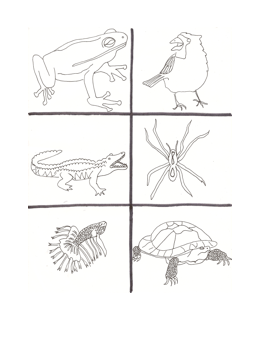
            Put a hard boiled egg inside of a small bag.  Tell the children that you brought something in your bag but it is a mystery.  Shake the bag; can anyone guess what it is?  Give the children clues and see if they can guess (it comes in many colors and sometimes is even speckled, we can eat it, it’s shaped like an oval, it comes from a reptile or a bird).  Have a child put their hand in the bag and feel the egg.  If they still do not guess, have a child pull it out of the bag.  Tell the children that birds like chickens and cardinals/bird in your area come out of eggs.  Show the children several pictures of other animals that come from eggs like alligators, turtles, snakes, birds, and spiders, frogs.

Approaches to Learning/Reasoning & Problem Solving; develops increasing abilities to classify, compare, and contrast objects, events, and experiences.

Reading the Story

            After reading the page about what the bunny thought might be in the egg, ask the children what they think is inside?  After reading the part where the bunny threw a little rock, ask the children if throwing a rock at it was a good idea?  What could the bunny have done besides throwing a rock? 

Literacy/Book Knowledge & Appreciation; predicts what will happen next in a story. AND Approaches to Learning/Reasoning & Problem Solving; develops increasing ability to find more than one solution to a question, task, or problem.

After Reading the Story

              Cut out the animals that come from eggs and cut a piece of construction paper into an oval.  Lay the animals where the children can see them.  Tell the children to close their eyes and count to five.  While they are counting, cover one of the animals with the egg shape.  Can they guess which one is hidden?  Go around your circle letting each child have a turn and play until the children get tired or can easily name the missing animal.

Social & Emotional Development/Cooperation; develops increasing abilities to give and take in interactions; to take turns in playing games or using materials; and to interact without being overly submissive or directive.

Discovery

            Put the plastic eggs into a basket and tell the children that there are pairs that when shaken will make the same sound.  Ask the children to try to find the pairs of eggs by listening carefully while they shake them.

Science/Scientific Skills & Methods; begins to use senses and a variety of tools and simple measuring devices to gather information, investigate materials, and observe processes and relationships.

Music and Movement

            Sing some of your favorite songs while everyone shakes an egg. Use your eggs from science or fill enough with rice so that every child has an egg to shake.

Creative Arts/Music; experiments with a variety of musical instruments.

Sing Shake Your Egg to the tune of Jingle Bells

Shake your egg, shake your egg,

Shake it very high

Shake it low, shake it fast,

Shake it very slow

Shake your egg, shake your egg

Shake behind your back

Now shake your egg, shake your egg

And put it in your lap.

Language Development/Listening & Understanding; shows progress infollowing simple and multiple-step directions.

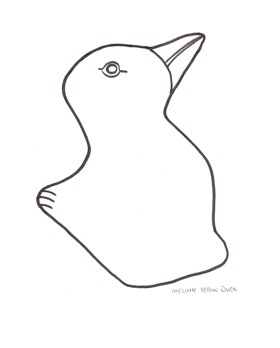
Make the duck/rabbit from resources and use it to teach the children the poem; My Little Yellow Duck

My little yellow duck,

Is really very funny

When you turn him over,

He becomes a little bunny!

(The first time you read the poem…When you turn the duck over to become a bunny, go slowly and see if the children can guess what the duck will become).

Approaches to Learning/Reasoning & Problem Solving; grows in recognizing and solving problems through active exploration, including trial and error, and interactions and discussions with peers and adults.

Blocks

            Put several eggs into the center.  Ask the children to build ramps for them to roll down.  Will the egg roll faster or slower if the ramp is higher/lower?  How can you make it so the eggs won’t fall off the ramp?

Approaches to Learning/Reasoning & Problem Solving; grows in recognizing and solving problems through active exploration, including trial and error, and interactions and discussions with peers and adults.

Art

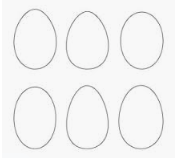
            Cut out egg shapes from manila files.  Put out tissue paper squares and a bowl of glue mixed with a little water to thin it out.  Give the children paint brushes to paint the glue onto the egg.  Stick the tissue paper squares on top and add another layer of glue.  The colors will blend to make new colors.

Physical Health & Development/Fine Motor Skills; progresses in abilities to use writing, drawing, and art tools, including, pencils, markers, chalk, paint brushes, and various types of technology.

Sand and Water

            Put egg halves in the sand or water.  The children can use them to scoop/pour and to fill and put together.

Physical Health & Development/Fine Motor Skills; develops growing strength, dexterity, and control needed to use tools such as scissors, paper punch, stapler, and hammer.

Library and Writing

            Ask the children to draw an animal that might be inside an egg.  After they have drawn, place a construction paper egg over their picture.  You can cut out a hole in the egg so it makes a peek through picture.  On the bottom of the egg write; What’s inside Kerry’s egg?  The children can write their own names and these can be stapled together to make a book. 

Creative Arts/Art; progresses in abilities to create drawings, paintings, models, and other art creations that are more detailed, creative, or realistic. AND Literacy/Early Writing; progresses from using scribbles, shapes, or pictures to represent ideas, to using letter-like symbols, to copying and writing familiar words such as their own name.

Dramatic Play

            Let’s cook eggs, either pretend or real.

Creative Arts/Dramatic Play; participates in a variety of dramatic play activities that become more extended and complex.

Math and Manipulatives

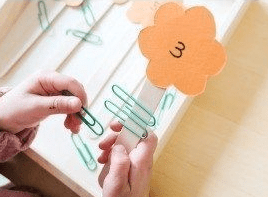
            Cut out 1-10 eggs from manila files.  Label them 1-10.  Put the appropriate number of dots along the edge.  Show the children how to put the appropriate number of paperclips onto each egg.  Ask them to place them on the table in the proper 1-10 order.

Physical Health & Development/Fine Motor Skills; develops growing strength, dexterity, and control needed to use tools such as scissors, paper punch, stapler, and hammer. AND Mathematics/Number & Operations; begins to associate number concepts, vocabulary, quantities, and written numerals in meaningful ways.

Outdoor Play

            Chicken noise makers.  https://allfortheboys.com/chicken-in-a-cup/ Take a plastic cup and poke two small holes into it.  String the yarn through the holes and tie a knot.  Wet the sponge and run it down the length of the yarn while another child holds the cup.  As you jerk the sponge down the yarn, it makes it squeaky, clucking sound.

Science/Scientific Skills & Methods; begins to participate in simple investigations to test observations, discuss and draw conclusions, and form generalizations.

Transitions

Play I’m Thinking. Let the children take turns guessing what you are thinking of. Always start out with a shape. If they cannot come up with something that shape, add more details. (I’m thinking of something that is shaped like an oval, I’m thinking of something that is square that we use to watch videos on).

Approaches to Learning/Reasoning & Problem Solving; grows in recognizing and solving problems through active exploration, including trial and error, and interactions and discussions with peers and adults.

Do with egg shapes

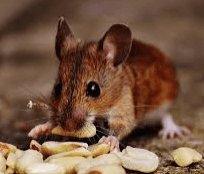
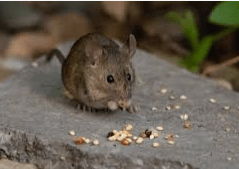
Ten Little Mice, by Joyce Dunbar

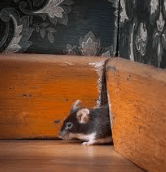
                  This lovely illustrated book helps children count down by one while learning about the life habits of field mice.  A charming book that children will enjoy.

Materials;

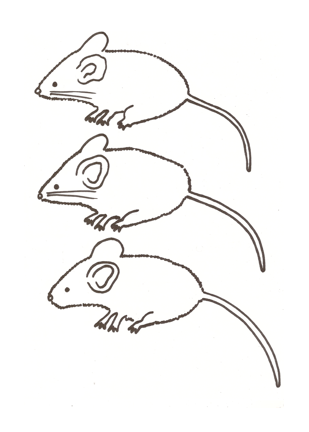
                  Ten mice***

                  Mouse bookmark directions

                  Mouse mask***

                  Soft pillows and fabrics

                  Several ping-pong balls

                  Bag of cotton balls

                  Several bowls

                  Tongs or clothespins

Shapes printed on colored paper. See resources.

Vocabulary;

                  Cozy (something warm and comfortable)

Before Reading the Story

                  Use one of the mice pieces and on several colors of construction paper draw a simple house.  Have the children take turns hiding their eyes and put the mouse under one of the houses.  Have the children repeat the following, Little Tommy Tiddlemouse, lives in a pretty house.  Can you guess which one?  The child then uncovers their eyes and guesses under which color the mouse is hiding.  Encourage the child to name the colors instead of just pointing. Play till all the children get a turn or until they lose interest.

Social & Emotional Development/Cooperation; develops increasing abilities to give and take in interactions; to take turns in games and using materials; and to interact without being overly submissive or directive.

Reading the Story

                  Put the ten mice on the wall or flannel.  As you read the story take one down accordingly.

Mathematics/Number & Operations; demonstrates increasing interest and awareness if numbers and counting as a means for solving problems and determining quantity.

After Reading the Story

                  Go back through the story and talk about the pictures.  Note the things that the mice are bigger then and smaller then.  Ask the children if they can think of other things that a mouse would be bigger then or smaller then.

Mathematics/Patterns & Measurement; shows progress in using standard and non-standard measures for length and area of objects.

Discovery;

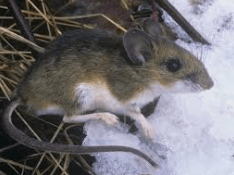
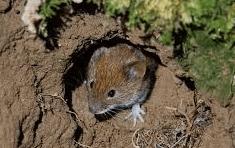
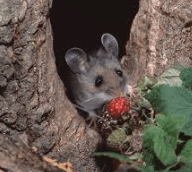
                  Bring in a book or pictures of real mice so the children can explore the life and times of a mouse.

Science/Scientific Knowledge; expands knowledge of and abilities to observe, describe, and discuss the natural world, materials, living things, and natural processes.

Music and Movement

                  Re-read the story and ask the children to show what all the different movements would look like that the mice did as they went back to their cozy nest.  Who can show me what scurry-scurried looks like?

Language Development/Listening & Understanding; understands an increasingly complex and varied vocabulary.

Teach the children the song Five Little Mice sung to 5 Little Ducks. https://www.youtube.com/watch?v=v9rqAO2zSIc

Five little mice came out to play
Gathering crumbs along the way
Out came pussycat sleek and fat
Four little mice go scampering back

Four little mice came out to play
Gathering crumbs along the way
Out came pussycat sleek and fat
Three little mice go scampering back

Three little mice came out to play
Gathering crumbs along the way
Out came pussycat sleek and fat
Two little mice go scampering back

Two little mice came out to play
Gathering crumbs along the way
Out came pussycat sleek and fat
One little mouse goes scampering back

One little mouse came out to play
Gathering crumbs along the way
Out came pussycat sleek and fat
No little mice go scampering back.

Mathematics/Number & operations; begins to associate number concepts, vocabulary, quantities, and written numerals in meaningful ways.

Do the following poem with the children. The teacher is the old grey cat. After doing the poem once, the children can take turns being the old grey cat.

The old gray cat is sleeping , sleeping, sleeping,
The old gray cat is sleeping in the house
The little mice are dancing, dancing, dancing (children dance)
The little mice are dancing in the house (continue dancing)
The little mice are nibbling, nibbling, nibbling (children nibble)
The little mice are nibbling in the house!
The little mice are resting, resting, resting (children sit or lay)
The little mice are resting in the house (continue sitting)
The old gray cat comes creeping, creeping, creeping (Cat begins to creep)
The old gray cat comes creeping in the house (Continue Creeping)
The little mice go scampering, scampering, scampering (Children run around)
The little mice go scampering in the house (Children run until caught then that child is the cat)

Language Development/Listening & Understanding; shows progress in understanding and following simple and multiple-step directions.

Blocks

                  Challenge the children how to use the blocks to make hallways or paths.  Pretend the ping-pong balls are mice and roll them through the hallway maze. Can they roll from beginning to end? Can the children make the mouse/ping pong ball roll under or over an object or around a corner?

Approaches to Learning/Reasoning & Problem Solving; grows in recognizing and solving problems through active exploration, including trial and error, and interactions and discussions with peers and adults.

Art

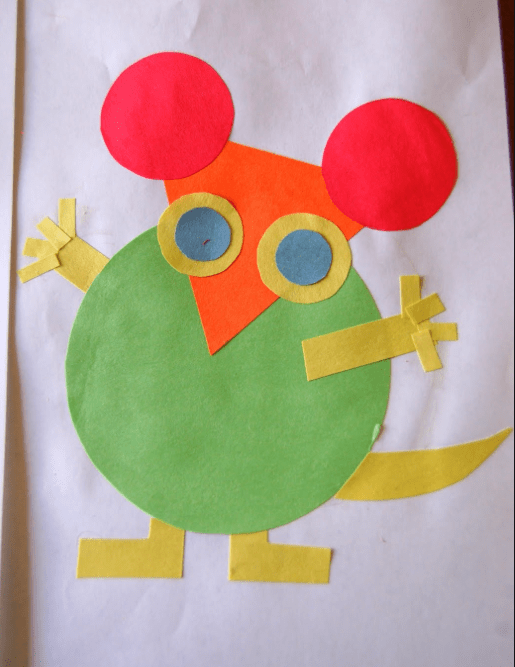
Put out the many colored shapes and scissors for the children to make mice. You can make one ahead of time so they can see how the shapes go together. For older children, draw and cut out the shapes using a manilla folder. The children can then draw around your shapes onto pieces of paper that they can then cut out.

Mathematics/Geometry & Spatial Sense; progresses in ability to put together and take shapes apart. AND Physical Health & Development/Fine Motor Skills; grows in hand-eye coordination in building with blocks, putting together puzzles, reproducing shapes and patterns, stringing beads, and using scissors.

Library and Writing;

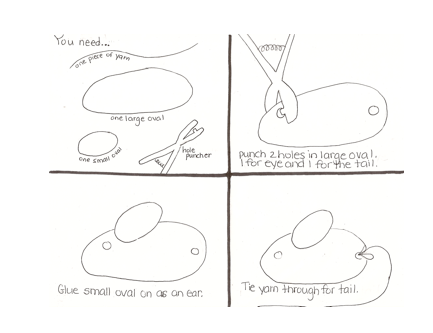
                  Have the children make bookmarks by following the direction cards.  Cut out the oval shapes in various colors.  Show the children how to use a single hole punch to make an eye and a hole for a tail.  Give each child a piece of yarn to put through the tail hole, tie. 

Literacy/Early Writing; develops understanding that writing is a way of communicating for a variety of purposes.

Sand and Water

Hide the following letters in the sand table; M-O-U-S-E. On a piece of paper write ‘MOUSE’ above the table. Encourage the children to find the letters and put them in the same order as the word on the wall to spell mouse. Use magnet letters, cookie cutter letters, or make letters out of cardboard to hide. Can the children identify any of these letters?

Literacy/Alphabet Knowledge; shows progress in associating the names of letters with their shapes and sounds.

Dramatic Play

                  In the story the mice all went home to their cozy nest.  Bring in soft and cozy fabrics and pillows so the children can pretend to be mice in a cozy nest.

Literacy/Book Knowledge & Appreciation; demonstrates progress in abilities to retell and dictate stories from books and experiences; to act out stories in dramatic play; and to predict what will happen next in a story.

Math and Manipulatives

                  Put out a bowl of cotton balls and a pair of tongs or a clothespin.  Show the children how to pick up the cotton balls with the tongs and move it to another bowl.  Roll a dice and count how many cotton balls you will need to move.

Mathematics/Number & operations; begins to make use of one-to-one correspondence in counting objects and matching groups of objects. AND Physical Health Development/Fine Motor Skills; develops strength, dexterity, and control needed to use tools such as scissors, paper punch, stapler, and hammer.

Outdoors Play

                  Challenge the children to build tunnels under the sand.  You may have to dampen the sand ahead of time so it has some sticking power as these are very sensitive to collapsing.

Approaches to Learning/Engagement & Persistence; demonstrates increasing ability to set goals and develop and follow through on plans.

Transitions

                  Put 0-10 mice up on the board.  Ask the child to count and name the number of mice present before they move to the next activity.

Mathematics/Number & operations; begins to make use of one-to-one correspondence in counting objects and matching groups of objects.

Resources

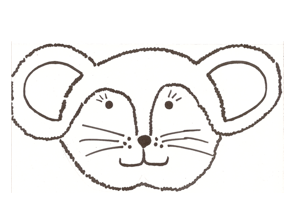
Enlarge and attach to a sentence strip to make mouse hats for dramatic play
Make 4 sets to use mice for counting throughout the day
Instructions for bookmarks