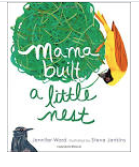
Mama Built a Little Nest, by Jennifer Ward

This book explores the many different kinds of nests that birds build.

Materials

Bird feeder with bird seed

Bird nest in a ziplock bag

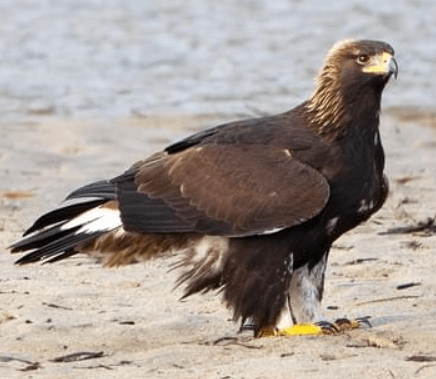
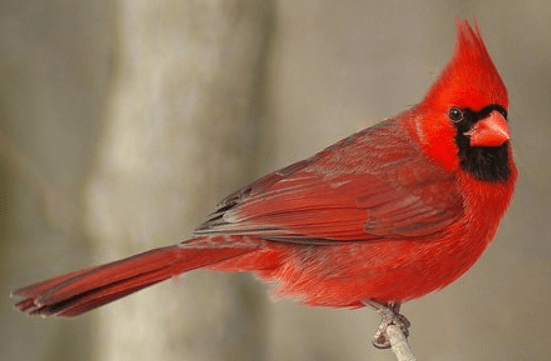
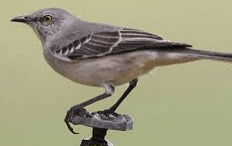
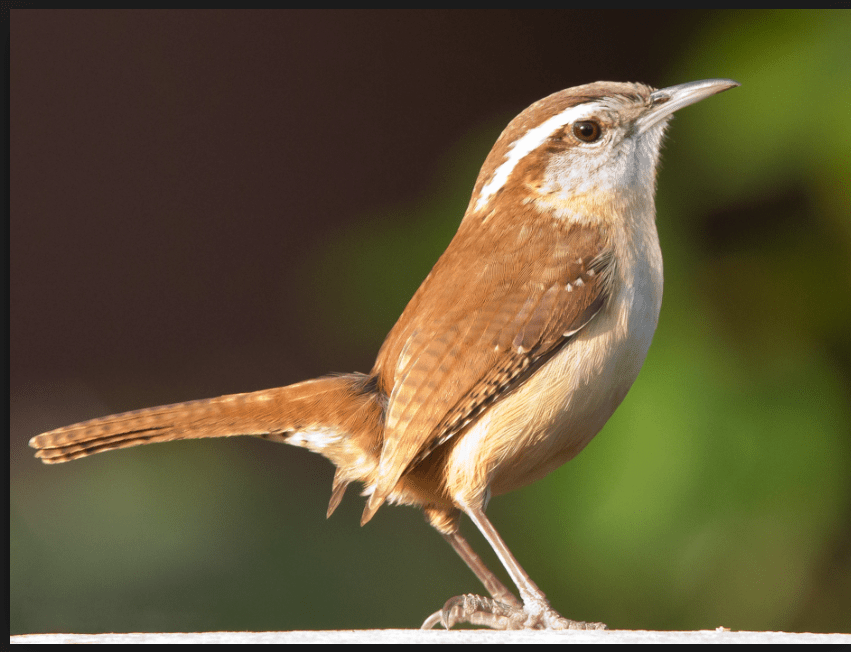
Picture of three birds from the story.

2 toilet paper tubes per child

assorted stickers or assorted colored tape

tongs or clothes pins that pinch open and close

24 pack of paper or plastic cups

bag of colored feather

Pipe cleaners cut into a variety of sizes to represent worms

Vocabulary

  • Ornithology  (the study of birds)
  • Sturdy (strong)
  • Cavity Nest (built by woodpeckers, a hole in a tree.  Kind of like a cavity in your tooth, a hole in your tooth)
  • Craggy (rocky rough cliff edge)
  • Burrow ( a hole in the ground used for a home)
  • Talons (the eagles claws or nails)

Before Reading the Story

Hold up cover of book and read title.  Guess what story about.  Ask the children what they think the big green ball is for? Ask children to share any knowledge they have about bird nests. (how are they built, what is a nest used for, where do you find nests). As the children talk about what they know about nests and birds, write their responses on a large piece of paper to pin to the wall. Make a KWL chart with the children. K=what we know about the subject, W= what we want to know about the subject, L= what we learned after reading/investigating about the subject.

Science/Scientific Knowledge; expands knowledge of and ability to observe, describe, and discuss the natural world, materials, living things, and natural processes.

Reading the Story

Stop and talk about the different birds, especially those that live in your area. When you get to the 2nd to last page (robins outside the window) ask the children what the author means when she says that they have a nest of their very own?

Language Development/Listening & Understanding; demonstrates increasing ability to attend to and understand conversations, stories, songs, anad poems.

After Reading the Story

Ask the children to share with you some of the facts that they learned about nests. On a third piece of paper write their responses. Hang on the wall with the other two sheets.

Literacy/Early Writing; develops understanding that writing is a way of communicating for a variety of purposes. AND Science/Scientific Knowledge; expands knowledge of and ability to observe, describe, and discuss the natural world, materials, living things, and natural processes.

Discovery

Tape the picture of the three different birds to the wall. Have a discussion with the children how they are alike and how they are different.

Mathematics/Patterns & Measurement; begins to make comparisons between several objects based on a single attribute.

If you are lucky enough to have a bird nest you can bring in to share with the children .  Put it in a ziplock bag so that it does not get torn apart or if there are any small bugs in the nest, they do not get into your classroom.

Science/Scientific Skills & Methods; begins to use senses and a variety of tools and simple measuring devices to gather informations, investigate materials, observe processes and relationships.

 Add a bird identification book and a birdfeeder where the children can easily view it.

Science/Scientific Skills & Methods; begins to use senses and a variety of tools and simple measuring devices to gather informations, investigate materials, observe processes and relationships. AND Literacy/ Print Awareness & Concepts; develops growing understanding of different functions of forms of print such as signs, letters, newspapers, lists, messages, and menus.

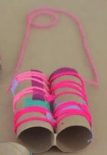
Tape two toilet paper tubes together to make binoculars.  Punch two holes in of the ends to add string to go around neck.  Give the children stickers or bits of colored tape to decorate their binoculars.

Music and Movement

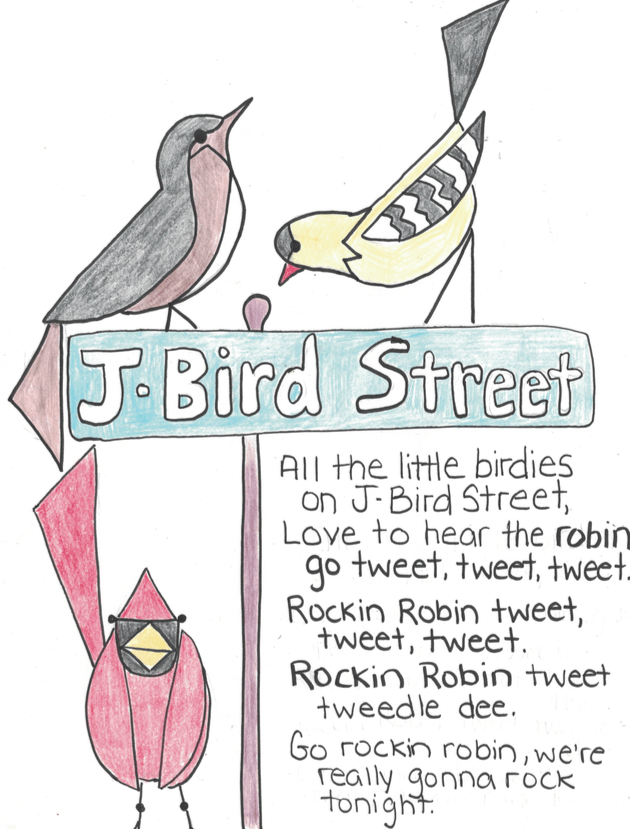
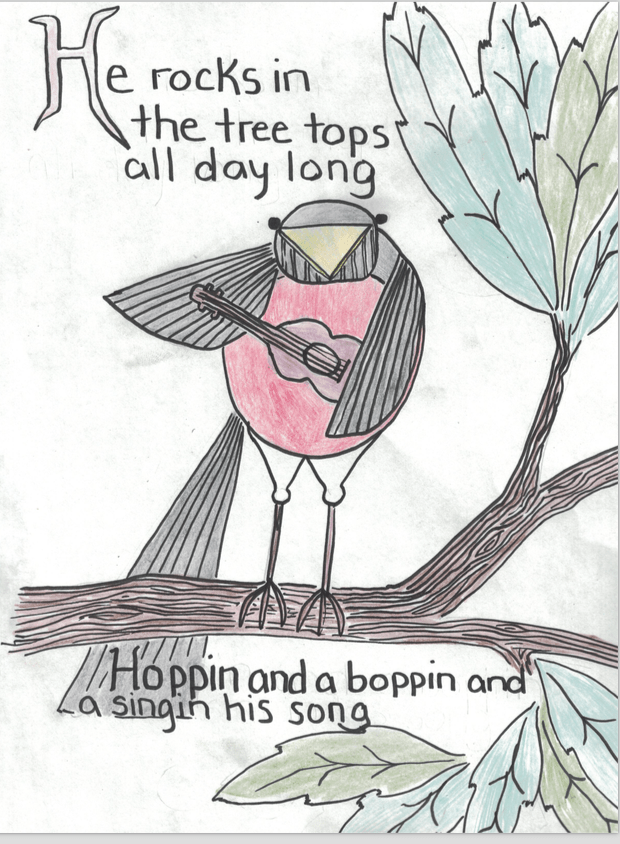
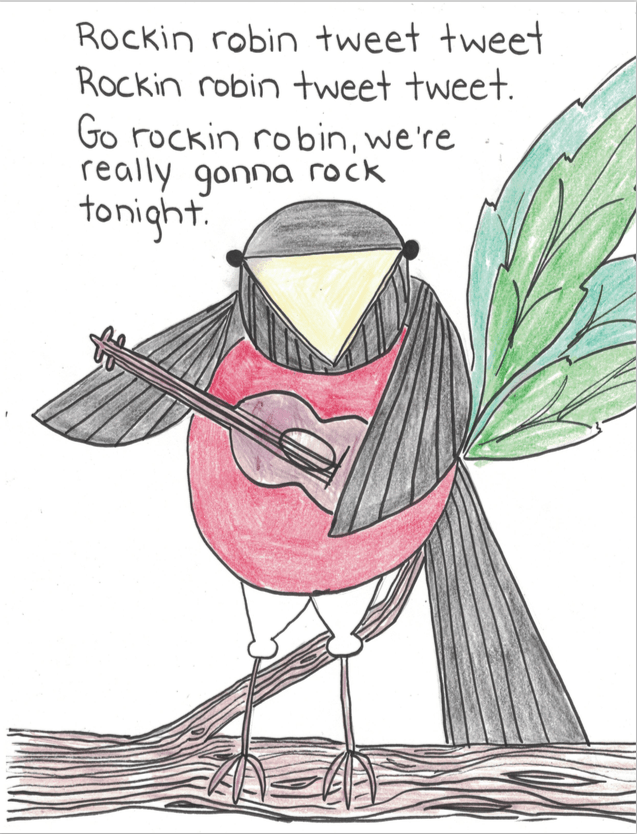
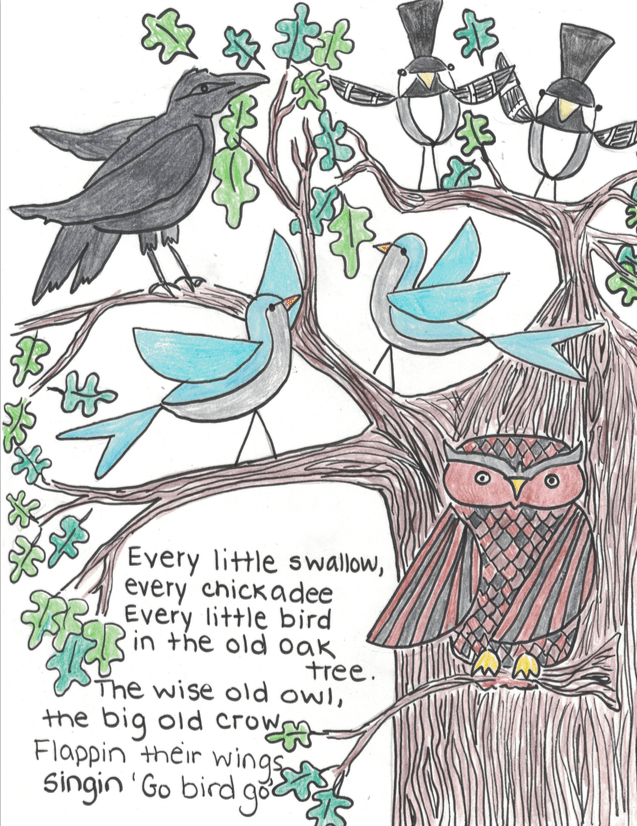
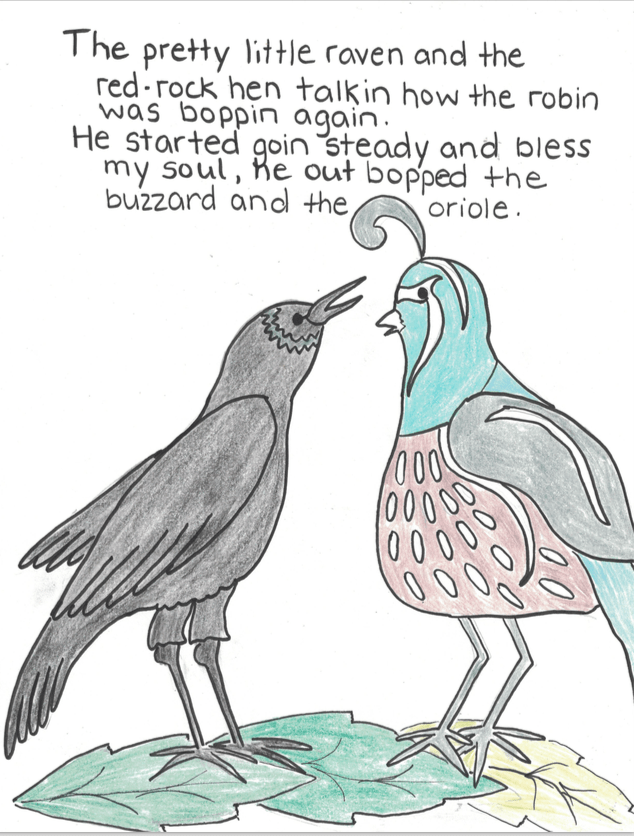
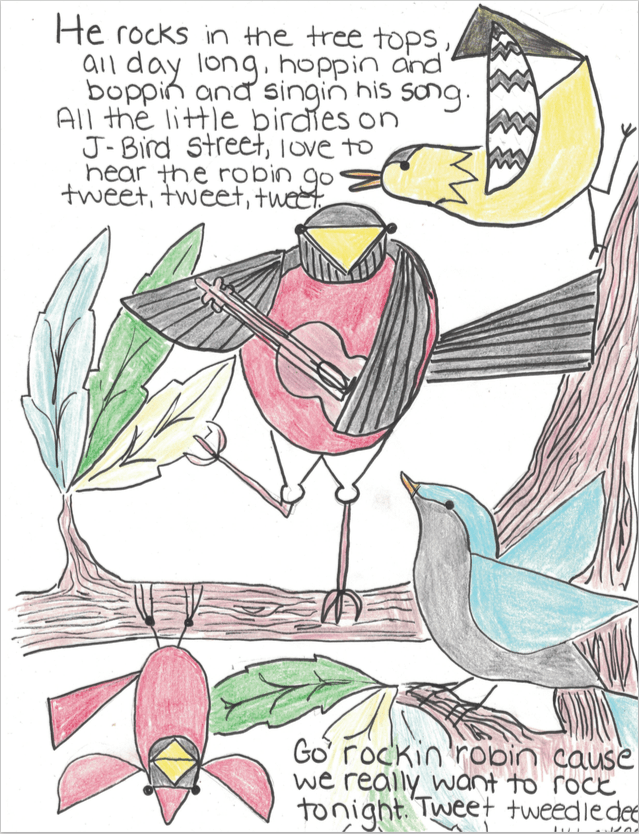
Put together the Rockin Robin Booklet and sing along. https://www.youtube.com/watch?v=z-OteAgvINc

Literacy/Book Knowledge & Appreciation; shows growing interest and involvement in listening to and discussing a variety of fiction and non-fiction books, and poetry.

Sing and act out the movements to The Bird Song. Sing it to the tune of Here We Go Round the Mulberry Bush.

This is the way we scratch for worms, scratch for worms, scratch for worms.
This is the way we scratch for worms so early in the morning.

This is the way we peck our food, peck our food, peck our food.
This is the way we peck our food so early in the morning.

This is the way we sit on our eggs, sit on our eggs, sit on our eggs.
This is the way we sit on our eggs so early in the morning.

This is the way we flap our wings, flap our wings, flap our wings.
This is the way we flap our wings so early in the morning.

This is the way we fly away, fly away

Creative Arts/Music; participates with increasing interest and enjoyment in a variety of music activities, including listening, swinging, finger plays, games, and performances.

Do the finger play Two Little Blackbirds. https://www.youtube.com/watch?v=gjv5Jwgsn7I

Language Development/Listening & Understanding; understands an increasingly complex and varied vocabulary.

Blocks

Add the cups to the center today.  Show the children how to stack them upside down one on top of the edge of two to make a pyramid.  Or to stack them bottom to top to bottom to top.  Both of these building activities take patience and good hand-eye coordination.

Physical Health & Development/Fine Motor Skills; grows in hand-eye coordination in building with blocks, putting together puzzles, reproducing shapes and patterns, stringing beads, and using scissors. AND Approaches to Learning/Engagement & Persistence; grows in abilities to persist in and complete a variety of tasks, activities, projects, and experiences.

Art

Make nests with playdough (Pinch pot).  Can the children roll small balls to be the eggs?

Creative Arts/Art; progresses in abilities to create drawings, paintings, models, and other art creations that are more detailed, creative, or realistic. AND Physical Health & Development;Fine Motor Skills; develops growing strength, dexterity, and control needed to use tools such as scissors, paper punch, stapler, hammer.

If your school has a petty fund, make bagel bird feeders.

To make one bird feeder, you will need:
1 day old bagel, lard, birdseed, string or ribbon for hanging

Spread the lard on the bagel.
Roll the bagel in the birdseed. (Or you may place the bagel in a gallon sized zipper bag that contains birdseed; shake the bag to coat the bagel.)
Tie ribbon or string through the hole of the bagel to hang the bagel. One of the good things about this bird feeder is that the birds can eat the whole thing!

Language Development/Listening & Understanding; shows progress in understanding and following simple and multiple-step directions.

Sand and Water

In the sensory table add mud, bits of play dough, twigs, grasses, bits of yarn, thread, small pebbles, etc.. Explain to the children that today they are going to be birds and challenge them to build a nest. Give each child a pair of tweezers or tongs and explain that birds can only use their beaks (tweezers) and feet (hands) to build their nest.

Science/Scientific Skills & Methods; begins to participate in simple investigations to test observations, discuss and draw conclusions, and form generalizations.

Library and Writing

Add bird identification book to center.  Encourage the children to learn the name of one or two familiar birds to your area.

Science/Scientific Skills & Methods; begins to use senses and a variety of tools and simple measuring devices to gather informations, investigate materials, observe processes and relationships. AND Literacy/ Print Awareness & Concepts; develops growing understanding of different functions of forms of print such as signs, letters, newspapers, lists, messages, and menus.

Dramatic Play

Encourage the children to pretend to be birds. Bring in several boxes big enough for the children to be able to sit in. To your center add; pipe cleaner worms, plastic Easter eggs, beaks made from sentence strips.

Creative Arts/ Dramatic Play; shows growing creativity and imagination in using materials and in assuming different roles in dramatic play situations.

Math and Manipulatives

Ahead of time, take pieces of pipecleaner and bend into worms. Think of size and /or colors that the children can sort by. Use tongs or tweezers to practice fine motor skills and pretend that you’re a bird gathering food with its beak! For older children you might try using colored feathers.

Physical Health & Development/Fine Motor Skills; develops growing strength, dexterity, and control needed to use tools such as scissors, paper punch, stapler, hammer. AND Mathematics/Patterns & Measurement; shows increasing ability to match, sort, put in a series, and regroup objects according to one or two attributes such as shape or size.

Outdoor Play

If you are lucky enough to have pine trees that drop their needles ,or do this activity in the fall when the leaves are dropping, have the children rake needles/leaves into a pile and then use to make a bird nest with them being the birds.

Creative Arts/ Dramatic Play; shows growing creativity and imagination in using materials and in assuming different roles in dramatic play situations. AND Social & Emotional Development/Knowledge of Families & Communities; develops growing awareness of jobs and what is required to perform them.

Transitions

Ahead of time cut out and hide egg shapes around the classroom.  Let the children go on an egg hunt.  Have the children count how many eggs they found within the allotted time.

Mathematics/Number & Operations; begins to make use of one-to-one correspondence in counting objects and matching groups of objects. AND Approaches to Learning/Engagement & Persistence; shows growing capacity to maintain concentration over time on a task, question, set of directions or interactions, despite distractions and interruptions.

Resources
Two Bad Ants, by Chris Van Allsburg

A colony of ants discover delicious crystals in a far off place.  As they go to gather the crystals, two ants decide not to return with their fellow ants but to stay and eat crystals forever.  The illustrations depict the story from an ants point of view which makes this a wonderful first mystery story for young children. 

Materials

  • Several small pitchers or pouring containers and plastic cups with lines marked at various heights.
  • Large box of raisins.

Vocabulary

  • Mystery (something that you must figure out)
  • Deemed (thought or to consider something)
  • Dew (condensation or water that forms when the water meets cold air, like on a glass of water with ice or on the grass when it gets cold at night).
  • Battered (beaten up)
  • Garbage disposal (chews up food products in some people’s sinks)

Before Reading the Story

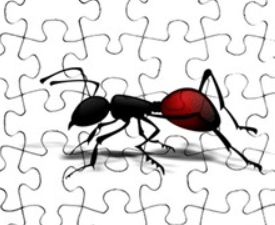
Hold up the cover of the book and ask the children what insect that is? Spend a few minutes talking about ants. Where have you seen ants? What color were the ants you saw? Do ants bite? Have you ever seen an anthill? Are ants dangerous?

Science/Scientific Knowledge; expands knowledge of and abilities to observe, describe, and discuss the natural world, materials, living things, and natural processes.

Reading the Story

All along the way stop and ask the children what is happening?  Can they tell by the illustrations what is happening or where the ants are? 

Read the text to the children and then ask them to guess where the ants are

Pg 4=what do you think that crystal might be?

Pg 7=they walked through the woods, what are they really walking through?

Pg 10= Do you think this is really a mountain?  What else could it be?

Pg 18=what did the two bad ants fall into?

22=can you guess where the two bad ants are now?

24=What is the fountain really?  Where would you find one of these in your home?

26=explain that this is called a garbage disposal.  This is not a toy, very dangerous.

28=never stick anything in an electric socket.  You can get very hurt!

Literacy/Book Knowledge & Appreciation; demonstrates growing abilities to retell and dictate stories from books and experiences; to act out stories in dramatic play; and to predict what will happen next in a story. AND Approaches to Learning/Initiative & Curiosity; grows in eagerness to learn about and discuss a growing range of topics, ideas, and tasks.

After Reading the Story

The two bad ants finally decide to go back home to their family of ants. What prompts their decision? What matters to them about their home community? What matters to you about your home community? 

Literacy/Book Knowledge & Appreciation; demonstrates growing abilities to retell and dictate stories from books and experiences; to act out stories in dramatic play; and to predict what will happen next in a story.

Talk about safety, especially plugs.  What happened to the ants that went into the plug?

Physical Health & Development/Health Status & Practices; builds awareness and ability to follow basic health and safety rules and by responding appropriately to potentially harmful objects, substances, and activities.

Discovery

Print the close up cards for the children to look at and discuss. Are they able to name all the items? Make two sets of the close-up cards and use them to play Memory by turning all the cards upside down and the children take turns trying to find matched pairs.

Approaches to Learning/Engagement & Persistence; shows growing capacity to maintain concentration over time on a stask, question, set of directions or interactions, despite distractions and interruptions. AND Social & Emotional Development/Cooperation; develops increasing abilities to give and take in interactions; to take turns in games and using materials; and to interact without being overly submissive or directive.

If you are lucky enough to have a class camera, show the children how to use it and then allow them to take 2-4 pictures each of anything in the classroom that they choose. Print these and hang them on the wall for all the children to see. or make them into a classroom book.

Creative Arts/Art; begins to understand and share opinions about artistic products and experiences.

Music and Movement

Make an obstacle course for the children to follow. Include crawling under a table, over a chair, around the easel, along the wall, behind the bookshelf, etc..

Mathematics/Geometry & Spatial Sense; builds an increasing understanding of directionality, order, and positions of objects, and words such as up, down, over, under, on top, bottom, inside, outside, in front, and behind.

March in an ant line to various tempos of music.

Creative Arts/Movement; shows growth in moving in time to different patterns of beat and rhythm in music.

Blocks

Use the many cut out ants and the blocks.  The children can build a structure and then put an ant line on.

Creative Arts/Dramatic Play; shows growing creativity and imagination in using materials and assuming different roles in dramatic play situations.

Art

Add salt to easel paint to make shiny-crystals

Creative Arts/Art; begins to understand and share opinions about artistic products and experiences.

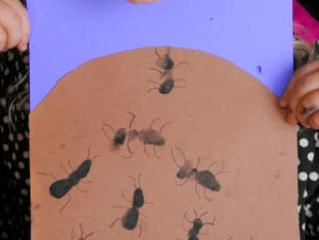
Cut out many 1” circles.  Show the children how they can put three together to make a simple ant shape.  Encourage them to glue sets of circles all over their picture.  When they are through gluing, show them how to add ant features (2 antenna, 6 legs, and big eyes)

Creative Arts/Art; progresses in abilities to create drawings, paintings, models, and other art creations that are more detailed, creative, or realistic.

Sand and Water

Let the children practice pouring from pitchers today. On plastic cups draw lines. Show the children how to pour stopping when they get to the line.

Physical Health & Development/Fine Motor Skills; grows in hand-eye coordination in building with blocks,putting puzzles together, reproducing shapes and patterns, stringing beads, and using scissors.

Library and Writing

Tell the children that you are going to make letters using ants today.  Show them the raisins and explain that they are going to use the raisins for pretend ants.  On a piece of construction paper write the first letter of the child’s name in large print.  Give the child a bottle of glue to follow the lines and then use raisins to go over the glue. 

Literacy/Alphabet Knowledge; knows that letters of the alphabet are a special category of visual graphics that can be individually named.

Dramatic Play

Explain to the children that ants come into kitchens looking for food and water.  Suggest to the children that they clean the center today to make sure there is no food about.  Let them use spray bottles with water and paper towels to wipe down the shelves and toys.  Encourage them to put the toys away in their proper place and to show you any toy that might be broken or ripped.

Social & Emotional Development/Knowledge of Families & Communities; develops growing awareness of jobs and what is required to perform them. AND Approaches to Learning/Engagement & Curiosity; grows in abilities to persist in and complete various tasks, activities, projects, and experiences.

Math and Manipulatives

Use the close-ups and items pictures to match those that belong together.

Mathematics/Geometry & Spatial Sense; progresses in ability to put together and take shapes apart.

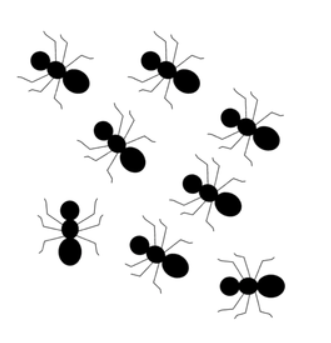
Make many copies of the ant page. Have the children roll a dice and add that many ants to their ant hill.

Mathematics/Number & Operations; begins to use one-to-one correspondence in counting objects and matching groups of objects.

Outdoor Play

Look around your playground for something heavy or awkward to lift (a small table, a wagon, a lounge chair). Tell the children that you would like to move the object to the otherside of the yard. Have the children work together to move the object from one side of the playground to another.

Social & Emotional Development/Cooperation; shows increasing abilities to use compromise and discussion in working, playing, and resolving conflicts with peers.

Bring out some food scraps and look for ants. When you find them, put the food down near their path. Come back later and see if there is any ant activitiy. Observe and talk about what you see happening.

Science/Scientific Knowledge;expands knowledge of and abilities to observe, describe, and discuss the natural world, materials, living things, and natural processes.

Transitions

Use the close-up cards and see if the children can guess what each item is. Later put the cards into the Math & Manipulative center for the children to use individually.

Mathematics/Geometry & Spatial Sense; progresses in ability to put together and take shapes apart.

Resources

ant hill for counting ants game
ants for counting

writing letters w/ raisin ants
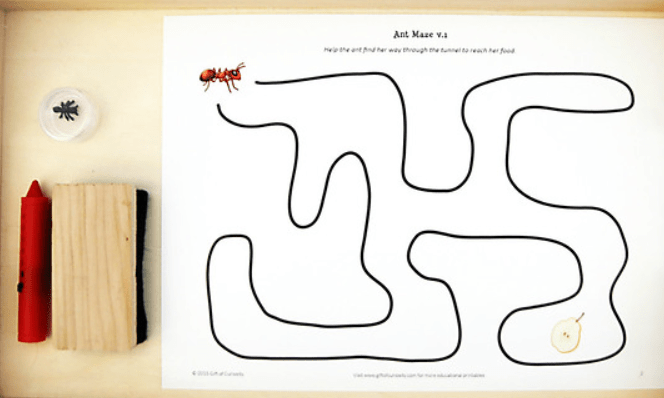
you can make simple mazes for writing center

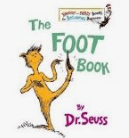
The Foot Book, by Dr. Seuss

            Dr. Suess in all his rhyming glory discusses feet.

Materials

  • Footprint pattern, lots
  • Make footprints ahead of time for writing and transitions.
  • Show Store supplies- a ruler, some shoe boxes, lots of shoes, a cash register, play money and several gift bags. 

Vocabulary

Before Reading the Story

            Ask the children to take off their shoes and socks as they come to the group time.  Take a few minutes and talk about feet.  How many feet do you have, how many toes?  See the toe nails; does anyone have polish on them?  Show the children where the heel of the foot is and the big toe and the pinky. 

Science/Scientific Knowledge; expands knowledge of and respect for their bodies and the environment.

Reading the Story

            Practice beforehand so that you can read this Seuss book in a flowing voice. As you read, slow down occasionally and see if the children can find the rhyming words.

Literacy/Phonological Awareness; progresses in recognizing matching sounds and rhymes in familiar words, games, songs, stories, and poems.

After Reading the Story

            Ask the children to help you make a list of all the things that we can do with our feet. (I can ride my bicycle, I can kick the ball, I can jump up and land on my feet).

Science/Scientific Knowledge; expands knowledge of and respect for their bodies and the environment.

Discovery

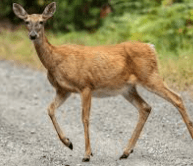
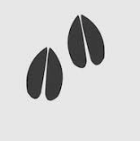
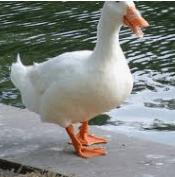
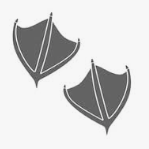
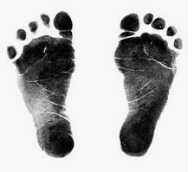
            Explain to the children that all animals have their own special footprint/shape.  Look at some of the foot prints and the animals that make them. How are they alike and different?

Science/Scientific Skills & Methods; develops increased ability to observe and discuss common properties, differences and comparisons among objects and materials.

Music and Movement

            Teach the children the following chant, Left Foot Right Foot. As you do, hold up your left hand and then your right. Ask the children what other body parts that they have that one is left and one is right?

Left foot, right foot I am cool,

Left foot, right foot I learned at school.

Science/Scientific Knowledge;expands knowledge of and respect for their bodies and the environment. AND Language Development/Listening & Understanding; demonstrates increasing ability to attend to and understand conversations, stories, songs, andpoems.

            Do the Mexican Hat Dance and teach the children to differentiate their left from their right foot. https://www.youtube.com/watch?v=qvRRvMw9-fg

Left foot, right foot, left

Right foot, left foot, right

Left foot, right foot, left

Right foot, left foot, right

Dance round and round the circle

Dance round and round the circle

Dance round and round the circle

And then begin again./And now this is the end.

Creative Arts/Music; shows growth in moving in time to different patterns of beat and rhythm in music.

            Make a set of 26 foot prints.  Write an alphabet letter on each one and put them on the floor in a walking pattern.  Put the feet in A-Z order and contact them to the floor.  The children can then walk the letters as they sing or say the alphabet. 

Literacy/Alphabet Knowledge; shows progress in associating the names if letters with their shapes and sound.

Blocks;

Cut out extra foot prints. Encourage the children to measure how many footprints long a block is. Can they make a line of blocks 5 foot prints long? 10 foot prints long?

Mathematics/Patterns & Measurement; shows progress in using standard and non-standard measures of length and area of objects.

Art;

            Take off your shoes and socks and paint the children’s feet.  Help them to make their foot prints on a piece of paper or get a long piece of paper that they can walk across. Have all the children contribute to the same sheet of paper to make a classroom footprint-collage.

Creative Arts/Art; begins to understand and share opinions about artistic products and experiences.

Library and Writing

            Have each child trace around their foot (with their shoe off) and then take a pencil and label the toes 1-5. Encourage the children to cut out around their foot.

Physical Health & Development/Fine Motor Skills; progresses in abilities to use writing, drawing, and art tools, including pencils, markers, chalk, paint brushes, and various types of technology.

Sand and Water

            Put your sand table down on the floor today and let the children take off their shoes and socks and put their feet into the sand.  You could also add water. Ask the children to use their words to tell you how it feels on their feet.

Science/Scientific Skills & Methods; develops growing ability to collect, describe, and record information through a variety of means, including discussion, drawings, maps, and charts.

Dramatic Play

            Play shoe store with the children.  Add a ruler, some shoe boxes, lots of shoes, a cash register, play money and several gift bags.  Show the children how to stand on the ruler and measure their foot.  Help the children identify what number/size their foot is.

Creative Arts/Dramatic Play; participates in a variety of dramatic play activities that become more extended and complex. AND Mathematics/Patterns & Measurement; shows progress in using standard and non-standard measures of length and area of objects.

Math and Manipulatives

Put out any people puzzles that you have today. Can the children show you where the head is, name the parts of the head. Show you where the arm is and name parts of the arm? ETC..

Science/Scientific Knowledge;expands knowledge of and respect for their bodies and the environment.

Outdoor Play;

            Find a balance beam to walk, or draw a line with chalk on the cement. Can the children walk forward, backward, slide side to side?

Physical Health & Development/Gross Motor Skills;shows increasing levels of proficiency, control, and balance in walking, climbing, running, jumping, hopping, skipping, marching, and galloping.

Transitions

            Make another set of footprints for your room but this time make both a left and right foot per children in the room.  Use these to make a line up chart by the door.  The first sets of feet both have the number 1, or one can have the numeral and the other the word.  Make 1-20 so that when the children line up, everyone has a number set to stand on.

Mathematics/Number & Operations; begins to associate number concepts, vocabulary, quantities, and written numerals in meaningful ways.

Resources

bear
deer
dog
bird
duck
human
use for measuring activities