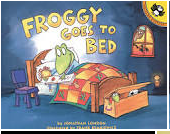
Froggy Goes to Bed, by Jonathan London

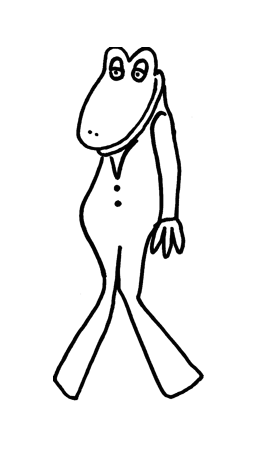
            It’s time for Froggy to go to bed but first he must prepare.  Froggy has so many things to do will he ever get to sleep?  This is a fun story to help children recall nightly rituals of their own.

Materials

  • Quilt pattern and many one-inch squares
  • Non-breakable mirrors

Vocabulary

  • Routine (schedule of events from one time to another, lunch to nap time)
  • Quilt (a blanket with a pattern design on it)

Before reading the story

            Ask the children if they know what a routine is?  Tell the children that routine means the schedule or practices of things that they do every day or night.  Can they think of any routines that they do?  Remind them about your classroom schedule, or your lunch routine.  Show the cover of the book and tell them this is the story about Froggy’s bedtime routine.  Ask them if they have any bedtime routines.  Write them down on a large sheet of paper.

Social & Emotional Development/Self-Concept; develops growing capacity for independence in a range of activities, routines, and tasks.

Reading the Story

Read with a soft soothing voice.

After Reading the Story

            Take back out your large sheet of paper that the children told their night time routines and compare them to Froggy’s. (Kerry said that she brushes her teeth before she goes to bed and so does Froggy).  Highlight all the similarities between the story and the children’s bedtime routines.

Literacy/Book Knowledge & Appreciation; shows growing interest and involvement in listening to and discussing a variety of fiction and non-fiction books, and poetry.

Discovery

            Put out mirrors so when the children brush their teeth today they can look at their teeth to see if they got them pearly white.  Today would be a good day to put out any teeth that you might have (pictures or real) as well as a large set of teeth that the children can examine with magnifying glasses.

Physical Health & Development/Health Status & Practices; shows growing independence in hygiene, nutrition, and personal care when eating, washing hands, brushing teeth, or toileting.

Music and Movement

            Take the children’s list of bedtime routines and sing them to the tune of This is the Way.    This is the way we wash our face, wash our face, wash our face.  This is the way we wash our face when it’s time for bed. https://www.youtube.com/watch?v=4XLQpRI_wOQ

       Put on the video, Rubber Duckie https://www.youtube.com/watch?v=Mh85R-S-dh8, and let the children dance.

Blocks

Art

            Cut out pictures of food you like to eat and glue to a paper plate, a bedtime snack.  Add a picture  of a fly or two for fun.

Social & Emotional Development/Self-Concept; begins to develop and express awareness of self in terms of specific abilities, characteristics, or preferences.

Sand and Water

            Fill the table with water and bubbles.  Add rubber animals or hard baby dolls to pretend it is bathtime. Add a washcloth for the children to wash the animals/dolls and a towel for drying.

Physical Health & Development/Health Status & Practices; shows growing independence in hygiene, nutrition, and personal care when eating, washing hands, brushing teeth, or toileting.

Library and Writing

            Talk to the children about the part of the day between lunch and nap.  What are your classroom routines?  Have the children help illustrate these events and make a classroom book titled, Children, It’s Time to Nap.  On the bottom of each page write “but first we need to_________”.

Social & Emotional Development/Self-Concept; develops growing capacity for independence in a range of activities, routines, and tasks.

Dramatic Play

            Act out bedtime routines.  Remind the children to think about the things that Froggy had to do before he fell asleep.

Literacy/Book Knowledge & Appreciation; demonstrates abilities to retell and dictate stories from books and experiences; to act out stories in dramatic play; and to predict what will happen next in a story.

Math and Manipulatives

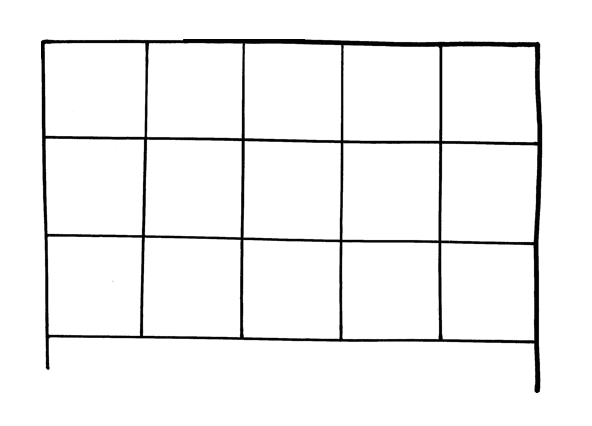
            Make several copies of the quilt grid.  Cover with contact paper.  Cut out many 1 – inch squares from assorted papers (construction, wrapping, foiled,etc)  Cover these with contact paper also.  Show the children how to make simple patterns ABABAB to fill the paper.  For younger children you might have to make a sample that they can copy the first time. 

Mathematics/Patterns & Measurement; enhances abilities to recognize, duplicate, and extend simple patterns using a variety of materials.

Outdoor Play

            If you have a parachute you can tell the children to lay on the ground and put their bodies under with only their head exposed for sleep.  You can have them take turns running under the covers/parachute.  Hop across to the other side like a frog.

Language Development/Listening & Understanding; shows progress in understanding and following simple and multiple step directions.

Transitions

            Shout out child’s name as their cue to go to the next activity.  KERRY!  Or K-E-R-R-Y!!!!!  go and find a center.

Literacy/Alphabet Knowledge; shows progress in associating the names of letters with their shape and sounds.

Resources
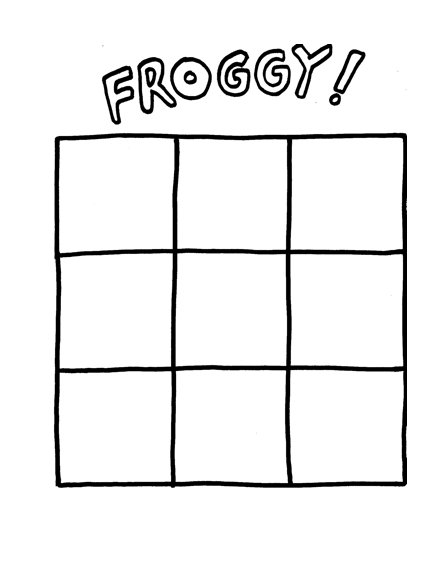
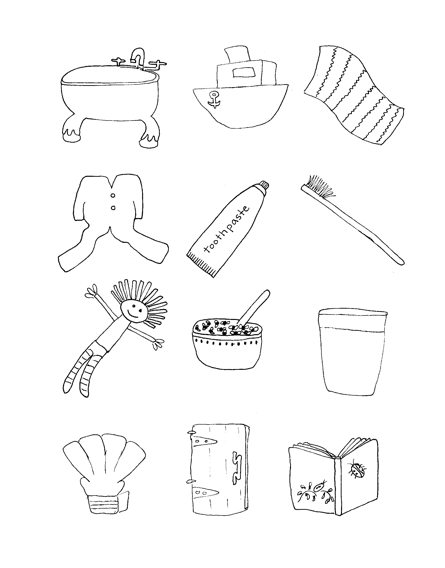
Make several sets and use these for patterns making with older children.
Use this to make patterns upon

Goodnight Moon, by Margaret Wise Brown

            Now it’s time to go to bed.   Mother rabbit helps her little bunny settle her head, saying goodnight to things in the home feeling safe for a cozy nights sleep.

Materials

  •   Several flashlights
  •  Alphabet line
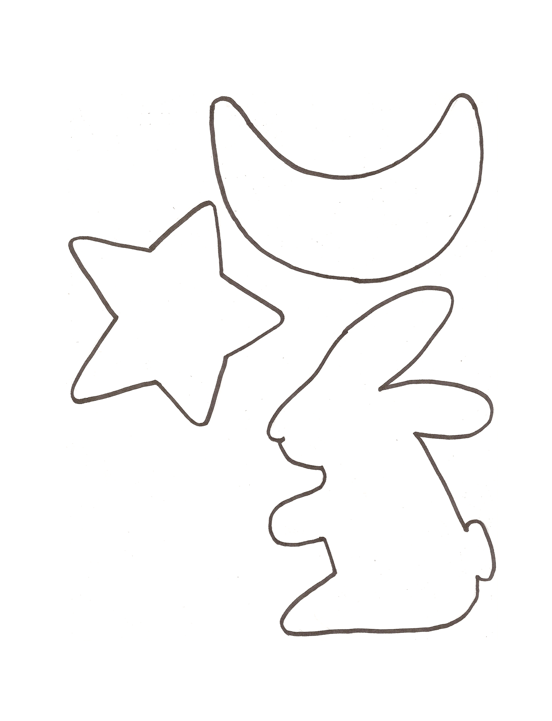
  •  Star, moon, and rabbit shape for tracing onto manila file
  • Oil pastels

Vocabulary

Before reading the story

            Open the book to the first page.  Ask the children if they can guess what the story is about.  Can you tell what time of day it is?  Where is the bunny?  Stretch and yawn.  Turn to the cover of the book and tell the children the book is titled, Goodnight moon.  Ask them if they can see where the moon is.

Science/Scientific Knowledge; develops growing awareness of ideas and language related to attributes of time and temperature.

Reading the book

            Read the book in a soft soothing voice.  Point to each object as you read the goodnight_____ and let the children help name the objects.

Language Development/Speaking & Communicating; uses an increasingly complex and varies spoken language.

After Reading the Story;

            Ask the children how night time is different from day time?  What types of activities do you do during the day?  What kinds of activities do you do at night?  How do you know when it is time for bed?  What gives us light in the day time?  What gives us light in the night?  What kinds of things are in your bedroom?

Science/Scientific Knowledge; develops growing awareness of ideas and language related to attributes of time and temperature.

Discovery

            Put several flashlights into the center.  What can you find that the flashlight can shine through (color paddles, your shirt, paper, a plastic lid, etc)?  Does the flashlight shine through a book, a toy car?

Science/Scientific Skills & Methods; develops increased ability to observe and discuss common properties, differences, and comparisons among objects and materials.

Music and Movement

            Sing Hey Diddle Diddle, The Cat and The  Fiddle. https://www.youtube.com/watch?v=caRuhprYlOQ

Teach the children the following poem with hand actions.

These fingers are so sleepy,                                 Point to hand

It’s time they went to bed.

First you little finger, Fold down pinkie finger

Tuck in your little head.                                      

Ring man, now it’s your turn                               Fold down ring finger

Now tall man great                                              Fold down middle finger

Pointer finger hurry                                              Fold down pointer finger

Because it’s getting late!

Let’s see, are you all tucked in?

No, there’s still one to come.

 Move over pointer finger,

Make room for stubby thumb                             Fold in thumb

            Author Unknown

Creative Arts/Music; participates with increasing interest and enjoyment in a variety of music activities, including listening, singing, finger plays, games, and performances.

Blocks

            Use the blocks to make rooms of a house.  Add doll furniture and small people.

Social & Emotional Development/Knowledge of Families & Communities; begins to express and understand concepts and language of geography in the contexts of the classroom, home, and community.

Art

Let the children draw with oil pastels onto white construction paper. When they are finished, wash over theri drawing with watercolors in a dark night type color. Using watercolors over oil pastels make the colors pop and give a night time effect. Encourage the children to draw something in their bedroom. You can then write,”Lee says good night stuffed elmo” and make a book with each child saying good night to what they have drawn on the paper.

Literacy/Early Writing; begins to represent stories and experiences trough pictures, dictation, and in play. AND Creative Arts/Art; gains ability on using different art media and materials in a variety of ways for creative expression and representation.

   Sand and Water

            Put magnetic alphabet letters into the sand.  Encourage the children to dig for the letters and match them to an alphabet line. Make a simple Alphabet line by tracing the magnet letters onto a piece of sentence strip. Cover with contact paper if you want it to last for multiple uses.

Literacy/Alphabet Knowledge; kn ows that letters of the alphabet are a special category of visual graphics that can be individually named.

Library and Writing

Trace around the star, moon and rabbit shapes onto a manilla file and cut them out. SHow the children how to use the manilla folder shapes to trace around onto paper. Encourage the children to practice cutting out the shapes with scissors.

 Literacy/Early Writing; experiments with a growing number of writing tools and materials, such as pencils, crayons, and computers. AND Physical Health & development/Fine Motor Skills; develops strength, dexterity, and coordination needed to use tools such as scissors, paper punch, stapler, andhammer.

Dramatic Play

            Encourage a child to be the mother bunny.  She says good night to an object in the dramatic center and the baby bunnies repeat.

Literacy/Book Knowledge & Appreciation; demonstrates progress in abilities to retell and dictate stories from books and experiences; to act out stories in dramatic play; and to predict what will happen next in a story.

Math and Manipilatives

Use the link to get a free bingo game download for Goodnight Moon. https://littlelearninglane.com/2016/07/01/goodnight-moon-freebies/

Outdoors

As the children play on the slide or other equipment that requires going one at a time, play Categories. As each child prepares to go down the slide, they must name something from a category specified by the teacher. (EXample= name a stuffed animal you have at home, name a food you eat for breakfast, name something that you do in the night, name something you wear).

Approaches to Learning/Reasoning & problem Solving; develops increasing ability to find more than one solution to a question, task, or problem.

Transitions

Play I’m Thinking Of… Describe something in the room and see if the children can guess what it is. “I’m thinking of something that is made of wood and is in the dramatic center. We can pretend to cook meals on it and a real one gets hot”.

Resources

for tracing and cutting

The Lion & The Mouse, by Jerry Pinkney

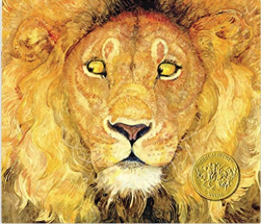
This wordless picture book is beautifully illustrated and tells the story about a mouse who was saved by a kind lion from becoming the lions dinner and how later the tiny mouse was able to save the lion from a hunter’s net.

Materials

  • Kindness coupons
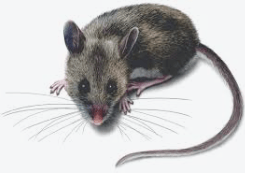
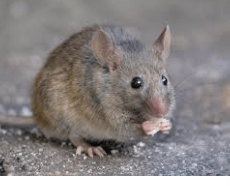
  • Picture of a lion and a mouse
  • 4 small fishnets or skimmer spoons

Vocabulary

  • Fable (a story that teaches a lesson)
  • Kindness (the act of doing something friendly, generous, or considerate for another)

Before Reading the Story

Tell the children that today’s story is about doing an act of kindness for another person or animal. Ask the children if they know what kindness means or looks like? Help the children if they are having trouble with the conversation by giving the definition of kindness and asking questions such as; have you ever done something nice for another person? Do you think that you can help a person who is bigger than you? Stronger than you? Ask the children how ift makes them feel when they do an act of kindness towards another? Explain that today’s story is about a wild lion and a little mouse. Introduce the story.

Language Development/Speaking & Communicating; develops increasing abilities to understand and use language to communicate information, experiences, ideas, feelings, opinions, needs, questions; and for other varied purposes.

Reading the Story

Stop and point out the loving act of kindness that took place on the page-on the page where the lion lets the mouse go and on the page where the mouse helps free the lion.

Language/Speaking & Communicating; uses an increasingly complex and varied spoken language.

One the first page, ask the children if they can tell at what time the story is taking place (night).  On the page with the Jeep, ask the children if they think they know what the men are doing in the jungle.  After they respond, on the next page show them how the sandbags will fall when someone or some animal steps on the rope.  Can they guess who’s foot has just stepped on the rope?  On the page with the roaring, ask the children if they know what the mouse is up to?  Do you think he is scared when he hears the roaring or do you think that he wants to help the lion?  WHY?

Literacy/Book Knowledge & Appreciation; demonstrates progress in abilities to retell and dictate stories from books and experiences; to act out stories in dramatic play; and to predict what will happen next in a story.

 After Reading the Story

Tell the children that this story is a fable. Fables teach lessons. Ask the children what they think the lesson of the story was? (Be nice, help others, even little people can help).

Approaches to Learning/Reasoning & Problem Solving; develops increasing abilities to classify, compare, and contrast objects, events, and experiences.

It might be fun to try to act this story out. Since it is a wordless book, the children can tell it in their own words and the actors can roar, scratch, and squeak.

Literacy/Book Knowledge & Appreciation; demonstrates progress in abilities to retell and dictate stories from books and experiences; to act out stories in dramatic play; and to predict what will happen next in a story.

Discovery

Put out the pictures of the lion and the mouse. Ask the children to tell you some of the similarities and differences that they see between the two animals. (They are both animals, they have 4 feet, they have tails, one is big and one is little, the lion has long fur)

Science/Scientific Skills & Methods; develops increased ability to observe and discuss common properties, differences, and comparisons among objects and materials.

Music and Movement

Teach the children the song Make New Friends minus the round. https://www.youtube.com/watch?v=r9NwEGSQ3r4

Play the Sesame Street Kindness Song and have the children repeat, “that’s kindness” with the characters. https://www.youtube.com/watch?v=enaRNnEzwi4

Creative Arts/Music;participates with increasing interest and enjoyment in a variety of music activities, including listening, singing, finger plays, agames, and performances.

Blocks

Encourage the children to work in cooperation with the others in the center.

Social & Emotional Development/Cooperation;shows increasing abilities to use compromise and discussion in working, playing, and resolving conflicts with peers.

Art

Cut out large circles, about the size of a dinner plate. Draw a smaller circle inside, about the size of a lunch plate. Show the children how to use scissors and cut from the outside of the large circle to the line of the smaller circle. This could then become a mane and the children can draw a lion face with markers.

Physical Health & Development/Fine Motor Skills; develops strength, dexterity, and control needed to use tools such as scissors, paper punch, stapler, and hammer.

Sand and Water

Add the fishnets or skimmer spoons to the table today with water. Dump a set of sorters such as sorting bears into the water. Encourage the children to use the fish nets to scoop up all the red counters, the small counters, etc.

Mathematics/Geometry & Spatial Sense; shows growth in matching, sorting, putting in a series, and regrouping objects according to one or two attributes such as color, shape, or size.

Library and Writing

Tell the children that you will help them write and act of kindness that they will do for a family member or friend. Copy the name of the person that the child wants to do the act for onto a piece of paper. The child copy the name onto the kindness coupon. On the other side you can write what the child would like to do. (Mommy-I won’t fight with my brother. Grandma-I will read stories with you. Tony-I will let you ride my bike).

Literacy/Early Writing; progresses from using scribbles, shapes, or pictures to represent ideas to using letter-like symbols, to copying and writing familiar words such as their own name.

Dramatic Play

Add some yarn or string to the center and encourage the children to act out the story on their own.

Literacy/Book Knowledge & Appreciation; demonstrates progress in abilities to retell and dictate stories from books and experiences; to act out stories in dramatic play; and to predict what will happen next in a story.

Math and Manipulatives

Cut out 2 foot lengths of yarn or string. Fold in half and tie to a chair. The children can practice tying knots the rest of the length of yarn or string. Cut and tie similar lengths of ribbon. The children can use scissors to snip the ends up.

Physical Health & Development/Fine Motor Skills; develops growing strength, dexterity, and control needed to use tools such as scissors, paper punch, stapler, and hammer.

Outdoor Play

Practice your roars and squeaks.

Transitions

Tell the children about any acts of kindness that you saw happen in the class today. (I like the way Alison shared her scissors with Sean. I saw Ryan ask Paula if she wanted to build blocks with him. I noticed Roger was feeling sad and Bobby asked him if he was ok).

Social & Emotional Development/Social Relationships; shows progress in developing friendships with peers.

Resources

Use for kindness coupons