Curious George rides a bike, by H.A.Rey

            When Curious George gets a bicycle he goes on quite an adventure around town.

Materials

  •             Newspapers or lots of scrap paper.
  • Paper for origami boats, directions in book
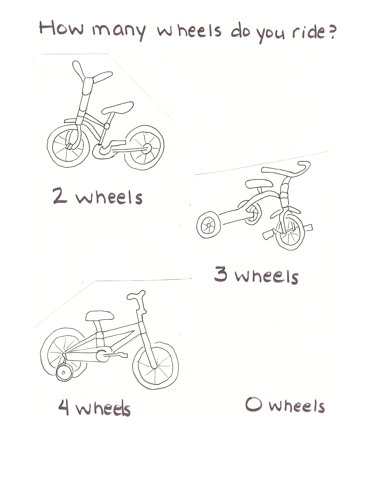
  •             Graph/no bicycle, 2 wheels, 3 wheels, 4 wheels
  •             Clean metal coffee can with lid
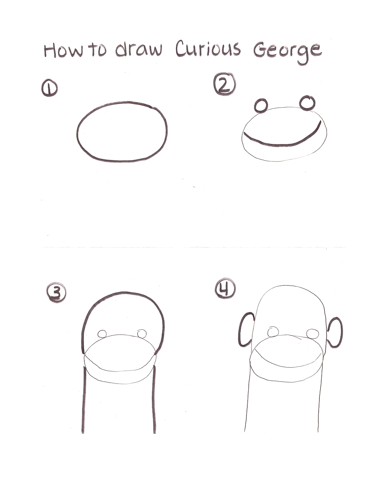
  •             Monkey drawing directions

Vocabulary

  •             Curious (to wonder about things)
  •             Celebrate (to honor someone for something special)
  •             Delighted (to be very happy about something)
  •             Fleet (a group of ships)
  •             Admiral (the person in charge of a fleet of ships)
  •             Responsible (to do the right thing, to do the safe thing)

Before Reading the Story

            Ask the children if any of them own bicycles.  What color is your bike?  Where do you ride it?  Make a graph of how many wheels are on the children’s bicycles and have the children help fill it in.  Talk to the children about bike safety rules (wear a helmet, do not ride in the street, make sure your shoes are tied, let a grown up know you are riding your bike, make sure your tires are blown up properly.

Mathematics/Number & Operations; demonstrates increasing interest and awareness if numbers and counting as a means for solving problems and determining quantity. AND Physical Health & Development/Health Status & Practices; builds awareness and ability to follow basic health and safety rules such as fire safety, traffic and pedestrian safety, and responding appropriately to potentially harmful objects, substances, and activities.

Reading the Story

            Stop along the way and ask was George being responsible, was George being safe?

Physical Health & Development/Health Status & Practices; builds awareness and ability to follow basic health and safety rules such as fire safety, traffic and pedestrian safety, and responding appropriately to potentially harmful objects, substances, and activities.

After Reading the Story

            Go back over the story and list the things George did that were responsible/not responsible on a piece of paper. (Not responsible; riding with no helmet, riding with no hands, not finish delivering papers, going to the river, using the newspapers he was supposed to deliver for boats, going with strangers to be in the show, getting close to the ostrich,   /Responsible; helping deliver papers, staying on the bench when he was told to, using the bugle to call the men when the bear escaped, saving the bear, being in the show when he said he would).

Language Development/Listening & Understanding; demonstrates increasing ability to attend to and understand conversations, stories, songs, and poems.

Discovery

   Bring in a coffee can with the lid.  Let the children experiment putting different classroom toys inside to see and hear the effect they have on the cans ability to roll.       

Science/Scientific Skills & Methods; begins to participate in simple investigations to test observations, discuss and draw conclusions, and form generalizations.

Music and Movement

            Play Peddle Round the Village, to tune of In and Out the Windows. https://www.youtube.com/watch?v=-LLGIeTuv8w  Have all the children hold hands and make a circle.  Hold their hands up while still holding hands.  Choose a child to be the first rider and have them go into the center of the circle.  As the children sing, the rider passes under the children’s arms.

Peddle round and round the village

Peddle round and round the village

Peddle round and round the village

Now go and pick a friend

(rider changes places with another child)

Language Development/Listening * Understanding; shows progress uin understanding and following simple and multiple-step directions.

            Play There Was A Funny Clown, sung to The Farmer in the Dell.  As you sing, let the children go in the center and do a funny trick (Children like to do somersaults to this song so make sure your circle is large enough that no one gets kicked in the face)

There was a funny clown

His/her name was Ting-a-ling

Watch him/her do a funny trick

In the circus ring.

Physical Health & Development/Health Status a & Practices; participates actively in games, outdoor play, and other forms of exercise that enhance physical fitness. AND Approches to Learning/Reasoning & Problem Solving; develops increasing ability to find more than one solution to a question, task, or problem.

            Take the children on a pretend bike ride.  Have everyone lay on their backs and then put their feet up in the air and pretend to peddle their bicycles.  Remember going up hill is hard so you have to peddle slower.  Going down hill you will be peddling very fast or putting your feet out and gliding. 

Creative Arts/ Dramatic PLay; particiapates in a variery of dramatic play acticvities that become more extened and complex.

Blocks

Put out cars and other vehicles with wheels. Add a ramp, or show the children how to make a ramp using blocks. As the children are playing, ask “Why are wheels important? WHy are wheels round? What would happen if that car had square wheels? Which vehicle goes farther/faster down the ramp, why do you think that?”. Encourage the children to find classroom objects that will roll down the ramp (masking tape roll, sphere shaped blocks, pencil, crayon, small ball, etc.).

Science/Scientific Skills & Methods; develops increased ability to observe and discuss common properties, diffrences, anmd comparisons among objects and materials. AND Scienctific Knowledge; shows increased awareness and beginning understanding of changes in materials and cause-effect relationships.

 Art

       Tell the children that you want to make a book titles, On My Way to School. Ask the children to draw a picture of something that they saw on their way to school today.  Write their words at the bottom of the page. (On my way to school today I saw a big dog, a garbage truck, my friend Sam).

Social & Emotional Development/Knowledge of Families & Communities; begins to express and understand concepts and language of geography in the contexts of the classroom, home, and community. AND Literacy/Early Writing; begins to represent stories and experiences through pictures, dictation, anad in play.

Library and Writing

     Make several copies of the How to Draw Curious George’s head. Give the children markers or crayons and encourage them to “read” the directions.

Literacy/Early Writing; develops understanding that writing is a way of communicating for a variety of purposes. AND Mathematics/Geometry & Spatial Sense; progresses in ability to put together and take shapes apart.

Sand and Water

            Ahead of time, make several newspaper boats. As the children are playing you can also help them make paper boats (the instructions are in the story). Fill the table with water today.  Let the children float their paper boats. Also include a float and sink activity (try floating objects from the room and predicting if it will float or sink-block, pencil, crayon, counter, lego, baby doll, puzzle piece). As the children try floating different objects, have them put those that float in one pile and those that do not into another pile.

Science/Scientific Skills & Methods; develops growing abilities to collect, describe, and record information through a variety if means, including discussion, drawings, maps, and charts.

Dramatic Play

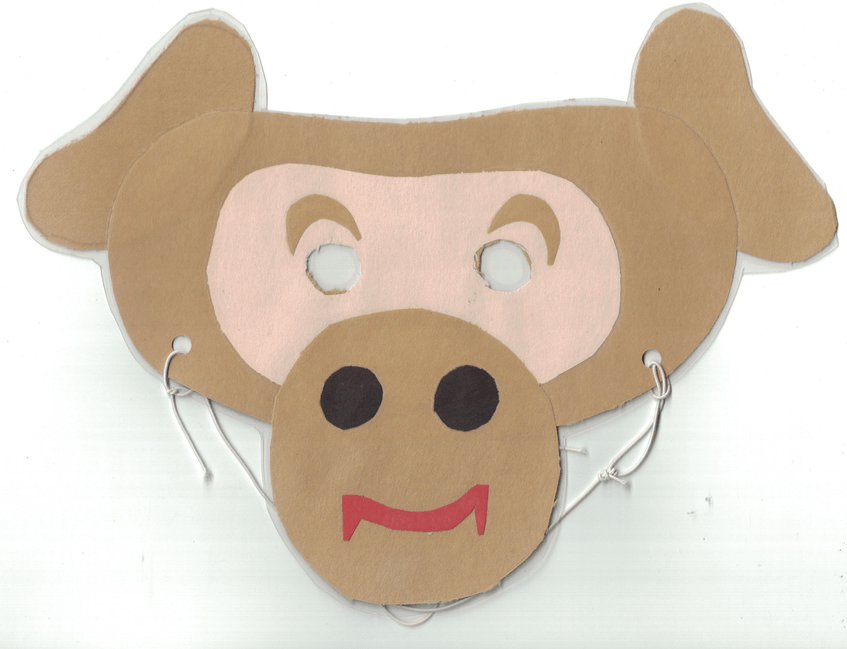
            Add monkey masks.  The children can pretend to be Curious George.  Add a big hat or sombrero.

Literacy/Book Knowledge & Appreciation; demonstrates progress in abilities to retell and dictate stories from book sand experiences; to act out stories in dramatic play; and to predict what will happen next in a story.

Math and Manipulatives

            Teach the children how to fold origami boats from paper.  See page 18 of the story.

Language Development/Listening & Understanding; shows progress in understanding and following simple and multiple-step directions. AND Approaches to Learning/Engagement & Persistence; grows in abilities to persist in and complete a variety of tasks, activities, projects, and experiences.

Outdoor Play

            Bring out cloth satchels and ride the bikes.  Fill the satchels with old newspapers or just rolled up paper and be delivery boys/girls. Or have the children write notes to one another and take turns delivering on the bike.

Social & Emotional Development/Knowledge of Families & Communities; develops growing awareness of jobs and what is required to perform them. AND Physical Health & Development/Gross Motor Skills; demonstrates increasing abilities to coordinate movements in throwing, catching, kicking, bouncing balls, and using the slide and swing.

Transitions

            As the children move to the next activity have them pretend to ride a bike.  They will have to pick their legs way up in a marching fashion but then sort of kick them out in front of them as they walk.  Practice as a group and then let the children ride off to the next activity.

Physical Health & Development/Gross Motor Skills; shows increasing levels of proficiency, control, and balance in walking, climbing, running, jumping, hopping, skipping, marching, and galloping.

Resources
Mama Provi and the Pot of Rice, by Sylvia Rosa-Casanova

            When Lucy gets the chicken pox, Mama Provi knows just what she needs to feel better.  She cooks up some arroz con pollo and heads up the eight flights of stairs to her grand daughters apartment.  On the way she meets some of her neighbors and the simple meal turns into a feast.

Materials

  • Local real-estate advertisements.  Two of each to use for matching.
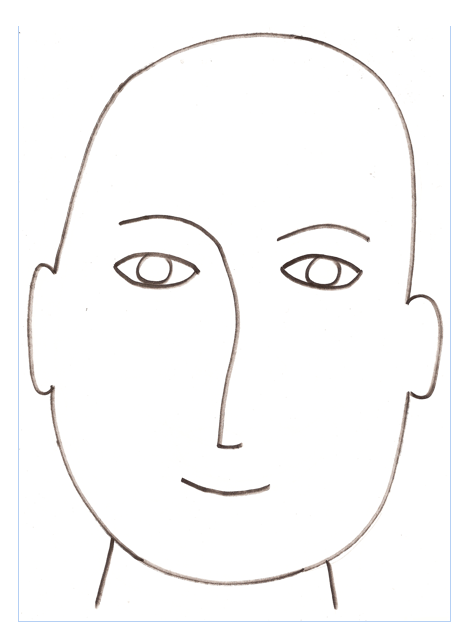
  • Face picture
  • Dice
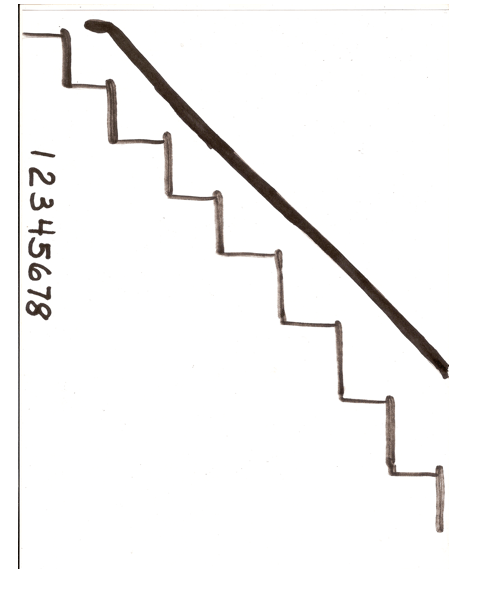
  • Picture of stairs
  • Animals in their homes

Vocabulary

  • Apartment  (a home in a large building that has more than one home in it).
  • Dozen (12 of something)
  • Tremendous (something really great or wonderful)

Introducing the Reading the Story

            Ask the children if they know if they live in a house or an apartment? If you do not have any children who live in an apartment, show the children a picture of one, or draw one and explain that it has many floors that people live on.  Sometimes there is an elevator and sometimes there are only stairs.  Show the children the book cover and tell the children that Mama Provi lives in an apartment.  She lives on the bottom floor and her grand daughter lives on the top floor.  Read the title of the book and ask the children if they can guess why Mama Provi might be carrying a pot of rice up to her granddaughter Lucy. 

Approaches to Learning/Reasoning & Problem Solving; develops increasing abilities to classify, compare, and contrast objects, events, and experiences.

Reading the Story

            As Mama Provi goes up each flight of stairs, huff and puff a little as though you are slightly out of breath. 

After Reading the Story

 In the story Lucy had the Chickenpox.  Ask the children if they have ever had the chickenpox or been sick in bed.  Who took care of you, what did they do to make you feel better?  

Social & Emotional Development/Knowledge of Families & Communities; progresses in understanding similarities and respecting differences among people, such as genders, race, special needs, culture, language, and family structures. AND Language Development/Speaking & Communicating; develops increasing abilities to understand and use language to communicate information, experiences, ideas, feelings, opinions, needs, questions; and for other varied purposes.

Music and Movement 

            Play the Pretend game.  Pretend to carry something heavy.  Pretend to carry something wiggly, something enormous, and something very small. 

Creative Arts/ Dramatic Play; shows growing creativity and imagination in using materials and in assuming different roles in dramatic play situations.

Teach the children The Elevator Song. https://www.youtube.com/watch?v=mfrn5_v_eCM Make your bodies go up and down with the song.

Mathematics/Geometry & Spatial Sense; builds an increasing understanding of directionality, order, and positions of objects, and words such as up, down, over,under, top, bottom, inside, outside, in front, and behind.

Do the song, Let’s Go Riding an Elevator using scarves to act out. https://www.youtube.com/watch?v=1sOlpdcEjsQ

Creative Arts/ Movement; shows growth in moving in time to different patterns of beat and rhythm in music.

Discovery

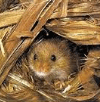
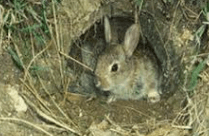
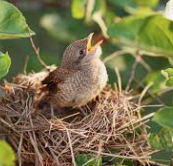
            Bring in pictures or books about animals and their homes.

Science/Scientific Knowledge; expands knowledge of and abilities to observe, describe, and discuss the natural world, materials, living things, and natural processes.

Blocks

            Give the children 10 cube shaped blocks or similar shaped blocks and challenge them to build stairs. 

Mathematics/Geometry & Spatial Sense; progresses in ability to put together and take shapes apart.

Art

            Encourage the children to draw a large head shape, or use the one provided.  Let the children use bingo daubers or their fingers to make chicken pocks on the head shape.  The children can also personalize by adding hair or extending features.

Creative Arts/Art; gains ability in using different art media and materials in a variety of ways for creative expression and representation.

Sand and Water

            If your center allows, add rice to the table for pouring and scooping.  If not, try birdseed as it makes the same kind of soothing sound when being scooped and poured. 

Library and Writing

            Give each child a picture of the stairs and encourage them to copy or write the numbers on each level.  They can then cut out pictures of food to glue on the picture, or draw a picture of their own favorite food/s. 

Physical Health & Development; Fine Motor Skills; progresses in abilities to use writing, drawing, and art tools, including pencils, markers, chalk, paint brushes, and various types of technology. AND Mathematics/Number & Operations; begins to associate number concepts, vocabulary, quantities, and written numerals in meaningful ways.

Dramatic Play

            Bring in gift bags or shopping bags that the children can use in their play today.

Encourage the children to do some delicious cooking.  Can they name all the pretend foods in your dramatic center? 

Language Development/Speaking & Communicating; uses an increasingly complex and varied vocabulary. 

Math and Manipulatives

            Put the picture of the face on the table and explain to the children that when a person has the chicken pox that they get a rash that is all spotty.  Let the children take turns rolling the dice.  They can count the number of spots on the dice and then use a marker to make the corresponding spots on the face picture.  As the children continue to add spots make comments about how the face sure has many chicken pox! 

Mathematics/Number & Operations; begins to use one-to-one correspondence in counting objects and matching groups of objects.

Outdoor Play

            Use mud, sand, dirt, rocks, and other natural ingredients to cook a yummy feast today. 

Creative Arts/Dramatic Play; shows growing creativity and imagination in using materials and in assuming different roles in dramatic play situations.

Transitions

            In the story everyone made their food trades “En un dos port res” which means lickedty split or quickly.  As the children move to the next activity ask them to move En un dos port tres or lickedty split. 

Language Development/Listening & Understanding; understands an increasingly complex and varied vocabulary.

Resources

Dear Parent,

            Cooking is a wonderful way to share an experience with your child.  While cooking you are introducing your child to math (add 2 cups of _______, ¼ teaspoon ____) and also science concepts (what happens to an egg when you add heat?  What happens when you mix milk with flour?).  Find a simple recipe that you and your child can make together.

Description: Macintosh HD:Users:rogercormier:Desktop:Scan.tiff
Description: Macintosh HD:Users:rogercormier:Desktop:Scan 1.tiff

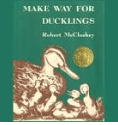
Make Way for Ducklings, by Robert McCloskey

            Mr. and Mrs. Mallard are looking for the perfect place to raise their family.  As they search for the perfect place, they run across dangers.  Will they find their perfect place?  Where will it be?

Materials

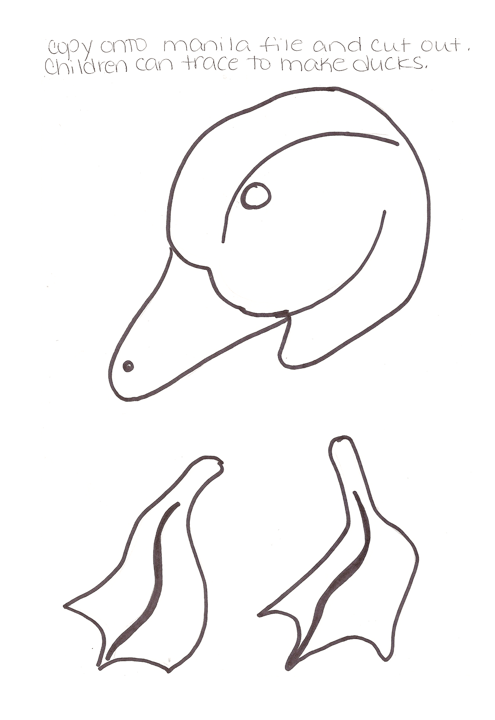
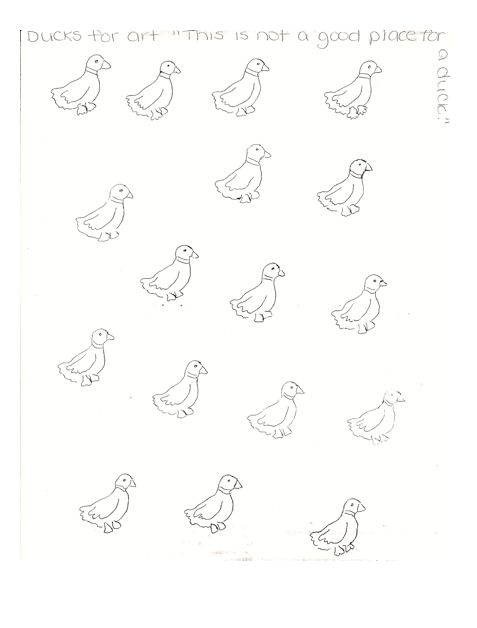
  • Copy of small ducks
  • 1 white paper plate per child.  Fold in half and punch holes along the edge. 
  • Yarn
  • Duck head/foot
  • Index card showing a letter from the letters the children’s names begin with.

Vocabulary

  • Dither (nervous and upset)
  • Hatch (when the ducklings come out of their shells)

Before Reading the Story

            Read the title of the book but don’t show the cover yet.  Ask the children if they think they know what Make way for ducklings means?  Now show them the cover of the book and ask them if they know now?  (get out of the way, move over, step aside, back up).  Why do you think the story is called, make way for ducklings?   Tell the children that this is a real story about a family of ducks who lived in Boston Gardens.

Language Development/Speaking & Communicating; uses an increasingly complex and varied spoken vocabulary.

Reading the Story

            As you read the story stop at spots that tell about why the ducks think it is a good place to raise a family? Make note about ducks need food and shelter.  When you get to the spots where it is unsafe, ask the children why they think it is unsafe for a duck?  Is it unsafe for people too?   

Physical Health & Development/Health Status & Practices; builds awareness and ability to follow basic health and safety rules such as fire safety, traffic and pedestrian safety, and responding to potentially harmful objects, substances, and activities.      

After Reading the Story

Ask the children if they can change their name so it ends with “ack” by putting their first letter in front of “ack”. Mary=Mack, Alison=Aack. then repeat their name saying, “quack, quack, quack ______ack” and let the children quack for a few seconds.

Literacy/Phonological Awareness; shows growing awareness of beginning and ending sounds in words.

Discovery

            Put several of the small ducks into the center.  Show the children how to play hide and seek duck in the center.  One child steps outside the center and hides his/her eyes.  The other children in the center can each hide a duck somewhere in among the science toys.  The child comes back into the center and looks for the ducks.  When he/she finds a duck, the child who hid it quacks.  Who ever hid the last duck found gets to be the hider.

Approaches to Learning/Engagement & Persistence; shows capacity to maintain concentration over time on task, question, set of directions or interactions, despite distractions and interruptions. AND Social & Emotional Development/Cooperation; develops increasing abilities to give and take in interactions; to taking turns in games and using materials; and to interact without being overly submissive or directive.

Music and Movement

            When you go to the playground today, waddle like ducks all in a line.

Physical Health & Development/Health Status & Practices; participates actively in games, outdoor play, and other forms of exercise that enhance physical fitness.

            Teach the children the song 5 Little Ducks Went Out To Play. https://www.youtube.com/watch?v=pZw9veQ76fo

5 Little ducks went out one play,

Over the hills and far away.

Mother duck said “Quack, quack, quack”

But only 4 little ducks came running back.

Continue on to 4, 3, 2, 1.  When you get to zero sing or say sadly;

Zero little ducks went out to play,

Over the hills and far away.

Mother duck said “QUACK, QUACK, QUACK”

5 little ducks came running back.

Mathematics/Number & Operations; begins to associate number concepts, vocabulary, quantities, and written numerals in meaningful ways.

Blocks

            Tell the children that the story took place in a city.  Can you build a city?  Don’t forget to add a pond for the ducks!

Literacy/Book Knowledge & Appreciation; demonstrates growing abilities to retell and dictate stories from books and experiences; to act out stories in dramatic play; and to predict what will happen next in a story. AND Approaches to Learning/Engagement & Persistence; demonstrates increasing ability to set goals and develop and follow through.

Art

            Ask the children to draw a picture of some place that would NOT be good for a duck to live (under the bed, in a car, on the house roof).  After they have drawn their picture give them a copy of a duck to glue on their picture.  You can make this into a book called, Ducks in Unexpected Places.

Approaches to Learning/Reasoning & Problem Solving; develops increasing ability to find more than one solution to a question, task, or problem. AND Literacy/Early Writing; begins to represent stories and experiences through pictures, dictation, and in play.

Sand and Water

            Water play today.  Add boats and ducks.  If you have no boats or ducks, use plastic lids or bowls.  You can also add bear counters or similar.  How many bears can float on your boat?

Mathematics/Number & Operations; begins to make use of one-to-one correspondence in counting objects and matching groups of objects. AND Physical Health & Development/Fine Motor Skills; grows in hand-eye coordination in building wit blocks, putting together puzzles, reproducing shapes and patterns, stringing beads, and using scissors.

Library and Writing

            Tell the children that Mrs. Mallard had to know how to get to the island to meet her husband.   Ask the children to tell you how to get to the playground from your classroom and then encourage them to draw a map.  (You go to the door and go out over there by the drinking fountain.  Then you got to go out that door and down the ramp.  You turn and walk, walk, walk past the baby room and then turn there.  You go to the gate and wait for the teacher to open it.  Then you are at the playground).

Science/Scientific Skills & Methods; develops growing abilities to collect, describe, and record information through a variety of means, including discussions, drawings, maps, and charts. AND Language/Speaking & Communicating; develops increasing abilities to understand and use language to communicate information, experiences, ideas, feelings, opinions, needs, questions; and for other varied purposes.

Dramatic Play

            The ducks ate peanuts at the park.  Ask the children, Have you ever taken a picnic to the park?  Pack a picnic lunch.  Use a basket or bag to put your picnic in. Put down a towel or blanket and the children can pretend to have a picnic in the center today.

Creative Arts/Dramatic PLay; participates in a variety of dramatic play activities that become more extended and complex.

Math and Manipulatives

            Show the children how to use the yarn to lace through the holes on the paper plate.  This will be the duck body.  Either pre-cut a head and feet for the children or put on manila file so they can trace and cut out themselves.  Put the head and feet onto the duck body.

Physical Health & Development/Fine Motor Skills; grows in hand-eye coordination in building with blocks, putting together puzzles, reproducing shapes and patterns, stringing beads, and using scissors.

Outdoor Play

            Teach the children the game, In the Pond, On the Bank.  Tell the children that this is a listening game. Use a sidewalk or line as the divider.  Call out “In the pond” and everybody jumps onto the sidewalk.  Call “On the bank” and everybody jumps to the grass.  Mix up your calls and try to trick the children into jumping onto the wrong one. 

Language Development/Listening & Understanding; shows progress in understanding and following simple and multiple-step directions. AND Physical Health & Development/Health Status & Practices; participates actively in games, outdoor play, and other forms of exercise that enhance physical fitness.

Transitions

Hold up an index card with a letter written upon it. Ask the children if they can name the letter, the letter sound, and whose name begins with this letter, and if any other child has this letter somewhere in their name?

Literacy/Alphabet Knowledge; identifies att least 10 letters of the alphabet, especially those in their own name.