I’m a Seed, by Jean Marzollo

            Follow the growth cycle of all seeds with this simple text that explains how seeds grow into plants.

Materials

  • Pieces of fruits and/or vegetables that have seeds you can look at.
  •  Food cards
  •  Bag of beans, the largest ones you can find
  •  Small ziplock per child.
  •  Sequence cards for planting
  •  Flower stencil

Vocabulary

Before Reading the Story

            Hold a bean seed in your hand and ask the children if they know what this is (a seed).  If they do not, tell them it is a seed.  Do you know what I can do with this seed? (You can plant it).  Guess what it will grow into when it is finished growing.  Only a bean seed can grow a bean.  Could this bean seed grow a watermelon? (No!)  Why not?  Hold up the cover of the book.  Look at the girls hands, what is in them? (Seeds)  Do they look the same?  (No).  I wonder what kind of seeds they are, let’s find out.

Approaches to Learning/Initiative & Curiosity; grows in eagerness to learn about and discuss a growing range of topics, ideas, and tasks.

Reading the Story

            Use two different voices so the children can tell if the marigold or the pumpkin is speaking.

After Reading the Story

Go back through the book on a picture walk. Can the children tell you about the different pages and how the different seeds grow?

Literacy/Book Knowledge & Appreciation; demonstrates abilities to retell and dictate stories from books and experiences; to act out stories in dramatic play; and to predict what will happen next in a story.

Discovery

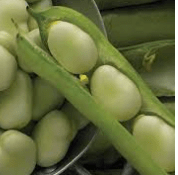
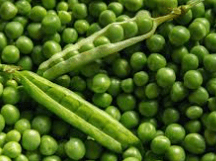
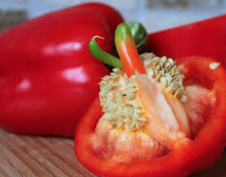
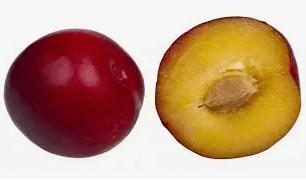
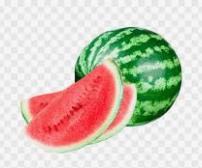
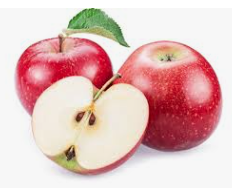
            Bring in a variety of produce that has a seed/seeds inside.  With the children hypothesis what the seed/s will look like and if there is more then one.  Cut the produce open to let the children see if they were correct.  You could try a fresh green bean, an apple, a banana, an avocado, a green pepper, and a zucchini.

Science/Scientific Methods & Skills; begins to describe and discuss predictions, explanations, and generalizations based on past experiences.

            Have the children fold a paper towel and then wet it.  Have them put it into a ziplock bag with one of the large bean seeds.  Check back tomorrow to see what has happened to the seed. Best done towards the end of the week so that when the children come back on Monday there should be some sprouting seeds. When the seeds start to sprout, you can make a journal or have the children use a ruler to measure how big it has gotten. This experiement will take place over a week or so.

Scientific Skills & Methods; begins to use senses and a variety of tools and simple measuring devices to gather information, investigate materials, and observe processes and relationships. AND Mathematics/Patterns & Measurement; shows progress in using standard and non-standard measures for length and area of objects.

Music and movement

            Teach the children the poem, Dig a Little Hole. Have the children act it out as they recite.

You dig a little hole and you put the seed in.

Then you cover it with dirt and let the sun shine in.

Add a little water and keep it fed,

Pretty soon a little plant will show it’s head.

Language Development/Listening & Understanding; demonstrates increasing ability to attend to and understand conversations, stories, songs, and poems.

Teach the children the song, The Farmer Plants His Seeds. https://www.youtube.com/watch?v=cRhGOdqWIIo

The Farmer plants the seeds,

The farmer plants the seeds.

Heigh-ho the dairy-o The farmer plants the seeds.

The sun comes out to shine…

The rain begins to fall…

The seeds begin to grow…

The produce is here…

The farmer picks his crops…

And now it’s time to eat…

Science/Scientific Knowledge; expands knowledge of and abilities to observe,, describe, and discuss the natural world, materials, living things, and natural processes.

Blocks

            Tape produce pictures to blocks and have the children pretend that they are making a garden. Can they name the different kinds of produce?

Creative Arts/Dramatic Play; shows growing creativity and imagination in using materials and in assuming different roles in dramatic play situations.

Art

            Put out flower stencils that the children can trace around on manilla files or thin cardboard.  Show the children how to take small tissue paper squares and make balls out of them.  Glue the balls inside the flower design.  The children can then use crayons to make stems and leaves. Encourage the children to make a pattern with the 12 petal shapes.

Mathematics/Pattern & Measurement; enhances abilities to recognize, duplicate, and extend simple patterns using a variety of materials. AND Physical Health & Development/Fine Motor Skills; develops growing strength, dexterity, and control needed to use tools such as scissors, paper punch, stapler, and hammer.

Library and Writing

            Cut out pictures from garden magazines.  Let the children glue them onto a group collage.  Title it, All Kinds of Things grow From Seeds.  Make sure that the pictures include flowers, trees, fruits and vegetables.  When finished, hang it up in your classroom to talk about all the things that come from seeds while waiting for lunch.

Physical Health & Development/Fine Motor Skills; grows in hand-eye coordination in building with blocks, putting together puzzles, reproducing shapes and patterns, stringing beads, and using scissors. AND Approaches to Learning/Initiative & Curiosity; chooses to participate in an increasing variety of tasks and activities.

Sand and water

            Put dirt in the table and large bean seeds.  The children can pretend to plant these in rows with a spoon. (We did this one week and when we came back on Monday, several of the seeds had taken root and begun to grow). Encourage the children to sing The Farmer Plants His Seeds as the dig in the dirt.

Creative Arts/Dramatic Play; shows growing creativity and imagination in using materials and in assuming different roles in dramatic play situations.

Dramatic play

            As the children play in the kitchen, ask them if they can show you some of the play foods you have that would have seeds inside.

Science/Scientific Knowledge; expands knowledge of and abilities to observe,, describe, and discuss the natural world, materials, living things, and natural processes.

Math and Manipulatives

            Education.com has a nice set of plant life cycle cards for the children to put together in order. If you have other sequencing cards, put those out as well. https://www.education.com/worksheet/article/plant-life-cycle-cards/?cid=50.300

Science/Scientific Knowledge; shows increased awareness and beginning understanding of changes in materials and cause-effect relationships.

Outdoor Play

            Plant seeds.  Bring in the materials you need to plant seeds either into cups or into the ground.  Children enjoy planting.  What and where you plant will depend upon the time of the year and the region in which you live.

Approaches to Learning/Initiative & Curiosity; chooses to participate in an increasing variety of tasks and activities.

Transitions

            Have the children identify produce pictures before they may leave to the next place. (Kerry, do you know what this fruit is called?    Where does a fruit grow? Do you know how it grows, on a tree, a vine, underground?)

Language Development/Speaking & Communicating; develops increasing abilities to understand and use language to communicate information, experiences, ideas, feelings, opinions, needs, questions; and for other varied purposes.

Resources

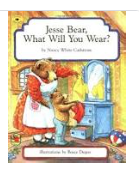
Jesse Bear, What Will You Wear? by Nancy White Carlstrom

Materials

  •         Pictures of a variety of clothes to make a jumping bean game
  •          One paper plate per child.

Vocabulary

Before Reading the Story

            Talk to the children about the clothing that they are wearing.   Does the time of year affect the clothing that the children are wearing?  Is anyone wearing their favorite article of clothing or their favorite color?  Did the children wear outer clothing to school today, why?  Ask the children if they ever get to pick out their clothes to wear to school? Look at the cover of the book and read the title.  Ask the children if they can guess which shirt Jesse Bear will pick to wear.

Language Development/Speaking & Communicating; develops increasing abilities to understand and use language to communicate information, experiences, ideas, feelings, opinions, needs, questions; and for other varied purposes. AND Social & Emotional Development/Self Concept; begins to develop and express awareness self in terms of specific abilities, characteristics, and preferences.

Reading the Story

            As you read through the pages, stop and let the children talk about what is happening on each page and what name articles of clothing that they see.

Literacy/Book Knowledge & Appreciation; shows growing interest and involvement in listening to and discussing a variety of fiction, non-fiction books, and poetry.

After Reading the Story

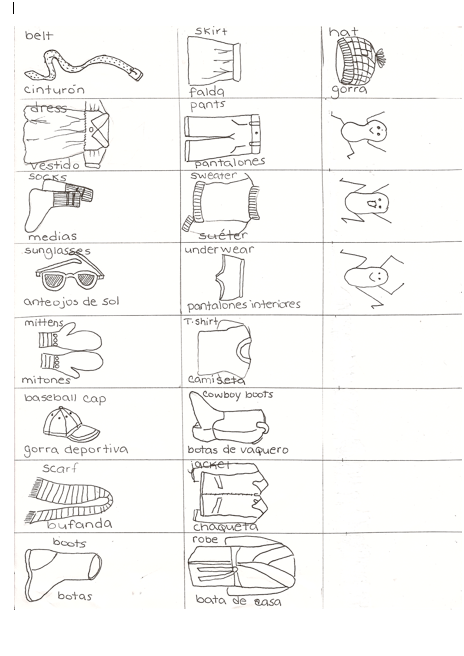
            After reading the story, talk to the children about some of the different items of clothes that are worn for night and day.  Then teach the children to play Jumping Bean.  To play, cut out the clothing items and glue them to strips of cardboard.  Put all the strips of cardboard into an envelope cut in half so the clothing pictures are inside the envelope.  Also include several jumping beans.  The children take turns pulling out a cardboard strip and naming the item of clothing.  If they pull out a bean they shout Jumping Bean! And everyone then jumps up and down.  The play continues until all the cardboard strips have been picked.

Approaches to Learning/Initiative & Curiosity; chooses to participate in an increasing variety of tasks and activities.

Discovery

            Put out bubble blowing supplies either commercial or home made.  Experiment with different kinds of blowers.  Do different shaped blowers make different shaped bubbles? What happens when you touch a bubble with a dry hand versus a wet hand? How hard must you blow to make one big bubble? Many small bubbles?

Science/Scientific Skills & Methods; begins to use senses and a variety of tools and simple measuring devices to gather information, investigate materials, and observe processes and relationships.

Music and Movement

            Jessie Bear wears pants that dance.  Put on some music and let the children dance.  Pretend that your pants make you dance until the music stoops and then you freeze.

Creative Arts/Movement; expresses through movement and dancing what is felt and heard in various musical tempos and styles.

            Sing Rhyming Words Sound the Same to first 4 stanzas of The Mexican Hat Dance. https://www.youtube.com/watch?v=q-Rqdgna3Yw

Rhyming words sound the same, rhyming words sound the same

Rhyming words sound the same, rhyming words sound the same.

(chanted) Can you think of a word that rhymes with red, pants, rose, chair, etc?

Literacy/Phonological Awareness; progresses in recognizing matching sounds and rhymes in familiar words, games, songs, stories, and poems.

Do the poem Teddy Bear, Teddy Bear but change it to Jesse Bear, Jesse Bear.

Jesse Bear, Jesse Bear turn around

Jesse Bear, Jesse Bear touch the ground.

Jesse Bear, Jesse Bear touch your shoe

Jesse Bear, Jesse bear show me blue.

Jesse Bear, Jesse Bear stretch up high

Jesse Bear, Jesse Bear touch the sky.

Language Development/Listening & Understanding; shows progress in understanding and following simple and multiple-step directions.

Blocks

            If you have colored blocks put them out today and encourage the children to talk about the colors as they build.

Language Development/Speaking & Communicating; develops increasing abilities to understand and use language to communicate information, experiences, ideas, feelings, opinions, needs, questions; and vfor other varied purposes.

Art

            In the story Jessie Bear eats a variety of foods for lunch.  Let the children cut out food pictures and glue them to a paper plate.

Physical Health & Development/Fine Motor Skills; grows in hand-eye coordination in building with blocks, putting together puzzles, reproducing shapes and patterns, stringing beads, and using scissors.

Library and Writing

            Use flannel board dressing dolls or find a set on the internet (look up paper dolls) and make for the children to use. https://www.designeatrepeat.com/printable-paper-dolls/ After the child has dressed the doll, talk about the names of the clothing items, the colors, what one usually does wearing that type of clothing.

Language Development/Speaking & Communicating; develops increasing abilities to understand and use language to communicate information, experiences, ideas, feelings, opinions, needs, questions; and for other varied purposes.

Sand and Water

            Add water and dish soap. Give the children egg beaters and/or hand whippers to make the bubbles form.

Science/Scientific Skills & Methods; begins to use senses and a variety of tools and simple measuring devices to gather information, investigate materials, and observe processes and relationships.

Dramatic Play

            Encourage the children to play using night rituals and morning rituals as their theme.

Creative Arts/Dramatic Play; shows growing creativity and imagination in using materials and in assuming different roles in dramatic play situations.

Math and Manipulatives

            Play a graphing game with your children.  Make a large X on the floor using masking tape.  Explain to the children that you are going to become a human graph.  Ask all the children who are wearing Velcro shoes to stand in one area, all those wearing tie shoes to stand in another, and those with buckles.  Which has the most?  Now have the children move and divide by long sleeves, short sleeves, sleeveless or shirts with letters, shirts with pictures, and shirts that are solid.  Continue in this manner naming different ways to graph clothing articles and seeing which has most and least.

Mathematics/Number & Operations; begins to make use of one-to-one correspondence in counting objects and matching groups of objects. AND begins to use language to compare numbers of objects with terms such as more, less, greater than, fewer, equal to.

Outdoor Play

            Digging in the sand today with a shovel and hand. Can the children work together to make a giant moutain?

Physical Health & Development/Health Status & practices; participates actively in games, outdoor play, and other forms of exercise that enhance physical fitness. AND Social & Emotional Development/Cooperation; shows increasing abilities to use compromise and discussion in working, playing, and resolving conflict with peers.

Transitions

            Ask the children to name an item of clothing that they would wear on their foot, their head, when it is cold, when it is hot, at bedtime, in the day time, on special occasions, etc.

Approaches to Learning/Reasoning & Problem Solving; develops increasing ability to find more than one solution to a question, task, or problem.

cut and use for jumping beans game

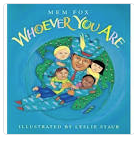
Whoever You Are, by Mem Fox

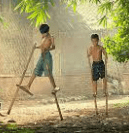
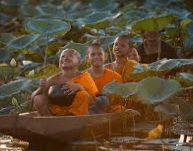
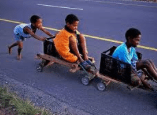
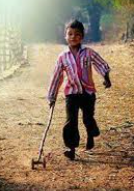
            This book helps point out clearly that although we might be different in some ways; in many more we are all just the same.  The colorful illustrations depict children and emotions that go along with the simple eloquent words of this book.

Materials

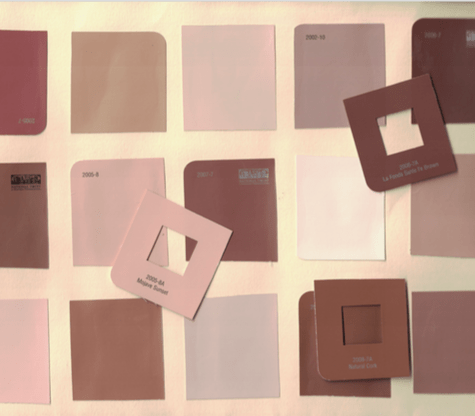
  • Paint sample chips in colors that reflect skin colors
  • Several bags of dried beans in various colors
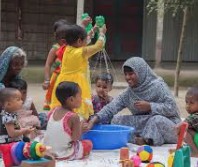
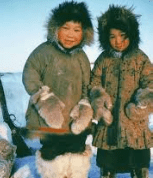
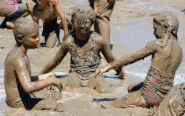
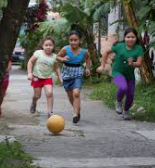
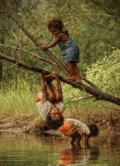
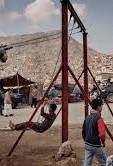
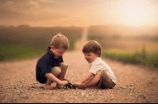
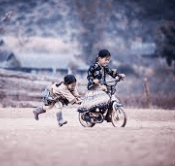
  • Pictures of real children playing
  • Picture books that depict other ways of life then the one common to your children.
  • Emotion pictures

Vocabulary

  • Different (different from you or a group of objects)
  • Same (just like you or a group of objects)
  • Joy (something that makes you happy)

Before reading the Story;

            Tell the children “I’m thinking of something that all of us have”.  Let the children come up with things that are common to all if they can. Then tell the children the thing you are thinking of is covered by their skin and includes all the parts inside (a body).

Approaches to Learing/Reasoning & Problem Solving; develops increasing ability to find more than one solution to a question, task, or problem.

Play Simon Says. (Stand on tippy toes, roll your knuckles on the floor, flip your ear lobe, touch your eyebrows, slap your thighs, etc.).

Science/Scientific Knowledge; expands knowledge of and respect for their bodies and the environment

Reading the Story

            As you read the book stop on each page to share some of the things that you see that are different from where you live and also things that are the same.

Social & Emotional Development/Knowledge of Families & Communities; progresses in understanding similarities and respecting differences among people such as genders, race, special needs, cultural, language, and family structures.

After Reading the Story

            In the story it talked about we all feel joy and love the same and also blood and pain.  Show the children pictures of real children in a variety of situations that depict clear emotion.  Ask the children to talk about the pictures.  What is happening?  How do you think the child feels?  How would this make you feel?  What else makes you feel this way?  Who else feels this way?  What makes you happy?  What makes you laugh, cry, or be sad?  Make sure to ask the children who else feels or would feel this way?  The idea is to show that we all have feelings that are similar.

Language Development/Speaking & Communicating; develops increasing abilities to understand and use language to communicate information, experiences, ideas, feelings, opinions, needs, questions; and for other varied purposes.

Discovery

            Use paint chip samples to make a color matching game that has colors similar to skin colors.

Mathematics/Geometry & Spatial Sense; shows growth in matching, sorting putting in series, and regrouping objects according to one or two attributes such as color, shape, or size.

Music and Movement

            Sing It’s Love That makes The World Go Round. https://www.youtube.com/watch?v=icoNkyEjIVo

It’s love, it’s love, it’s love that make the world go round,

It’s love, , it’s love, it’s love that makes the world go round,

It’s love, it’s love, it’s love that makes the world go round,

It’s love that make the world go round.

It’s boys, it’s girls, it’s friends that make the world go round’

It’s boys, it’s girls, it’s friends that make the world go round,

It’s boys, it’s girls, it’s friends that make the world go round

It’s love that makes the world go round.

Creative Arts/ Music; participates with increasing interest and enjoyment in a variety of music activities, including listening, singing, finger plays, games, and performances.

Blocks

Encourage the children to build homes today. Add interesting materials to embellish such as toilet paper tubes, scraps of cardboard, felt squares, sticks, etc..

Physical Health & Development/Fine Motor Skills; growing in hand-eye coordination in building with blocks, putting together puzzles, reproducing shapes and patterns, stringing beads, and using scissors.

Art

            Give the children finger paints in white, brown, yellow, and black to try to mix skin tone colors.  Then encourage the children to draw people in their finger paint.

Science/Scientific Knowledge; shows increased awareness and beginning understanding of changes in materials and cause-effect relationships. AND Creative Arts/Art; gains ability in using different art media and materials in a variety of ways for creative expression and representation.

Sand and water

If your center allows, add several varieties of beans to the table for the children to use for scooping and pouring. Tell the children that these are all beans but they are diffrent.

Social & Emotional Development/Self-Control; demonstrates increasing capacity to follow rules and routines and use materials purposefully, safetly, and respectfully.

Library and Writing

            Add any books with photos that depict life in other countries or life that is different from what you and the children understand as the norm.

Literacy/Book Knowledge & Appreciation; shows growing interest in reading related activities, such as asking to have a favoritie book read; choosing to look at books; drawing pictures based on stories; asking to take books home; going to the library; and engaging in pretend-reading with other children.

Dramatic play

            Bring in any clothes that you might have that are common to other cultures.  Add scarves to dress-ips as these can be used as capes, skirts, head dresses, baby carriers, etc..

Creative Arts/Dramatic Play; shows growing creativity and imagination in using materials and in assuming different roles in dramatic play situations.

Math and manipulatives

Make a Memory Game using pictures of children at play around the world. Make 2 sets of pictures and glue them to index cards. Turn the upside-down and the children must take turns trying to make matching pairs. If they make a match, they keep the cards. Play until all the cards have been matched and count who has the most cards.

Social & Emotional Development/Cooperation; develops increasing abilities to give and take in interactions; to take turns in games and using materials; and to interact without being overly submissive or directive. AND Approaches to learning/Engagement & Persistence; grows in abilities to persist in and complete a variety of tasks, activities, projects, and experiences.

Outdoor play

Explain to the children that Soccer is a game played throughout the world. Set up a goal area and let the children practice their kicking and foot dribbling skills as you have soccer practice or a game.

Physical Health & Development/Gross Motor Skills; demonstrates increasing abilities to coordinate movements in throwing catching, kicking, bouncing ball,s and using the slide and swing.

Resources
Grover sings I am Special video. https://www.youtube.com/watch?v=Gms-Yk7mzv4

sample of color matching game

Pictures of children at play.
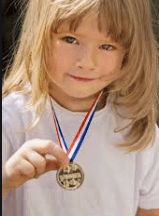


Emotion pictures