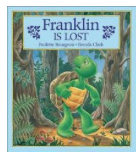
Franklin is Lost, by Paulette Bourgeois

            Franklin is playing outside with his friends when suddenly he becomes lost in the dark and scary woods.  How will he ever get home and what will his parents do when they find him?

Materials

  • Paper plates, enough for 2 per child.
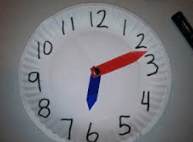
  • Paper plate clocks made ahead of time but do not add the numbers to the face.
  • Body coverings match game
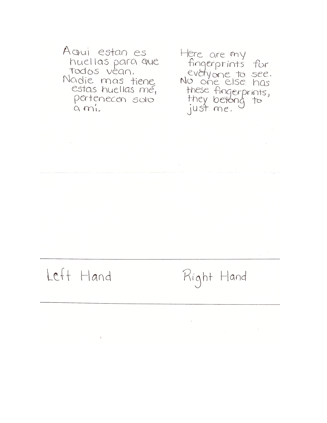
  • Fingerprint poem. Here are my fingerprints, they belong to me,  No one has these same prints, they are special to just me.

Vocabulary

  • Woods (an area of many trees, another name for the forest)
  • Annoyed (when you get irritated at someone or they get irritated at you)
  • Worried (to feel like something bad might have happened to someone)
  • Knoll (a little hill)
  • Lost (to not know where you are)

Before Reading the Story

Hold up the cover of the book and tell the children that this turtle’s name is Franklin. Ask them to look at Franklin’s face and ask them how they think Franklin is feelin, why? Read the title of the book and ask the children if any of them have ever been lost? How did you feel? If no one has ever felt lost and afraid, make up an example that the children can respond to (Once when I was little I went to the store with my Dad and when he was paying I hid behind a shelf. My Dad did not know and walked out of the store without me. When I ran after him, I could not find him and I was so scared. I cried and then he realized I was not behind him and came back and found me. I was scared and never hid in a store again).

Language Development/Speaking & Understanding; develops increasing abilities to understand and use language to communicate information, experiences, ideas, feelings, opinions, needs, questions; and for other varied purposes.

Reading the Story

            On the page where Franklin is looking for Fox and walks into the woods, stop and ask the children what they think is going to happen next?.  On the page where Franklin’s parents get worried, ask the children if they know what it means to be worried?  Why do you think his parents worried?

Literacy/Book Knowledge & Appreciation; demonstrates progress in abilities to retell and dictate stories from books and experiences; to act out stories in dramatic play; and to predict what will happen next in a story.

After Reading the Story

            Ask the children, Why was Franklin not allowed to go into the woods alone?  Are there places your parents tell you, you are not allowed to play?  Why do you think they tell you that?  Explain to the children that sometimes parents yell when they are worried or scared for their child (Franklin’s Mom might have yelled at him for going into the woods) but it does not mean that they do not love you.  You scared them and even though it’s not nice, they sometimes just yell.

Approaches to Learning/Initiative & Curiosity; grows in eagerness to learn about and discuss a growing range of topics, ideas, and tasks.

Discovery

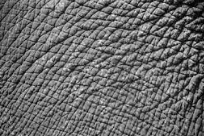
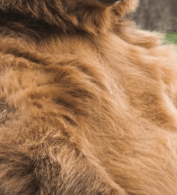
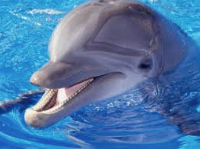
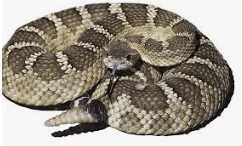
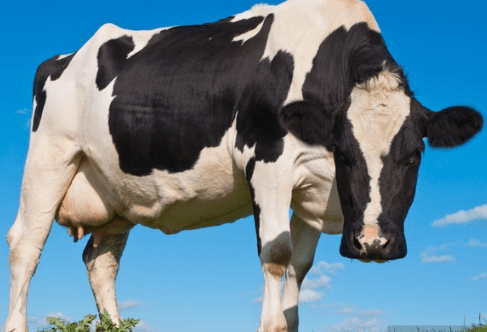
            Put the body covering match cards out and see if the children can find which animals have which kind of body coverings.

Mathematics/Patterns & Measurement; shows increasing abilities to match, sort, put into series, and regroup objects according to one or two attributes, such as shape or size.

            Look at pictures of animals and talk about how they are alike and different from people. (People have hands, bears have paws/people have skin, birds have feathers/people have two eyes, and so do most animals!)

Science/Scientific Knowledge; expands knowledge of and ability to observe, describe, and discuss the natural world, materials, living things, and natural processes.

Music and Movement;

            Sing Hickory Dickory Dock ,use your paper plate clock to move the hands about. https://www.youtube.com/watch?v=uMNOZ7rC5hU

Hickory Dickory Dock, tick tock

The mouse ran up the clock

The clock struck one

This made him run,

Hickory Dickory Dock

The clock struck 2, he lost his shoe/the clock struck 3, he scraped his knee/ the clock struck 4, he went back for more/ the clock struck 5, he jumped off with a dive/ the clock struck 6, he gave his paws a lick/ the clock struck 7, he ______/ the clock struck 8, he felt great/ the clock struck 9, he hurt his spine/ the clock struck 10, he ran down again/ the clock struck 11, he wished it was 7/ the clock struck 12, he was tired and went to sleep.

Mathematics/Number & Operations;develops increasing ability to count in sequence to 10 and beyond.

            Count to 10 and Back Again holding up and taking down fingers as you do so. On the way down when you get to zero, call out blast off! and let the children jump up.

Mathematics/Number & Operations;develops increasing ability to count in sequence to 10 and beyond.

Blocks

            Tell the children that while they are building a structure, to see if they can hide an animal within.  Then they can call you over to see if you can find it.

Approaches to Learning/Engagement & Persistence; demonstrates increasing ability to set goals and develop follow through on plans.

Art

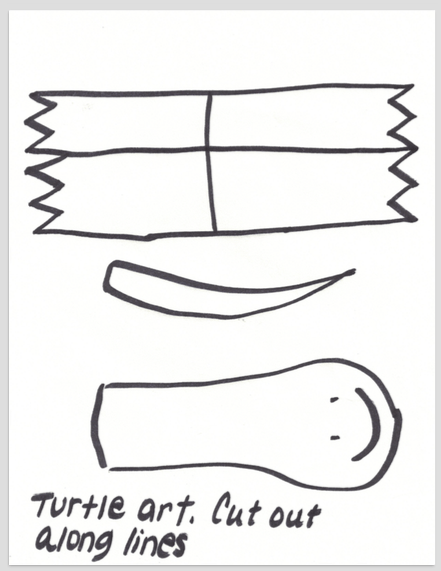
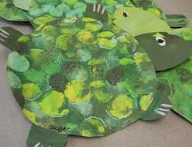
            Let the children paint paper plates with green, yellow, and white paint.  After they dry, they can cut out 4 legs, a tail, and a head to make their own turtles.

Creative Arts/Art; develops growing abilities to plan, work independently, and demonstrate care and persistence in a variety of art projects.

Library and Writing

            Give each child a piece of white paper and have them trace around both their left and right hand.  Then help them to use a stamp pad in a darker color to carefully put their fingerprints in the coordinating finger.  Make copies of the fingerprint poem that can be glued to the back of the page.  After you have finished, give the children magnifying glasses and let them look at their prints and their friends to see that they really are all different.

Physical Health & Development/Fine Motor Skills; progresses in abilities to use writing, drawing, and art tools, including pencils, markers, chalk, paint brushes, and various types of technology.

Sand and Water

            If you have small animals, put them into the sand and let the children bury them and then hide and seek them. Give them a small bowl to put their animals into and a plastic fork for scraping the sand. If you have multiple kinds of an animal, encourage the children to collect all of the same kind first. (Annie, can you find all 6 of the cows, and Lee you look for the 4 tigers).

Mathematics/Number & Operations; begins to make use of one-to-one correspondence in counting objects and matching groups of objects.

Dramatic Play

            Franklin was lost and scared.  When he comes home he is very hungry.  Can the children make a meal nutritious meal that would help Franklin to feel better?  Ask the children what they are preparing.  Write their nutritious meal plans down.

Approaches to Learning/Reasoning & Problem Solving; develops increasing abilities to classify, compare, and contrast objects,, events, and experiences.

Math and Manipulatives

            In the story, Franklin was told to be home at 6 o’clock.  Have a paper plate clock made ahead of time and show the children what 6 o’clock looks like.  Give each child a paper plate clock.  Show the children on a clock how the numbers go around the face of the clock.  Encourage the children to copy numbers onto their own clocks.  (They will probably not get it exact but the activity is to practice copying/writing numbers more then making a clock).

Literacy/Early Writing; experiments with a growing variety of writing tools and materials, such as pencils, crayons, and computers.

Outdoor Play

            Use a familiar classroom toy animal and hide it somewhere on the playground.  Tell the children what you have hidden and that they will need to follow your directions to find it.  Give 2-3 part directions and let them see if they can find the toy.  Do with each child individually or in small groups.  Hide the toy in different spots between children.  (I have hidden our little toy cow.  Go over to the red tricycle and then look down by the ground and you will see the cow.  Go around the big tree two times and then to the chair by the water table and you will see the cow)

Language Development/Listening & Understanding; shows progress in understanding and following simple and multiple-step directions.

Transitions

            Ask questions about the story.  What kind of an animal is Franklin?  Whose house did he go to?  What did his parents tell him about the woods?  What game was he playing when he got lost?  Who was he playing with?  How did he feel when he got lost in the woods? Etc..

Literacy/Book Knowledge & Appreciation; demonstrates abilities to retell and dictate stories from books and experiences; to act out stories in dramatic play; and to predict what will happen next in a story.

Resources
Put out a number line for the children to copy number writing. Do not worry what their clock looks like, it is for practice writing, not accuracy.
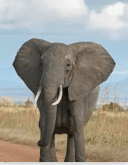
Elephant
Bear
Dolphin
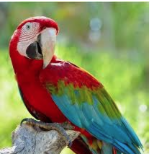
Parrot
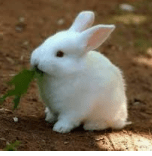
Rabbit
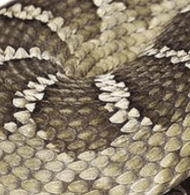
Snake
Cow
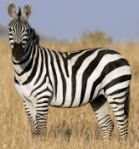
Zebra
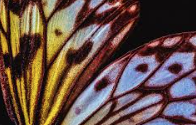
Butterfly

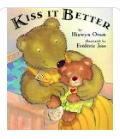
Kiss it Better, by Hiawyn Oran

            It is amazing what a kiss and a Band-Aid can do to heal a hurt.

Materials

  • Lots of band-aids (the more the merrier. I found the children liked opening and applying bandaids with this book).
  • Piece of paper large enough to trace a child
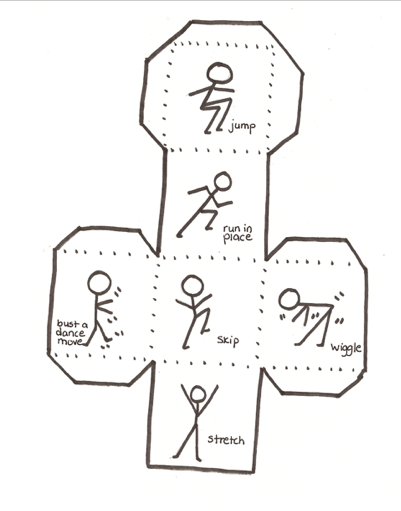
  • Make a dice for transition (see resources)

Vocabulary

Before Reading the Story

            Come to the rug time wearing a band-aid.  Tell the children a story about how it happened.  Ask them if they have ever worn a band-aid?  What do they think band-aids do?  Let the children talk about their experiences about being hurt or sick while at home.  What did they do, who did they tell, what did their parent do, did they have to go to the doctor?

Language Development/Speaking & Communicating; develops increasing abilities to understand and use language to communicate information, experiences, ideas, feelings, opinions, needs, questions; and for other varied purposes.

Reading the Story

Read the story with sympathetic emotions and point out to the children, “look, can you tell how Little Bear is feeling”? Let the children talk about each sad experience that Little Bear goes through if they choose. When you get to the part where Big Bear is upset, ask the children what they think Little Bear will do?

Social & Emotional Development/Social Relationships; progresses in responding sympathetically to peers who are in need, upset, hurt, or angry; and in expressing empathy or caring for others. AND Literacy/Book Knowledge & Appreciation; demonstrates ability to retell and dictate stories from book sand experiences; to act out stories in dramatic play; and to perdict what will happen next in a story.

After Reading the Story

            Trace around one child in the classroom before hand.  Tape the child’s body shape to the wall.  Give each child a band-aid and have them open it.  Go around the circle naming body parts.  The children then attach their band-aid to the body part that they were assigned (Kerry can you put your band-aid on the knee, Roger can you put your band-aid on the neck. Include body parts such as knuckles, ear lob, nostril, spine, ankle, heel, etc). 

Science/Scientific Knowledge; expands knowledge if and respect for their bodies and the environment. AND Language Development/Listening & Understanding; understands and increasingly complex and varied vocabulary.

Discovery

            This would be a good day to practice proper hand washing and body washing technique.  Explain to the children that when they fall and bleed that the area must be washed well to help fight any dirt or germs that might have gotten into the cut.  Let the children practice washing their hands and also any other body part that they would like to pretend was cut; water, soap, rinse, dry, apply a band-aid.

Physical Health & Development/Health Status & Practices; shows growing independence in hygiene, nutrition, and personal care when eating, dressing, washing hands, brushing teeth, and toileting.

Music and Movement

            Play Simon Says with the children. 

Language Development/Listening & Understanding; understands and increasingly complex and varied vocabulary.

Sing the Hokey Pokey https://www.youtube.com/watch?v=4EnaAFyrcQM or Looby Loo https://www.youtube.com/watch?v=pwcA_xjw8vs.  Use songs and movements that make children aware of body parts and their names.

Science/Scientific Knowledge; expands knowledge if and respect for their bodies and the environment.

            Sing We’re Gonna Wash Those Germs Right Off Of Our Hands, sung to the chorus of I’m Gonna Wash That Man Right Out Of My Hair. https://www.youtube.com/watch?v=Zzu8ZxBHMWk

We’re gonna wash those germs right off of our hands,

We’re gonna wash those germs right off of our hands,

We’re gonna wash those germs right off of our hands,

And keep them nice and clean.

Physical Health & Development/Health Status & Practices; builds awareness and ability to follow basic health and safety rules such as fire safety, traffic and pedestrian safety. and responding appropriately to potentially harmful objects, substances, and activities.

Use body parts to make simple patterns for the children to follow (clap, jump, clap, jump or tippy toes, touch the ground, turn around, tippy toes, touch the ground, turn around).

Mathematics/Patterns & Measurement; enhances abilities to recognize, duplicate, and extend simple patterns using a variety of materials.

Blocks

            Bring paper and red writing materials to the center and show the children how to make a cross shape with red marker.  Tell them that this is the universal sign for first aid.  Let them build a hospital and attach their red crosses.  Bring in a toy ambulance if you have one.

Social & Emotional Development/Knowledge of Families & Communities; develops growing awareness of jobs and what is required to perform them. AND Literacy/Early Writing; experiments with a growing variety of writing tools and materials, such as pencils, crayons, and computers.

Art

            Give each child 5-7 band-aids and have them attach them to a piece of colored paper.  Paint over the band-aids.  When the paint is dry, peel the band-aids off the paper. Can the children predict what will happen?

Creative Arts/Art;develops growing abilities to plan, work independently, and demonstrate care and persistence in a variety of art projects. AND Science/Scientific Skills & Methods; begins to describe and discuss predictions, explanations, and generalizations, based on past experiences.

Sand and Water

            Remind the children if they are wearing a band-aid on their hands, that they should not play in the water as it will fall of when it gets wet. And you do not want any germs to get into their cut or their cut to get into the water.

Physical Health & Development/Health Status & Practices; builds awareness and ability to follow basic health and safety rules such as fire safety, traffic and pedestrian safety. and responding appropriately to potentially harmful objects, substances, and activities.

Library and Writing

            Have the children draw a picture of a person.  Give each child a band-aid to attach to their picture.  Ask the child how who the person is and why they had to have a band-aid? (My Mom got cut with the knife; I fell off my bicycle and hurt my knee).

Literacy/Early Writing; begins to represent stories and experiences through pictures, dictation, and in play.

Dramatic Play

            If you have any Doctor’s office equipment put it out in the center today along with more bandaids and bandages!

Social & Emotional Development/Cooperation; increaseses abiliities to sustain interactions with peers by helping, sharing, and discussion.

Math and Manipulatives

            Put out sequencing cards for the children to put in order and talk about what comes first, next, and last. If you do not have sequencing cards, The Wiseowlfactory website has some that you can copy and print. https://www.thewiseowlfactory.com/sequencing-cards-and-color-matching-for-pre-k-k-1-free-pdfs/.

Mathematics/Patterns & Measurement; shows increasing abilities to match, sort, put in a series, and regroup objects according to one or two attributes such as shape or size. Literacy/Book Knowledge & Appreciation; demonstrates progress in abilities to retell and dictate stories from books and experiences; to act out stories in dramatic play; and to predict what will happen next in a story.

Outdoor Play

            Play Elbow-Elbow.  Every child finds a partner.  The caller calls out a body part and the children must touch them together (elbow to elbow, forehead to forehead, toe to toe).  Let the children take turns being the caller.

Social & Emotional Development/Cooperation; develops increasing abilities to give and take in interactions; to take turns in games or using materials; and to interact without being overly submissive or directive. AND Science/Scientific Knowledge; expands knowledge of and respect for their bodies and the environment.

Transitions

            Let the children take turns rolling the movement dice and following the actions as they line up or go to the next activity.

Literacy/Early Writing; develops understanding that writing is a way of communicating for a variety of purposes. AND Language Development/Listening & Understanding; shows progress in understanding and following simple and multiple-step directions.

Resources
dice for transitions. Cut solid lines and fold dotted lines, tape to make a cube.
Make on cardboard for the dramatic center today.

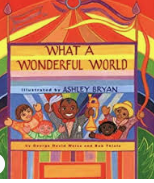
What A Wonderful World, by George David Weiss and Bob Thiele

            Louis Armstrong sang this song/book and made it popular everywhere.  This is a great book to learn to sing to your children.  It has a lovely message for young and old alike.

Materials

  • Map of the world or a globe
  • Tongs, tweezers, chopsticks
  • An assortment of natural objects-rocks, shells, seed pods, twigs, etc.
  • One or two pair of binoculars
  • One ‘I See’ chart for each child

Vocabulary

  • Map (a picture from the air of the world or a part of the world)
  • Globe ( a model of the earth)

Before Reading the Story

            Show the children the map or globe of the world.  Ask them if the know what it is.  Show them where you are on the map.  If you have children whose parents have come from other countries show them where their family homeland is.  Talk about the water and mountains on the map.  Show the children where it is always a frozen tundra, a big river, where the rain forest is and the dessert.

Social & Emotional Development/Knowledge of Families & Communities; begins to express and understand concepts and language of geography in the contexts of the classroom, home, community.

Reading the Story

            Sing the story or bring in the music and use it while you turn the pages.  The tune is lovely and children seem to enjoy this to music. https://www.youtube.com/watch?v=A3yCcXgbKrE

Language Development/Listening & Understanding; demonstrates increasing ability to attend to and understand conversations, stories, songs, and poems.

After Reading the Story

            Talk about how we must help to take care of the earth.  Ask the children if they can think of ways that they can help keep the world beautiful.  If they can not, give them some suggestions (throw trash in the garbage and not on the ground, walk around insects instead of squishing them, smile to people you meet on the street, try not to break tree branches and flowers).  Think about your school, is there anything that you see that is destructive to the earth? 

Science/Scientific Knowledge; expands knowledge of and respect for their bodies and the environment.

Discovery;

            Encourage the children to use binoculars to look out the window.  Do you see any birds or plants?  Look up into the sky, what do you see? (If you do not have binoculars, tape two toilet tubes together as this helps focus the view to a smaller peripheral and works as pretend binoculars. Give each child an I See sheet and they can circle what they see.

Science/Scientific Skills & Methods; develops growing abilities to collect, describe, and record information through a variety of means, including discussion, drawings, maps, and charts.

Music and Movement

            Sing I’ve Got Something in My Pocket https://www.youtube.com/watch?v=MkO7UKUBXUY

I’ve got something in my pocket,

That belongs across my face

I keep it very close at hand

In an easy to get place.

I’m sure you wouldn’t guess it

If you guessed a long, long while

So I’ll take it out and put it on

It’s a great big friendly smile

Language Development/Listening & Understanding; demonstrates increasing ability to attend to and understand conversations, stories, songs and poems.

            Dance to music from different cultures and use soothing music from other cultures at rest time.

Creative Arts/Movement; expresses through movement and dancing what is felt and heard in various musical tempos and styles.

Blocks

            Encourage the children to make shapes using the blocks.  Can you make a big triangle from all these little blocks?  Can you make a big square using these rectangle blocks?

Mathematics/Geometry & Spatial Sense; progresses in ability to put together and take apart shapes.

Art

            Ahead of time, cut out long strips of colored paper about 1/2 inch wide. Give the children scissors and ask them to cut the strips into little pieces. You can then use the small pieces to make a collage or to fill in a rainbow shape. Today, just let them practice cutting the strips.

Physical Health & Development/Fine Motor Skills; develops growing strength, dexterity, and control needed to use tools such as scissors, paper punch, stapler, and hammer.

Library and Writing

            Bring a bean bag or small koosh ball to the center.  Toss or roll it to a child and ask them to think of three words that start with their first letter sound of their name. (/R/ roar, Roger, roly poly   /T/ toes, train, tomato).  If your children are good at letter sounds, expand to different letters then the letter of their first name.

Literacy/Phonological Awareness; shows growing awareness of beginning and ending sounds of words.

Sand and Water

            Fill the table with sand or water.  Add small objects that the children can try to pick up with tongs, tweezers, and chopsticks (if you put a rubber band on the end of the chopsticks they are easier for children to use)

Physical Health & Development/Fine Motor Skills; grows in hand-eye coordination in building with blocks, putting together puzzles, reproducing shapes and patterns, stringing beads, and using scissors.

Dramatic Play

            Put out any multicultural clothing you may have.  Or put out large scarves which are great for making saris, head wraps. skirts, and capes.

Social & Emotional Development/Knowledge of Families & Communities; progresses in understanding similarities and respecting differences among people such as genders, race, special needs, culture, language, and family structures.

Math and Manipulatives

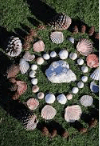
            Bring in an assortment of natural objects for the children to sort (rocks, shells, seed pods, twigs).  Put out a piece of dark colored paper and show them how to use this for a frame and ask them to use the objects to make a beautiful design with the natural objects.

Mathematics/Patterns & Measurement; enhances abilities to recognize, duplicate, and extend simple patterns using a variety of materials. AND Mathematics/Geometry & SPatial Sense; shows increasing abilities to match, sort, put in a series, and regroup objects according to one or two attributes such as color, shape, or size.

Outdoor Play

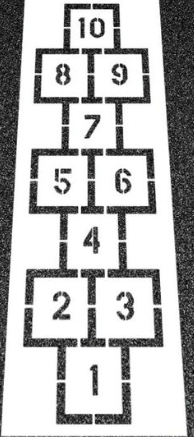
            Draw a hopscotch on the cement.  Tell the children that children all over the world play hopscotch type games.  Fill the squares in with numbers, letters, or shapes depending on what the children need to focus on. Have the children throw a beanbag or small stone onto a square, name the letter/shape/number and then jump or hop to that square and collect their stone and jump back to home.

Mathematics/Number & Operations; begins to associate number concepts, vocabulary, quantities, and written numerals in meaningful ways, AND Physical Health & Development/Gross Motor Skills; shows increasing levels of proficiency, control, and balance in walking, climbing, running, jumping, hopping, skipping, galloping, and marching.

Transitions

            As the children go to the next activity, draw a shape on their back with your finger and have them try to guess what shape you drew.

Mathematics/Geometry & Spatial Sense; begins to recognize, describe, compare, and name common shapes and their attributes.

Resources
hopscotch board
science
science