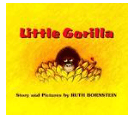
Little Gorilla by Ruth Bornstein

            Everybody loves little gorilla, a baby in the jungle.  When he has his first birthday he discovers that he is no longer a little gorilla, but he is still loved.

Materials

  • Picture of a real gorilla from a book or magazine.
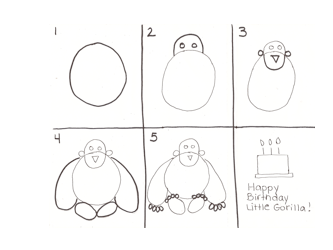
  • How to draw a gorilla directions
  • 2 Washcloths and towels
  • crepe paper
  • wrapping paper, foil, or newsprint (to use for wrapping)
  • several shoe boxes or blocks (to use for wrapping)
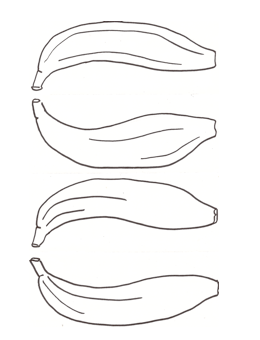
  • Large banana cards for measuring
  • 1/2 Banana per child, cereal (i.e. Cheerios), and small baggie per child.

Vocabulary

  • Gorilla (a cousin to the monkey. Gorillas grow really, really big)

Introducing the Story

            Begin a discussion about babies.  What kinds of things can babies do? What kinds of things can babies not do? Show the children the picture of a gorilla and the cover of the book, Little Gorilla. Ask if they know what kind of animal this is?  Tell the children that all animals, just like people start off as babies and that they grow up to be big and strong.

Science/Scientific Knowledge; expands knowledge of and respect for their bodies and the environment.

Reading the story

            Emphasize the word grow as you read.  When you get to the page where the animals sing Happy Birthday to Little Gorilla, stop and let the children sing along.

After Reading the story

            Ask the children what their family and friends do to make them feel loved?

Social & Emotional Development/Social Relationships; progresses in responding sympathetically to peers who are in need, upset, hurt, or angry; and in expressing empathy aor caring for others.

Music and Movement

Teach the poem, When I Was One Years Old. Have the children scrunch down low and as you say the poem they grow taller and taller until they are reaching towards the ceiling.

                                    When I was one years old,                       

                                    I was very,very small

                                    But now I’m 3 years old

                                    And I’ve grown up big and tall!    


Language Development/Listening & Understanding; demonstrates increasing ability to attend to and understands conversations, stories, songs, and poems.

Discovery

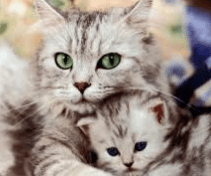
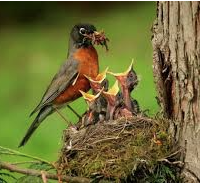
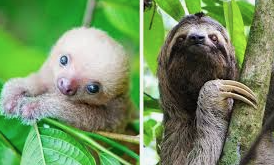
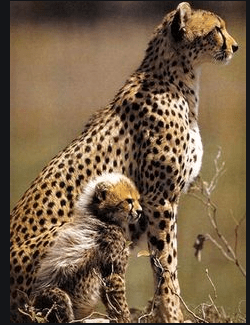
            Put out books/pictures of animal babies and mothers.  Encourage the children to tell how they look alike and different.

Science/Scientific Skills & Methods; develops increased ability to observe and discuss common properties, differences ,and comparisons among objects and materials.

Make banana pops with the children. (Give each child a half of a banana and a small baggie of cereal).  Have the children crush the cereal and then cut the banana into three pieces and put the banana pieces into the baggie.  Shake it up and then take it out to eat.

Language Development/Listening & Understanding; shows progress in understanding and following simple and multiple-step directions.

Blocks

            Add animals to blocks.  Ask the children if they can arrange the animals from smallest to largest.

Mathematics/Pattern & Measurement; shows increasing abilities to match, sort, put in series, and regroup objects according to one or two attributes such as shape or size.

Art

            Put out the How to Draw a Monkey directions and encourage the children to try to read teh directions and draw.

Physical Health & Development/Fine Motor Skills; progresses in abilities to use writing, drawing, and art tools, including pencils, markers, chalk, paint brushes, and various types of technology.

Sand and Water

            Put any hard plastic baby dolls that you have in water today. Add several washcloths and towels for the children to give the dolls baths. Remind them that babies and children need to stay clean and healthy.

Physical Health & Development/Health Status & Practices; shows growing independence in hygiene, nutrition, and personal care when eating, dressing, washing hands, brushing teeth, and toileting. AND Creative Arts/Dramatic Play; participates in a variety of dramatic play activities that become more extended and complex.

Library and Writing

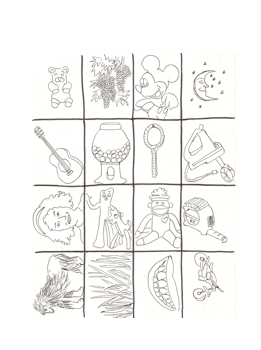
            Cut out the picture cards. Have the children sort them by pictures that start with the G sound and those that do not.

Literacy/Phonological Awareness; shows growing awareness of beginning and ending sounds of words.

Dramatic Play

           Let the children play Birthday Party. Give them the crepe paper to decorate by hanging on the walls. Give them the boxes or blocks to wrap with paper and masking tape as gifts. Add any other party supplies that you might have.

Creative Arts/Dramatic Play; shows growing creativity and imagination in using materials and in assuming different roles in dramatic play situations.

Math and Manipulatives

            Make several copies of the large banana card and have the children use it to measure how many bananas tall their partner is.  Record (Kerry is 4 bananas tall).  Encourage them to also measure the table, the book shelf. etc..

Mathematics/Patterns & Measurement; shows progress in using standard and non-standard measures for length and area of objects.

Outdoors

            Use a ball to play Monkey in the Middle.  Two people throw a ball back and forth.  Some one, the monkey, is in the middle and must try to get the ball before the throwers.  If they do, then a thrower goes in the middle and the monkey comes out to be a thrower.

Physical Health Development/Gross Motor Skills; demonstrates increasing abilities to coordinate movements in throwing, catching, kicking, bouncing balls, and using the slide and swing.

Transitions;

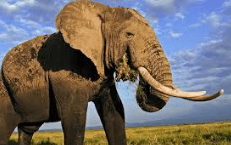
Play I’m Bigger Than-Smaller Than. Make up riddles for the children to solve. (I am an animal that is bigger than a cow. I have wrinkly skin and a long nose called a trunk. I am smaller than a mouse. I am an insect that has spots on my back and wings to fly).

Approaches to Learning/Reasoning & Problem Solving; develops increasing abilities to classify, compare, and contrast objects, events, and experiences. AND Science/Scientific Knowledge; expands knowledge of and abilities to observe, describe, and discuss the natural world, materials, living things, and natural processes.

Resources
Things that start with /G/ and things that do not
Bananas for measuring

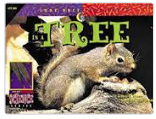
Look Once, Look Again In A Tree, David Schwartz

            This book is part of a science series that delves into nature and habitats.  First you get a close up, can you see what it is?  Then you are shown the animal and given a little information.

Materials

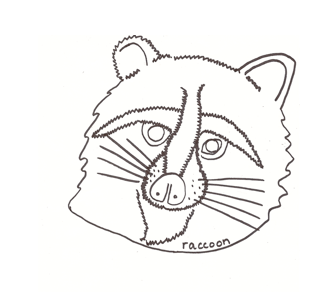
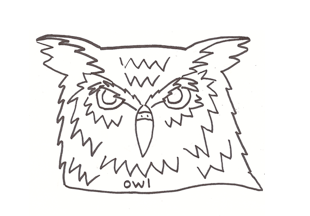
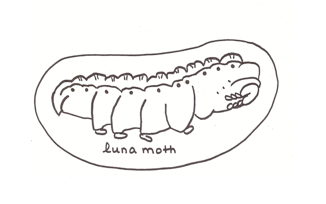
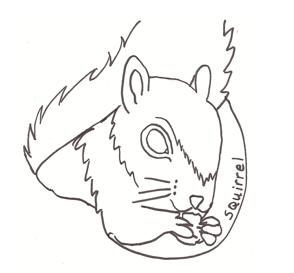
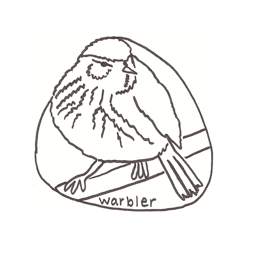
  • Animal head masks, squirrel, owl, raccoon, caterpillar, and bird
  • Pine needle branches
  • Parts of a tree or signs of life in a tree
  • Props for Green Grass Grew All Around
  • 10 straighter sticks of different lengths

Vocabulary

  • Pounce (jump quickly upon)
  • Bark (the skin of a tree)

Before Reading the Story

            Tell the children that today you want them to help tell a story before you read your story.  Ask the children to make themselves very small and round just like an acorn, or whatever other seed from a tree you want them to be.  Tell them that they are in the ground where it is warm and dark.  Soon it starts to rain and you begin to grow little roots that stretch down into the ground.  Now you are just a sapling or a tiny baby tree.  Each year you grow a little bit bigger and a little bit bigger until one day you are a great big tree that almost touches the sky.  You stretch out your branches as wide as you can because you are a strong and beautiful Oak tree.  One day a squirrel scampers up on you and it tickles so you wiggle with laughter.  One day a caterpillar begins to eat your leaves so you shake to get it off.  One day a bird comes and makes a nest in your branches and you gently rock it.  The wind blows through you and you slowly sway from side to side.  Sometimes when a storm comes you bend over and almost touch the ground but you do not break.  You are the home to many animals and you give the children on the playground shade when it is hot outside.  You look down and you smile because you are an Oak Tree and very important to the world.

Creative Arts/Dramatic Play; shows growing creativity and imagination in using materials and in assuming different roles in dramatic play situations. AND Language Development/Listening & Understanding; demonstrates increasing ability to attend to and understand conversations, stories, songs, and poems.

Reading the Story

            Introduce the story and let the children guess what each object is in the tree.

Science/Scientific Knowledge; expands knowledge of and abilities to observe, describe, and discuss the natural world, materials, living things, and natural processes.

After Reading the Story

            Ask if anyone has a tree in their yard at home.  Let them share any tree stories they might like.  Tell the children that they did a good job at the rug today. 

Approaches to Learning/Initiative & Curiosity; grows in eagerness to learn about and discuss a growing range of topics, ideas, and tasks.

Discovery

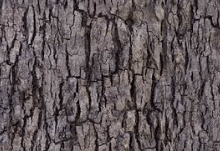
            Look at the trees in your school yard; do you see any signs of animal life?  Bring in bark, branches, leaves eaten by bugs,  a birds nest, and any other interesting tree specimens you have to share with the children.  Encourage them to bring in more.

Science/Scientific Skills & Methods; begins to describe and discuss predictions, explanations, and generalizations based on past experiences. AND Language Development/Speaking & Communicating; develops increasing abilities to understand and use language to communicate information, experiences, ideas, feelings, opinions, needs, questions; and for other varied purposes.

Music and Movement

            Teach the children the song The Green Grass Grew All Aroundhttps://www.youtube.com/watch?v=AkAOeIMypg8 This is an echo song.  The teacher sings it and the children sing the line back.  The chorus is sung by everyone all together.  Use the props to help the children recall the order. (This is a long song, are the children able to stay on task throughout)?

There was a hole                                     children repeat

In the middle of the ground                  children repeat   

The prettiest hole                                      repeat

That you ever did see                               repeat

And the green grass grew all around all around and the green grass grew all around.

And in that hole                                      repeat

There was a tree                                      repeat

The prettiest tree                                     repeat

That you ever did see                              repeat

Well, the tree in the hole and the hole in the ground and the green grass grew all around all around, and the green grass grew all around.

And on this tree                                      repeat

There was a branch                                  repeat

The prettiest branch                                 repeat

That you ever did see                               repeat

Well the branch on the tree and tree in the hole and the green grass grew all around all around and the green grass grew all around.

And on that branch                                 repeat

There was a nest                                      repeat

The prettiest nest                                     repeat

That you ever did see                              repeat

Well the nest on the branch and the branch on the tree and the tree in the hole and the hole in the ground and the green grass grew all around all around and the green grass grew all around.

And in that nest                                      repeat

There was an egg                                    repeat

The prettiest egg                                     repeat   

That you ever did see                             repeat

The egg in the nest and the nest on the branch…..

And in the egg there was a bird….

Well the bird in the egg and the egg in the nest and the nest on the branch and the branch on the tree and the tree in the hole and the hole in the ground and the green grass grew all around all around and the green grass grew all around!

Language Development/Listening & Understanding; demonstrates increasing ability to attend to and understand conversations, stories, songs, and poems. AND Approaches to Learning/Engagement & Persistence; grows in abilities to persist in and complete a variety of tasks, activities, projects, and experiences.

Blocks

Bring in small branches to add to the block play today. Tell the children that your blocks are made from wood that comes from trees.

Physical Health & Development/Fine Motor Skills; grows in hand-eye coordination in building with blocks, putting together puzzles, reproducing shapes and patterns, stringing beads, and using scissors.

Art

            Bring in pine tree branches to use at the easel instead of paint brushes.  Use a rubber band or tape to hold together.  (Bring lots because they can not be easily cleaned).

Creative Arts/Art; gains ability in using different art media and materials in a variety of ways for creative expression and representation. AND Physical Health & Development/Fine Motor Skills; progresses in abilities to use writing, drawing, and art tools; including pencils, markers, chalk, paint brushes, and various technology.

Library and Writing

            Tree begins with the letter /T/.  Have the children help think of T words.  Give them paper to practice writing T’s. Make a list of all the /T/ words that your children were able to come up with and hang it on the wall.

Literacy/Phonological Awareness; shows growing awareness of beginning and ending sounds in words. AND Literacy/Alphabet Knowledge; shows progress in associating the names of letters with their shape and sounds.

Sand and Water

            Put water into the table and add leaves.  Do they look the same dry and wet?  You can especially notice the color difference in the fall time when the leaves are changing color.  Do dried out leaves stay dried out in the water?  Do leaves float or sink?  Can you smell the leaves better when they are wet or dry? 

Science/Scientific Skills & Methods; begins to participate in simple investigations to test observations, discuss and draw conclusions, and form generalizations.

Dramatic Play

            Make masks for the children by stapling the animal heads to a sentence strip.  The children can pretend to be the animals and your dramatic center the tree house.

Creative Arts/. Dramatic Play; participates in a variety of dramatic play activities that become more extended and complex.

Math and Manipulatives

Put the 10 straight sticks in a pile and challenge the child to put them in order from shortest to longest. Have them then count the sticks, how many in all?

Mathematics/Pattern & Measurement; shows increasing abilities to match, sort, put in a series, and regroup objects according to one or two attributes such as shape or size.

Outdoor Play

            If you have pine needles on your playground, help the children gather them up to make a giant nest (toy rakes work well but you can use your hands also).  They can be the birds.  The pinecones can be the eggs.

Creative Arts/Dramatic Play; shows growing creativity and imagination in using materials and in assuming different roles in dramatic play situations.

Transitions

Have the children recall animals and items that they saw in the story today or things they have really seen in a tree. (My Grandma has a tree with cherries in it, I have a swing in my tree).

Literacy/Book Knowledge & Appreciation; shows growing interest and involvement in listening to and discussing a variety of fiction and non-fiction books and poetry. AND Language Development/Speaking & Communicating; develops increasing abilities to understand and use language to communicate information, experiences, ideas, feelings, opinions, needs, questions; and for other varied purposes.

Resources
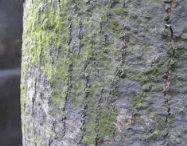
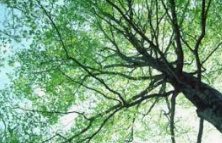
The bark is the skin of the tree.
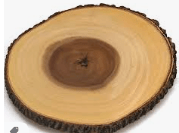
The inside of a tree has rings to tell how old the tree is.
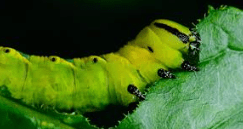
Insects eat the leaves of trees.
Caterpillars eat leaves.
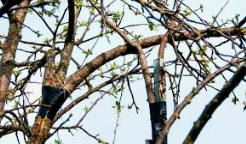
The branches are beginning to grow on this tree.
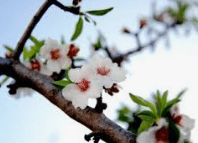
Trees have flowers.
Trees reach for the sunlight.
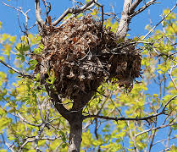
Squirrels build homes in trees.
Birds build homes in trees.
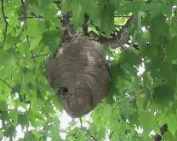
Bee build homes in trees.
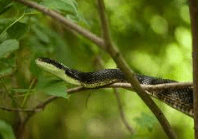
Snakes can climb trees.
Lizards can climb trees.

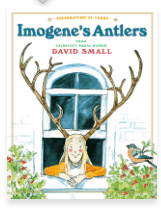
Imogene’s Antlers, by David Small

            What happens when Imogene wakes up one morning with antlers on her head?  This funny story will have children thinking of all the things they could do if they suddenly developed an animal body part.

Materials

  • Several different sized popsicle sticks or twigs
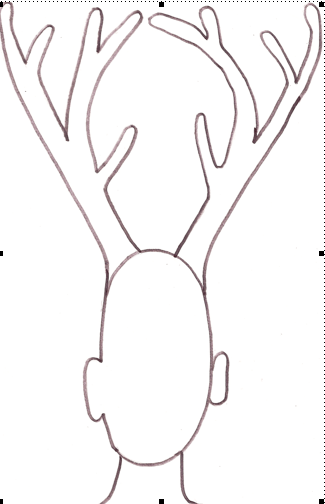
  • Head shape
  • Bag of birdseed
  • Pipe cleaners
  • Several hats and ribbon or crepe paper

Vocabulary

  • Milliner (someone who makes hats)

Before Reading the Story

            Ask the children if they ever thought what it would be like if they could be an animal.  What animal would they like to be and why?  Show the children the cover of the book and introduce.  Ask them if they can think of any problems that Imogene might have with her antlers.  What could you do if you had antlers?

Approaches to Learning/Reasoning & Problem Solving; develops increasing ability to find more than one solution to a question, task, or problem.

Reading the Story

            As you read the story, stop on the page where Imogene’s mother faints. Ask the children why they think Imogene’s mother faints (She can not believe her daughter has antlers)! What do you think is going to happen? What would you do if you woke up and had antlers on your head?

Approaches to Learning/Reasoning & problem Solving; develops increasing abilities to classify, compare, and contrast objects, events, and experiences. AND Literacy & Book Knowledge; demonstrates progress in abilities to retell and dictate stories from books and experiences; to act out stories in dramatic play; and to predict what will happen next in a story.

After Reading the Story

            Show the children several peephole pictures of animals to see if they can guess what each animal is. (Make a peep hole by cutting a one-inch circle in a manilla file. Put a picture behind it and move it around. Can the children guess what the picture is by just looking through the small hole)?

Approaches to Learning/Reasoning & Problem Solving; grows in recognizing and solving problems through active exploration, including trial and error; and interactions and discussions with peers and adults.

Discovery

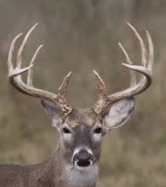
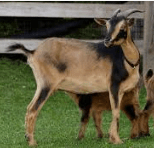
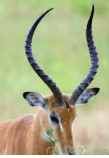
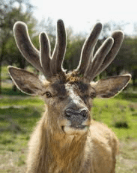
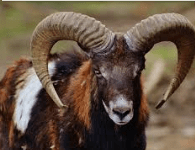
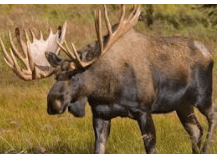
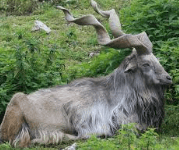
            Bring in pictures of animals with antlers and horns.  If you are lucky perhaps you know someone who will let you borrow some antlers, horns, skulls for the children to explore.

Science/Scientific Skills & Methods; develops increased ability to observe and discuss common properties, differences, and comparisons among objects and materials.

Music and Movement

            Sadly I know no songs that would go along with this book , so make it children’s choice day!

Social & Emotional Development/Self-Concept; begins to develop and express awareness of self in terms of specific abilities, characteristics,and preferences. AND Approaches to Learning/Initiative & Curiosity; develops increased ability to make independent choices.

Sing, If You’re Happy and You Know It but doing actions.

If you’re happy and you know it jump up and down

If you’re happy and you know it jump up and down.

If you’re happy and you know,

Your body will show it.

If you’re happy and you know it jump up and down.

(turn around, touch your toes, take a big leap, squat down low, etc.).

Physical Health & Development/Gross Motor Skills; shows increasing levels of proficiency, control, and balance walking, slimbing, running, jumping, hopping, skipping, marching, and galloping.

Blocks

            Add animals to the blocks.  As the children play, encourage them to talk about the different animal attributes.

Science/Scientific Skills & Methods; develops increased ability to observe and discuss common properties, differences, and comparisons among objects and materials.

Art

            Give the children a head page and Popsicle sticks.  They can draw the face and put popsicle stick/twig antlers on top using glue.

Creative Arts/Art; gains ability in using different art media and materials in a variety of ways for creative expression and representation.

Sand and Water

            Fill the table with birdseed (very soothing sound and can be used later to fill a bird feeder by your science window).  Give the children things for scooping and pouring. Ask the children if they can remember what Imogene fed the birds? Remind the children to keep the seed in the table as birdseed on the floor can be slippery.

Social & Emotional Development/Self-Control; demonstrates increasing capacity to follow rules and routines and use materials purposely, safely, and respectfully.

Library and Writing

            Ask the children to illustrate the following.  If I had _____I could_____!  (If I had wings I could fly, If I had a tail I could wag it hello).

Approaches to Learning/Reasoning & Problem Solving; develops increasing ability to find more than one solution to a question, task, or problem.

Dramatic Play

            Bring hats and ribbon into the center and be milliners.

Literacy/Book Knowledge & Appreciation; demonstrates progress in abilities to retell stories from books and experiences; to act out stories in dramatic play; and to predict what will happen next in a story.

Math and Manipulatives

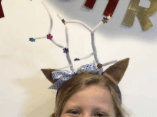
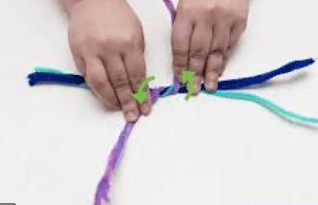
            Give the children 2 pipe cleaners to practice twisting together, like a candy cane.  The teacher can then help twist several together to make antlers. These can be attached to a sentence strip for wearing.

Physical Health & Development/Fine Motor Skills; develops growing strength, dexterity, and control needed to use tools such as scissors, paper punch, stapler, and hammer.

Outdoor Play

Play a ring toss game by having children try to toss hula hoops over a box or street cone. (Remember in the story how Imogene had donuts on her antlers? Let’s pretend that the hula hoop is a giant donut and see if we can get it to land on the cone/antler).

Physical Health & Development/Gross Motor Skills; demonstrates increasing abilities to coordinate movements in throwing, catching, kicking, bouncing balls, and in using the swing and slide.

Transitions

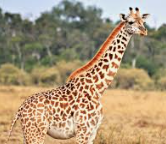
            Do animal riddles with the children. I’m thinking of an animal that has… (spots all over its body and a very long neck and legs.  It eats leaves from the tops of the trees)

Approaches to Learning/Reasoning & problem Solving; develops increasing abilities to classify, compare, and contrast objects, events, and experiences
Resources