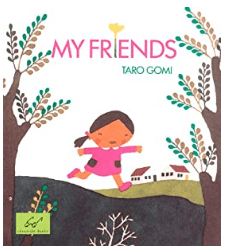
My Friends, by Taro Gomi

            In this story a little girl learns about the important things in life from her friends. 

Materials

  •  Loteria game
  •  Snap clothes pins
  •  Kitchen sponge cut into one inch squares.
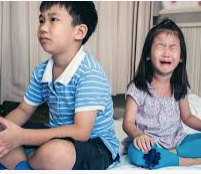
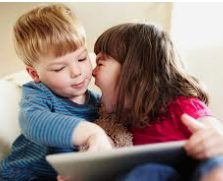
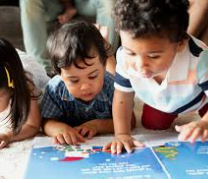
  • Pictures of children getting along-not getting along
  • Any stuffed animals that you might have

Vocabulary

Before reading the Story

           Ask the children if they know what it means to have a friend.  Ask them what kinds of things that they like to do with their friends.  Ask them if a friend has ever taught them how to do something new.  Our story today is about how friends helped a little girl learn how to do many things.

Social & Emotional Development/Self-Concept; debins to develop and express awareness of self in terms of specific abilities, characteristics, and preferences. And Social & Emotional Development/Cooperation; increases abilities to sustain interactions with peers by helping, sharing, and discussions.

Reading the Story

            Read the sentences slowly to see if the children can tell the animal name when you say from my friend the _____. 

Science/Scientific Knowledge; expands knowledge of and abilities to observe, describe, and discuss the natural world, materials, living things, and natural processes.

After Reading the Story

           Tell the children that people can be good friends also and help teach each other to do good things.  Make scenarios that the children can respond to about what they can do to help.  Use puppets to help tell these scenarios. (If you are sitting at the lunch table and you want more green beans, what should you say?  If you want to put a book back on the shelf but there is someone standing in front, what should you do?  If you want to ride a bicycle but they are all being used, what should you do?  When someone gets off so you can get on, what do you say?  If someone was running on the playground and they fell down, what should you do? )

Social & Emotional Development/Self-Control; develops growing understanding of how their actions affect others and begins to accept the consequences of their actions.

Discovery

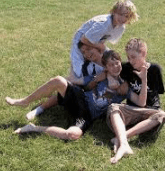
            Take a piece of paper, divide in half and write fighting-not fighting on it.   Use pictures to have the children sort the pictures by those that look like they are getting along and those in which they are fighting. As the children sort you can talk about the pictures and if they, the child, would react the same way.

Social & Emotional Development/Social relationships; progresses in responding sympathetically to peers who are in need, upset,hurt, angry; and in expressing empathy towards other.

Music and Movement;

            Chant the 1,1,1,2,3 chant.

1,1,1,2,3

All my friends are here with me.

You’re my friend, you’re my friend

You’re my friend, you’re my friend

1,1,1,2,3

All my friends are here with me!

(encourage the children to clap or tap out the beat as they chant)

Creative Arts/Movement; shows growth in moving in time to different patterns of beat and rhythm in music.

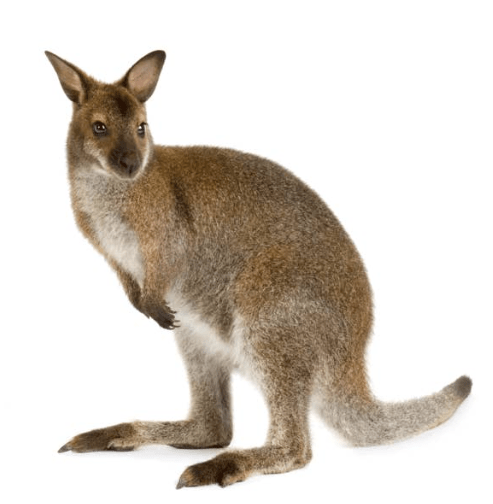
            Teach children Willoughby Wallaby Woo

Willoughby Wallaby Woo, I don’t know what to do.

Willoughby, wallaby wee, An elephant sat on me.

Willoughby, wallaby washed, I’m feeling awfully squashed

Willoughby wallaby woo, I don’t know what to do.

(Then go around the circle saying )

Willoughby, wallaby w____/werry

An elephant sat on Kerry!

Willoughby, wallaby w_____/woger

An elephant sat on Roger

(Continue around the circle doing each child’s name.  When you get back to the beginning do the chorus)

Literacy/Phonological Awareness; progresses in recognizing matching sounds and rhymes in familiar words, games, songs, stories, and poems.

Blocks

            Encourage the children to work together to build a structure. Friends cooperate and work together.

Social & Emotional Development/Cooperation; shows increasing abilities to use compromise and discussion in working, playing, and resolving conflicts in with peers.

Art

            Tell the children that the little girl must be happy to learn so many things from her friends.  What does your mouth do when you are happy? (It smiles).  Cut out smiles from large pieces of red construction paper.  Show the children how to print teeth onto the smile using a piece of sponge cut into a square and held with a clothespin and moving up and down, up and down.

Creative Arts/Art; gains ability in using different art media and materials in a variety of ways for creative expression and representation.

Library and Writing

            Ask the children to think of things that they know how to do that makes them feel proud.  Write these down on a piece of paper.  I write their proud things on a star shaped paper.  The children write their name on one side and I write what they are proud of on the other.  We then hang these over the table with string.

Social & Emotional Development/Self-Concept; demonstrates growing confidence in a range of abilities and expresses pride in accomplishments. AND Literacy/Early Writing; progresses from using scribbles, shapes, or pictures to represent ideas, to using letter-like symbols, to copying and writing familiar words such as their own name.

Dramatic play

            Bring in stuffed animals today.  As the children play ask them if they can think of things that each animal could teach them.

Science/Scientific Knowledge; expands knowledge of and abilities to observe, describe, and discuss the natural world, materials, living things, and natural processes.

Math and Manipulatives

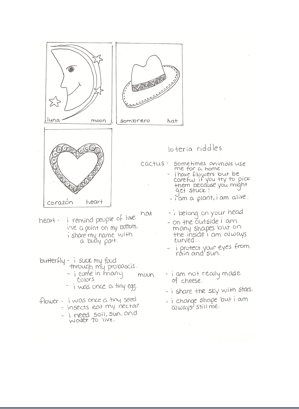
            Teach the children to play Loteria which is the Spanish version of BINGO.  For older children instead of showing the children the pictures, only give clues for each symbol on the board.

Language Development/Listening & Understanding; demonstrates increasing ability to attend to and understand conversations, stories, songs, and poems.

Outdoor play

            Take the book outside to re-read and let the children do the actions.

Language Development/Listening & Understanding; demonstrates increasing ability to attend to and understand conversations, stories, songs, and poems. AND Physical Health & Development/Health Status & Practices; participates actively in games, outdoor play, and other forms of exercise that enhance physical fitness.

Transitions

Put two 6-foot long strips of masking tape onto the floor about 1 foot apart. Call two children to hold hands and then walk the line as they go to the next activity. You could have the children jump the line, walk backwards, tip-toe, etc..

Physical Health & Development/Health Status & Practices; participates actively in games, outdoor play, and other forms of exercise that enhance physical fitness. AND Language Development/Listening & Understanding; shows progress in understanding and following simple and multiple-step directions.

Resources
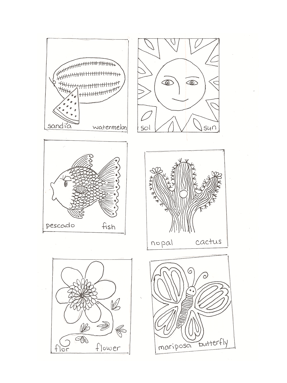
Loteria pictures and riddles. Make four copies of the loteria cards and 3 rows of three per card. Make a set for the caller.

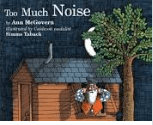
Too Much Noise, by Ann McGovern

            What happens when all the noises of the house keep you awake at night?

Materials

Vocabulary

  • Burro (another name for a donkey)

Before Reading the Story

            Ask the children what we use our ears for.  Talk about the importance of ears and how to take care of your ears (avoid really loud sounds/music, do not put things in your ears).    Explain that some people can not hear well or at all with their ears.  Ears sometimes get plugged and you can not hear very well but a doctor can help you to hear better.  If ever you think your ears are not hearing well, tell an adult. Tell the children that some people’s ears do not work properly.  Mime a sentence.Talk about being deaf or wearing a hearing aid.

Physical Health & Development/Health Status & Practices; bui.lds awareness and ability to follow basic health and safety rules such as fire safety, traffic and pedestrian safety, and responding appropriately to potentially harmful objects, substances, and activities.

Reading the Story

            Explain that today’s story is about a man whose ears work too good and he heard all kinds of sounds at night.  Ask them if they can guess what is going to happen? Introduce the book.

Literacy/Book Knowledge & Appreciation; demonstrates progress in abilities to retell and dictate stories from books and experiences; to act out stories in dramatic play; and to predict what will happen next in a story.

After Reading the Story

            Ask the children why they think the wise man had the old man get a cow and a burro and a dog and a cat? 

Literacy/Book Knowledge & Appreciation; shows growing interest and involvement in listening to and discussing a variety of fiction, non-fiction and poetry. AND Language Development/Listening & Understanding; demonstrates increasing ability to attend to and understand conversations, stories, songs, and poems.

Have the children sit very quietly for a minute.  Then ask them to help list some of the sounds that they heard.

Science/Scientific Skills & Methods; develpps growing abilities to colllect, describe, and record information threough a variety of means, including discussion, drawings, maps, and charts.

Discovery

            Make a tape recording ahead of time of familiar household sounds (vacuum, water dripping, shower, door bell, dog barking, car driving by, horn).  Put the tape on and let the children listen and try to identify the sounds.

Approaches to Learning/Reasoning & Problem-Solving; grows in recognizing and solving problems through active exploration, including trial and error, and interactions and discussions with peers and adults.

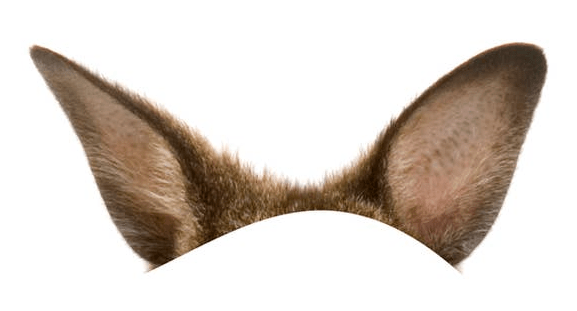
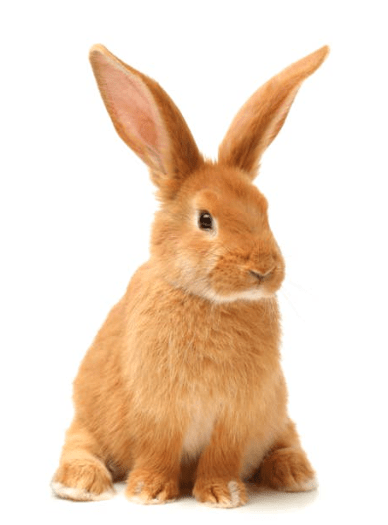
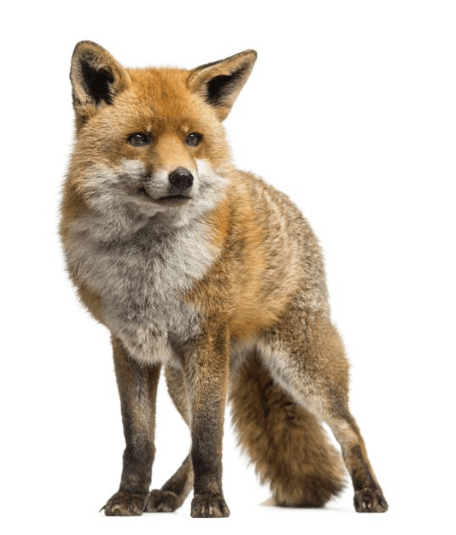
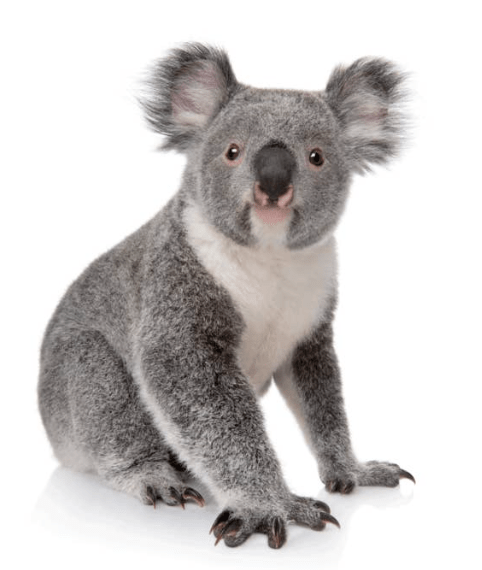
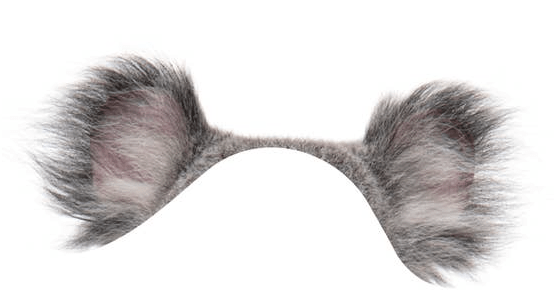
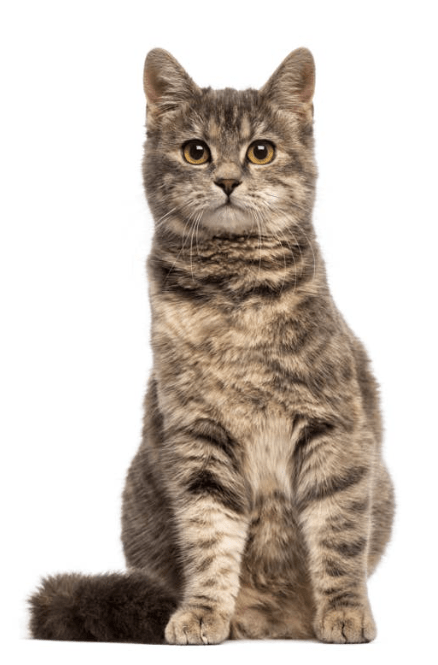
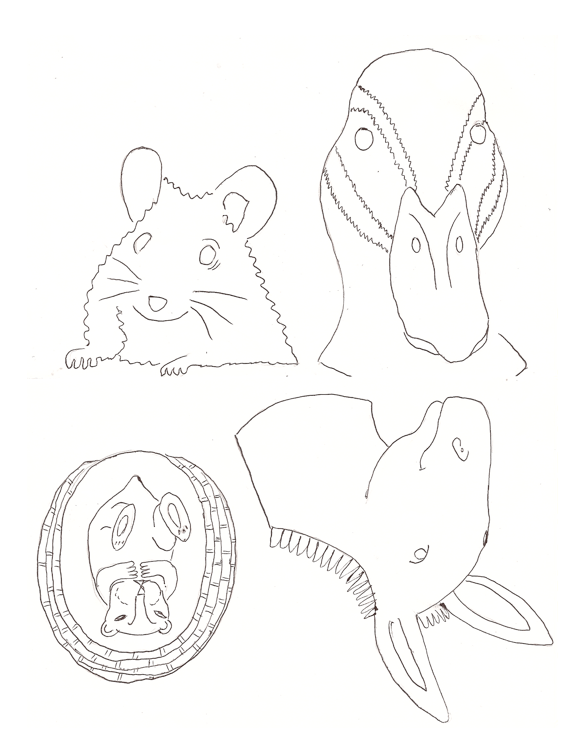
Make a set of animal ears and the animals that they belong to. Can the children identify the correct ears to the correct animal?

Science/Scientific Skills & Methods; develops increased ability to observe and discuss common properties, differences, and comparisons among objects and materials.

Music and Movement

            Sing the alphabet song.  The second time around start off very softly and get louder and louder.  The third time start off loudly and get softer and softer.

Literacy/Alphabet Knowledge; knows that letters of the alphabet are a special category of visual graphics that can be individually named.

            Use you classroom instruments.  Can you play loudly?  Can you play softly?  Have the children sort the instruments by those that make loud sounds and those that make quiet sounds.

Creative Arts/Music; experiments with a variety of musical instruments.

            Sing, Do Your Ears Hang Low https://www.youtube.com/watch?v=aH7A_pBOTkY

Do your ears hang low

Do they wobble to and fro

Can you tie them in a knot

Can you tie them in a bow?

Can you throw them over your shoulder

Like a strong brave soldier

Do your ears hang low?

Language Development/Listening & Understanding; demonstrates increasing ability to attend to and understand conversations, stories, songs, and poems.

Blocks

            Challenge the children to build a house.  Can they make it have a window and a door?

Approaches to Learning/Engagement & Persistence; demonstrates increasing ability to set goals and develop and follow through on plans.

Art

            Bring in clay or play dough to pound and roll.

Creative Arts/Art; gains ability tin using different art media and materials in a variety of ways for creative expression and representation.

Library and Writing

            Bring in books with pictures animals and note their ears. (Look at this rabbit’s ears; he must be able to hear really well.  Look at this dog’s ears, they hang down)

Science/Scientific Skills & Methods; develops increased ability to observe and discuss common properties, differences, and comparisons among objects and materials.

Sand and Water

            Use water today.  Add containers that allow the water to pour at different rates (sprinkle, rush, splashing).  Talk about the sounds of the water as it flows from the container back into the water table.

Science/Scientific Skills & Methods; develops increased ability to observe and discuss common properties, differences, and comparisons among objects and materials.

Dramatic Play

            Act out night time rituals.  Encourage the children to snore as they sleep.

Creative Arts/ Dramatic PLay; participates in a variety of dramatic play activities that become more extended and complex.

Math and Manipulatives

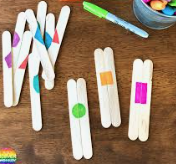
            Hold two Popsicle sticks side by side and draw a shape that covers both (square).  Do this with a number of sets of Popsicle sticks.  Put all the sticks in a bowl and encourage the children to make the matching sets.

Mathematics/Geometry & Spatial Sense; shows growth in matching, sorting, putting in series, and regroup objects according to one or two attributes such as color, shape, or size.

Outdoor Play

            Sit outside and listen to all the sounds that pass through the play ground.  Do you hear any voices that you recognize?  Do you hear any birds or cars?  Listen carefully and you might hear an insect fly by.

Science/Scientific Skills & Methods; begins to use senses and a variety of tools and simple measuring devices to gather information, investigate materials and observe processes and relationships.

Transitions

            Ask the children to listen carefully to the letter sounds that you make.  If their name begins with this letter sounds they may go to the next activity. /K/K/Kerry

Literacy/Phonological Awareness; shows growing awareness of beginning and ending sounds of words.

Resources

Thank you Buzz Feed for these animals and their ears.


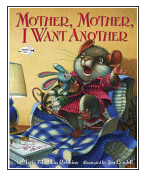
Mother, Mother, I Want Another, by Maria Polushkin

    Mother Mouse is tucking her baby into bed.  Baby mouse begins to cry, I want another, Mother.  Another Mother!  Find out what Mrs. Mouse does and how she and baby mouse resolve this issue.

Materials

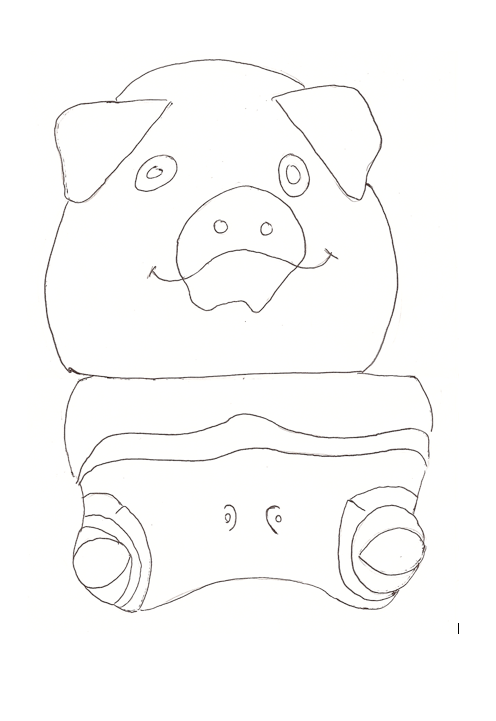
  • Mask of Mrs. Mouse, baby mouse, Mrs Duck, Mrs. Frog, Mrs. Pig, and Mrs Donkey
  • A variety of plastic foods or toys that have a varied number of syllables (corn, apple, carrot, pineapple, celery, pear)
  • Magazines with pictures of mothers and babies
  • Box of cornstarch

Vocabulary

  • Fret ( to be upset and cry)    

Before Reading the Story

Talk to the children about their bedtime rituals. Does anyone read them a story? Does anyone kiss them good-night?

Language Development/Speaking & Communicating; develops increasing abilities to understand and use language to communicate information, experiences, ideas, feelings, opinions, needs, questions; and for other varied purposes

Reading the Story

            Sing the Mother animal’s responses to baby mouse. 

After Reading the Story

            Tell the children that in the story, mother mouse went to find what she thought her baby wanted.  Ask the children what baby mouse really wanted?  Ask the children if they have ever had an experience like baby mouse, what did they do, what did their parent do?  Explain that when we don’t use our words or talk in full sentences, people do not always know what we want. 

Language Development/Speaking & Communicating; progresses in abilities to initiate and respond appropriately in conversation and discussions with peers and adults.

Discovery

            Tell the children that you are going to play a game with them about not using your words correctly.  Put out a variety of plastic foods.  Explain that you are going to ask them to guess which one you want by grunting the food name.  They will have to try to guess which one you want by counting the syllables of the word.  Practice counting syllables in the children’s names before you begin.(apple=grunt, grunt /pineapple=grunt,grunt,grunt).  After they guess correctly have all the children name the food item and then clap out its syllables.

Literacy/Phonological Awareness; shows growing ability to hear and discriminate separate syllables in words.

Music and Movement

            Sing Good Night Baby, to tune Good Night Ladies . https://www.youtube.com/watch?v=fMruF_CLrqM

Good night baby, good night baby,

Good night baby, it’s time to go to sleep

AGAIN!

Creative Arts/Music; participates with increasing interest and enjoyment in a variety of music activities, including listening, singing, finger plays, games, and performances.

Blocks

            Challenge the children to make a bed that they can sleep in. How will you figure out if it is long enough? How will you form the base? What blocks will you need to use?

Approaches to Learning/Initiative & Curiosity; approaches tasks and activities with increased flexibility, imagination, and inventiveness.

Art

            Use magazines and ask the children to cut out pictures of babies and mothers.  These can be both human and animals.  Draw a line down a piece of poster board and have the children glue the babies on one side and the mothers on the other.

Physical Health & Development/Fine Motor Skills; grows in hand-eye coordination in building with blocks, putting together puzzles, reproducing shapes and patterns, stringing beads, and using scissors. AND Mathematics/ Patterns & Measurement; shows increasing abilities to match, sort, put in a series, and regrouping objects according to one or two attributes such as shape or size.

Sand and Water

Try something different in the water table today. Add a box of cornstarch and slowly add water. The mixture will become solid in the bottom of your water table but when you pick it up, it will liquify and slip through your fingers. Show the children how to let it become a solid and use their finger to write their name. Them pick it up and let it ooze through their fingers.

Science/Scientific Skills & Methods; begins to use senses and a variety of tools and simple measuring devices to gather information, investigate materials, and observe processes and relationships. AND Literacy/ Early Writing; experiments with a growing variety of writing tools and materials. such as pencils, crayons, and computer.

Library and Writing

            Encourage the children to think of other animals that might come and sing to baby mouse.  What might these other animals say and bring to baby mouse?  Have the children illustrate and write their responses.  (Meow, I will bring you milk. Don’t cry baby mouse I will bring you a piece of cake).

Literacy/Print Awareness & Concepts; shows increasing awareness of print in the classroom, home, and community settings.

Math and Manipulatives

            Ask the child to give you two or three objects (chain link, counter bears).  When they give them to you say “I want another, now how many do I have”?  Continue this as the child gives you another and counts, note if they understand adding one more and how high they can count.  For older children you can say I want two more, now how many do I have?

Mathematics/Number & Operations; develops increases abilities to combine, separate and name “how many” concrete objects.

Dramatic Play

            This is a fun story to act out   Make the Mother masks and attach to a sentence strip.

Literacy/Book Knowledge & Appreciation; demonstrates progress ub abilities to retell and dictate stories from books and experiences; to act out stories in dramatic play; and to predict what will happen next in a story.

Outdoor Play

Play Mouse Tag. The teacher starts off as ‘the cat’ and chases the mice trying to catch them. Have a tree or a climber be the mouse hole or safe place. If a “mouse” is caught then they become a cat and help catch other mice.

Social & Emotional Development/Cooperation; shows increasing abilities to use compromise and discussion in working, playing, and resolving conflicts with peers.

Transitions

Ask each child to tell you something that their Mother does that makes them feel special and loved. (My Mom makes me chocolate milk, My Mom hugs me and tickles me)

Social & Emotional Development/Knowledge of Families & Communities; develops ability to identify personal characteristics, including gender and family composition.