Mama, Do You Love Me? by Barbara M. Joosse

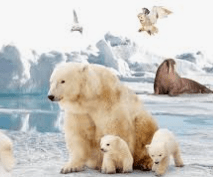
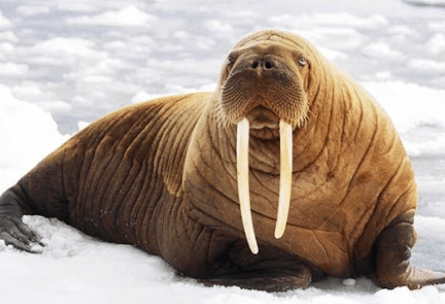
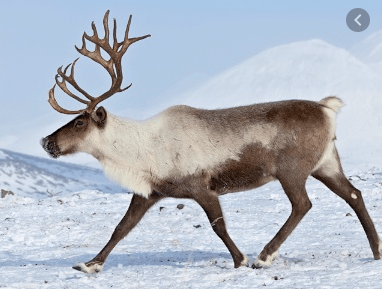
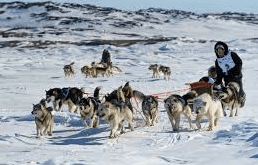
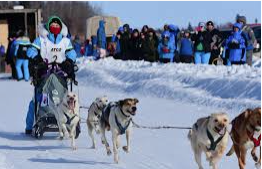
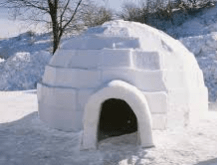
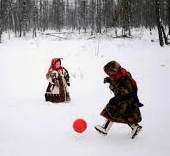
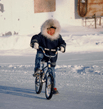
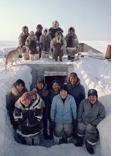
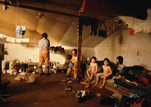
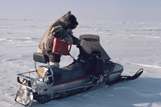
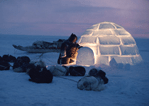
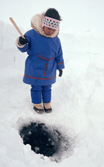
            A little girl asks her Mama if she loves her.  Her Mother’s response is  always a yes.  This book has bold pictures that show the life of the Inuit’s in the northern regions of the artic.  And it conveys the message of unconditional love between a mother and her child.

Materials

  • Several trays of ice cubes
  • Globe
  • Books and/or pictures of Arctic life
  • Any winter clothing that you can add to dramatic play

Vocabulary

  • Spout (the water that comes from the whales head like a fountain)
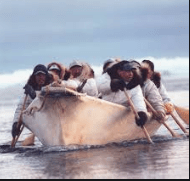
  • Umiak (a kind of boat that the Inuit use)
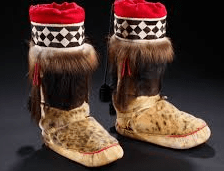
  • Mukluks (a big pair of boots made to wear over shoes or with extra socks)

Before Reading the Story

            Ask the children if their parent has ever gotten mad at them?  Ask if they have ever gotten mad at their parent?  Ask them to show you what mad looks like.  Tell them that sometimes everyone gets mad.  What should you do if you are mad?  Ask the children if they know what it means to forgive.  What are some things that people do to forgive each other? (say sorry, hug, smile at each other, shrug shoulders and go play).

Language Development/Speaking & Communicating; develops increasing abilities to understand and use language to communicate information, experiences, ideas, feelings, opinions, needs, questions; and for other varied purposes.

            Tell the children that the story today takes place in the artic.  Show them on the globe.  Tell them that the arctic is always very cold.

Social & Emotional Development/Knowledge of Families & Communities; begins to express and understand concepts and language of geography in the contexts of the classroom, home, and community.

Reading the Story

            As you read, stop on each page that names an emotion and ask the children to show you what that emotion looks like.

Language Development/Speaking & Communicating; develops increasing abilities to understand and use language to communicate information, experiences, ideas, feelings, opinions, needs, questions; and for other varied purposes.

After Reading the Story

            Do the people in the story dress like you do where you live?  Could you tell what the weather was like when we read the story?    What was the little girl’s biggest worry? (Mama do you love me?) 

Literacy/Book Knowledge & Appreciation; shows growing interest and involvement in listening to and discussing a variety of fiction and non-fiction and poetry.

Discovery

            Bring in any books or pictures of life in the arctic circle (the animals, the dress of the people, modern life style, transportation, etc).

Literacy/Book Knowledge & Appreciation; shows growing interest and involvement in listening to and discussing a variety of fiction and non-fiction and poetry.

Music and Movement

            Go on a pretend bear hunt with the children. https://www.youtube.com/watch?v=BP2GwOLr2nI

            Sing If You’re Happy and You Know It, https://www.youtube.com/watch?v=Kk0mASRGEI8 then sing about if you’re sorry, if you’re angry, very angry, worried, surprised.

Creative Arts/Dramatic Play; shows growing creativity and imagination in using materials and in assuming different roles in dramatic play situations.

Blocks

            Tell the children that an umiak is a kind of boat.  Can the children build a boat out of blocks?  If you do not have the right kind of blocks to build a boat for the children, encourage them to try to make one for a doll or stuffed animals.  Make sure you add sides so the water does not splash inside.

Social & Emotional Development/Cooperation; develops increasing abilities to give and take in interactions, to take turns in games and in using materials; and to interact without being overly submissive or directive. AND Approaches to Learning/Engagement & Persistence; demonstrates increasing ability to set goals and develop and follow through on plans.

Art

            Show the children the masks on the front and back inside covers.  Put out paper plates with a variety if collage materials to make masks.  Cut two eye holes out before they begin.

Creative Arts/Art; progresses in abilities ti create drawings, paintings, models. and other art creations that are more detailed, creative, or realistic.

Sand and Water

            Put water in the table and add several trays of ice.  It is cold in the arctic where the story took place.  Add any arctic animals you might have.

Approaches to Learning/Initiative & Curiosity; chooses to participate in an increasing variety of tasks and activities.

Library and Writing

            Tell the children that you heard the letter M many times in the story.  It was in the words, Mama, musk-ox, mukluks, and moose.  Ask the children to make the /M/ letter sound.  Can they think of any more /M/ words?  Can they find anything in the room that begins with the letter M?  Dump the magnet letters out onto the table and see if the children can find the M’s.

Literacy/Alphabet Knowledge; shows progress in associating the names of letters with their shapes and sounds.

Dramatic Play

            Bring winter clothes for drama.  Include some boots/mukluks, jacket, mittens, hats, and scarves.

Creative Arts/Dramatic PLay; participates in a variety of dramatic play activities that become more extended and complex.

Math and Manipulatives

            Show the children The mother and the daughter’s dresses were full of beautiful patterns.  Show the children how to use one of your manipulatives to make patterns (chain links, parquetry shapes, 1”cubes).

Mathematics/Patterns & Measurement; enhances abilities to recognize, duplicate, and extend simple patterns using a variety of materials.

Outdoor Play

            If you read this book in the winter, go out and play in the snow! 

Science/Scientific Knowledge; develops a growing awareness of ideas and language related to attributes of time and temperature.

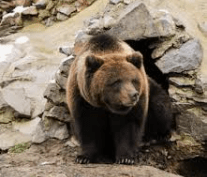
            Play Ferocious Bear!  Have the children practice growling.  Play Ferocious Bear like tag.  The children can growl as they run around the playground. 

Physical Health & Development/Health Status & Practices; participates actively in games, outdoor play, and other forms of exercise that enhance physical fitness.

Transitions

            Ask the children, how much do you love your Mama?  (more than the sun, as much as cookies, forever) . Write their answers on a piece of paper and hang it on the wall.

Literacy/Early Writing; begins to represent stories and experiences through pictures, dictation, and in play.

Resources
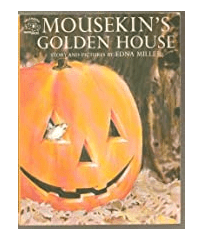
Mousekin’s Golden House, by Edna Miller

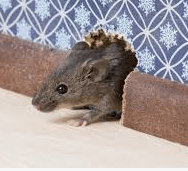
            A little mouse is searching for a house to sleep in through the winter.  What will he find, will he be safe?  This is a beautifully illustrated story.

Materials

Vocabulary

  • Forest (woods)
  • Swooped (to fly quickly down)
  • Sulking (to pout angrily)
  • Hibernate (pass the winter sleeping “Certain animals hibernate because food supplies become scarce during the winter months. By going into a long deep sleep, they bypass this period completely, waking up when food becomes more plentiful”.

Before Reading the Story

            Ask the children if they know what a jack-o-lantern is? Ask them if they made a jack-o-lantern last Halloween?   What shape eyes, nose, and mouth did you make?  Let the children share any jack-o-lantern stories that they may have.

Language Development/Speaking & Communicating; develops increasing abilities to understand and use language to communicate information, experiences, ideas, feelings, opinions, needs, questions; and for other varied purposes.

Reading the Story

            When you get to the page where Mousekin saw something in the path left over from Halloween, ask the children if they can guess what it might have been?

Literacy/Book Knowledge & Appreciation; demonstrates progress in abilities to retell and dictate stories from books and experiences; to act out stories in dramatic play; and to predict what will happen next in a story.

After Reading the Story

            Go back through the story and talk about the pictures.  Ask the children if they can tell what season different pages represent.  Explain that some animals hibernate all winter.  Talk about the turtle and how he goes inside his shell when he is afraid.  Show the children the forest and talk about other animals who might live in the forest.

Science/Scientific Knowledge; expands knowledge of and abilities to observe, describe, and discuss the natural world, materials, living things, and natural processes.

Discovery

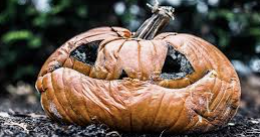
            Put a jack-o-lantern inside of the classroom where the children can observe it.  You can also carve an apple into a head shape and leave out to observe.  After several days the apple head will start to look like a shrunken head. As the fruits start to wrinkle, call attention and let the children begin to share daily observations. Have them draw their observations of the pumpkin weekly. Does it still look the same?

Science/Scientific Skills & Methods; develops growing abilities to collect, describe, and record information through a variety of means, including discussion, drawings, maps, and charts.

            Bring in a box of soft and hard things for the children to sort.  Try to bring in some natural objects like moss, cotton fluff, sticks, and rocks as well as man made items.

Science/Scientific SKills & Methods; begins to use senses and a variety of tools t and simple measuring devices to gather information, investigate materials, and observe processes and relationships.

Music and Movement

            Explain to the children that when a mouse or other small creature sees an owl or other enemy in the wild, they often freeze.  Put on music with different beats. Encourage the children to move to the beat and t when the music stops they must freeze in whatever position they are in.

Language Development/Listening & Understanding; shows progress in understanding and following simple and multiple-step directions. AND Movement/ expresses through movement and dancing what is felt and heard to various musical tempos and styles.

Sing, Can You Make a Happy Face Jack-o-lantern. https://www.youtube.com/watch?v=x8b4f5fhYuw&vl=en

Language Development/Speaking & Communicating; develops increasing abilities to understand and use language to communicate information, experiences, ideas, feelings, opinions, needs, questions; and for other varied purposes.

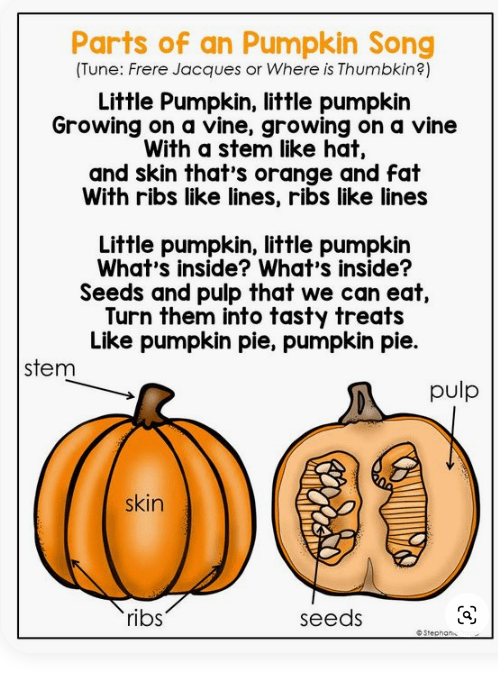
Teach the children the Parts of a Pumpkin that is shared by primarythemepark.com. (See resources)

Science/Scientific Knowledge; expands knowledge of and abilities to observe, describe, and discuss the natural world, materials, living things, and natural processes.

Blocks

            Give the children toy mice or make several origami mice that they can use to build a mouse house for.

Creative Arts/Dramatic Play; participates in a variety of dramatic play activities that become more extended and complex.

Art

            Put large pumpkin shapes on the easel.  The children can paint them fanciful or add faces.

Creative Arts/Art; gains ability in using different art media and materials in a variety of ways for creative expression and representation.

Give each child a pumpkin shape.  Have them collage cotton and leaves onto the pumpkin.  Glue their origami mouse onto the pumpkin.  On the top of the pumpkin write “This pumpkin is my home”.

Creative Arts/Art; gains ability in using different art media and materials in a variety of ways for creative expression and representation.

Library and Writing

Talk to the children about different kinds of homes that animals and people live in. Ask then children to draw a picture of where they would like to live and then write their description at the bottom of the page. (I would want to be a mermaid and live with Ariel. I want to live in my house with my family. I would live in a nest like a bird).

Social & Emotional Development/Self-Concept; begins to develop and express awareness of self in terms of specific abilities, characteristics, and preferences.

Sand and Water

Use Water Jelly Crystals in your table today. As they start to grow, talk to your children about the changes that they see happening.

Scientific Skills & Methods; begins to participate in simple investigations to test observations, discuss and draw conclusions, and form generalizations.

Dramatic Play

            Make several mouse masks for the children to use in the center.  They can pretend that they are mice and make a soft, warm house to sleep in. Provide extra pillows, blankets, or soft items that you might have.

Literacy/Book Knowledge & Appreciation; demonstrates progress in abilities to retell and dictate stories from books, and experiences; to act out stories in dramatic play; and to predict what will happen next in a story.

Math and Manipulatives

            Use sequencing cards for the children to put in first, than, and last order.

Literacy/Book Knowledge & Appreciation; demonstrates progress in abilities to retell and dictate stories from books, and experiences; to act out stories in dramatic play; and to predict what will happen next in a story.

            Ask the children to help name animals that would be small enough to live inside a jack-o-lantern.  Write their responses on a pumpkin shape.

Mathematics/Geometry & Spatial Sense; begins to determine whether or not two shapes are the same size and shape.

Outdoor Play

            When the owl swooped down, Mousekin ran into the jack-o-lantern house.  Play a tag game where the children can pretend to be mice and the teacher is the owl.  The teacher chases the children who then run trying not to get caught.  There can be a safe area (a play house, a tree) that can be the mouse house.

Literacy/Book Knowledge & Appreciation; demonstrates progress in abilities to retell and dictate stories from books and experiences; to act out stories in dramatic play; and to predict what will happen next in a story. AND Physical Health & Development/Health Status & Practices; participates actively in games, outdoor play, and other forms of physical exercise that enhance physical fitness.

Transitions

            Ask the children to help name other animals that might live in a forest, a zoo, a pond, or a pet store.  Extend this by bringing in pictures of real animals from magazines and asking the children to name the animal and where it might live.  Group the animals by habitat.

Science/Science Knowledge; expands knowledge of and abilities to observe, describe, and discuss the natural world, materials, living things, and natural processes.

            Mouse starts with the letter /M/.  Can the children think of other words that begin with the letter /M/?

Literacy/Phonological Awareness; shows growing awareness of beginning and ending sounds of words.

            Mouse-house are rhyming words.  What other rhyming sets can the children name?

Literacy/Phonological Awareness; progresses in recognizing matching sounds and rhymes in familiar words, games, songs, stories, and poems.

Resources
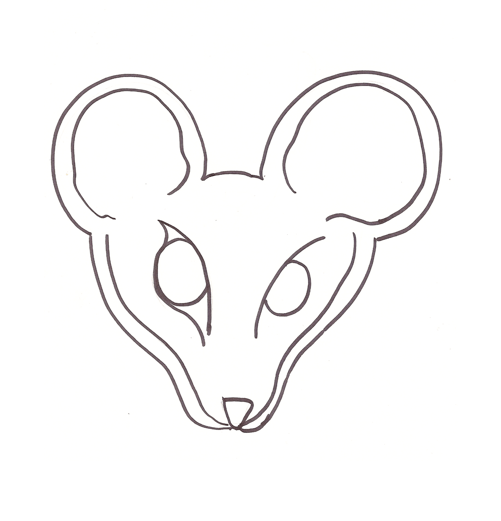
To decorate and use for dramatic play.

Pumpkin sequence cards

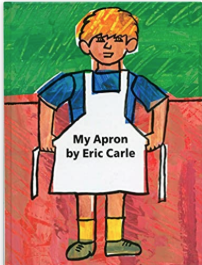
My Apron, by Eric Carle

            This is a story of a boy who helps his uncle to do his job/work.  It is hard work but the boy is proud.  Follow him through the day as he proudly helps his uncle and receives his own apron.
Materials

  • Bag of flour or plaster of paris
  • Shoe boxes or cereal boxes, one per child

Vocabulary

  • Apron; (What you wear over your clothes to protect them and keep them clean while you work).
  • Plasterer (The person who mixes the stuff that is used to make a house)
  • Chimney (The part of the house that rises out of the roof where the smoke and heat come out)

Before reading the Story

            Ask the children if they know what kinds of work their parents do for a living?  Write down their responses.   Explain that parents do many different kinds of jobs.  Talk about your job as a teacher and other jobs within your center.  Ask the children if they know why adults need to get jobs (to make money, so we can buy the food, cause they have to work).

Social & Emotional Development/Knowledge of Families & Communities; develops growing awareness of jobs and what is required to perform them.

Reading the Story

            As you read make a point of noting the times of day “In the morning my Uncle Adam and I go to work”-ask the children where they go in the morning?  All morning while the boy carries the plaster ask the children what kinds of things they like to do at school in the morning-play, go outside, build with blocks.  Talk about lunch time, what you are going to have that day.  When the boy talks about all afternoon, ask the children what they do in the afternoon-take a nap, read books, play, etc.  Late in the afternoon-explain that this is when the children go home from school. 

Science/Scientific Knowledge; develops growing awareness of ideas and language related to attributes of time and temperature.

After Reading the Story

            Ask the children if they know any jobs that they might like to do when they get grown up? You can then try to find pictures of these on the internet and print them out and write the child’s name underneath. Do any jobs have more than one person who chooses a job type? How many children chose to be firepersons?

Mathematics/Number & Operations; begins to use language to compare numbers of objects with terms such as more, less, greater than, fewer, equal. AND Social & Emotional Development/Self-Concept; begins to develop and express awareness of self in terms of specific abilities, characteristics, or preferences.

Discovery

            Ask parents to supply a tool from their trade that the children may display and examine in the classroom.  Or bring in a variety of tools from different job types (menu, hammer, stapler, stethoscope, cash register, pencil, etc.). Ask the children if they can name the tools and who might use them.

Language Development/Speaking & Communicating; uses an increasingly complex and varied vocabulary. AND Social & Emotional Development/Knowledge of Families & Communities; develops growing awareness of jobs and what is required to perform them.

Music and Movement

            Put on some music and have the children pretend that they are going up stairs and down stairs.  Do this marching like activity for a whole song.  Stop and ask the children how their legs feel.  Imagine doing this all day long as a plasterer, now that’s hard work!

Creative Arts/Movement; shows growth in moving in time to different patterns of beat and rhythms.

Blocks

            Challenge the children to build a home.  Can they add window and a door?  Can they make stairs?  How about a chimney?  Let the children stage any community helpers that you might have with their house.

Approaches to Learning/Engagement & Persistence; demonstrates increasing ability to set goals and develop and follow through on plans.

Art

            Cut out white apron shapes that the children can decorate.

Creative Arts/Art; gains ability in using different art media and materials in a variety of ways for creative expression and representation.

Sand and Water

            Put plaster of paris or flour and water into the table.  Let the children mix it and then use popsicle sticks to spread it across shoe boxes or cereal boxes.  They are plasterers.

Social & Emotional Development/Knowledge of Families & Communities; develops growing awareness of jobs and what is required to perform them. AND Physical Health & Development/Fine Motor Skills; progresses in abilities to use writing, drawing, and art tools, including pencils, markers, paint brushes, and various types of technology.

Library and Writing

            Bring in a variety of books or pictures that depict people at work.  Bring in unusual careers also like a ballerina or race car driver.  Encourage the children to talk about all the kinds of jobs and help them name the trade and any tools that they know are associated with it.

Social & Emotional Development/Knowledge of Families & Communities; develops growing awareness of jobs and what is required to perform them.

Dramatic Play

            Look around and find several different kinds of aprons that you can bring into the center and let the children try wearing.  You could also include a tool belt and a paint smock.

Creative Arts/Dramatic Play; shows growing creativity and imagination in using materials and in assuming different roles in dramatic play situations.

Math and Manipulatives

            Bring in a yard stick or tape measure and measure how many inches tall the children are.  Mark on the wall so the children can see. Put out rulers for the children to practice measuring the table, the chair, or a friend.

Mathematics/Patterns & Measurement; shows progress in using standard and non-standard measures for length and area of objects.

Outdoor Play

Get out the bicycles and pretend that it is time for everyone to go to work. One child can work the gas station pump, another could collect the toll tickets, and another could pretend to serve food through a fast food window.

Creative Arts/Dramatic Play; shows growing creativity and imagination in using materials and in assuming different roles in dramatic play situations. AND Social & Emotional Development/Knowledge of Families & Communities; develops growing awareness of jobs and what is required to perform them.

Transitions

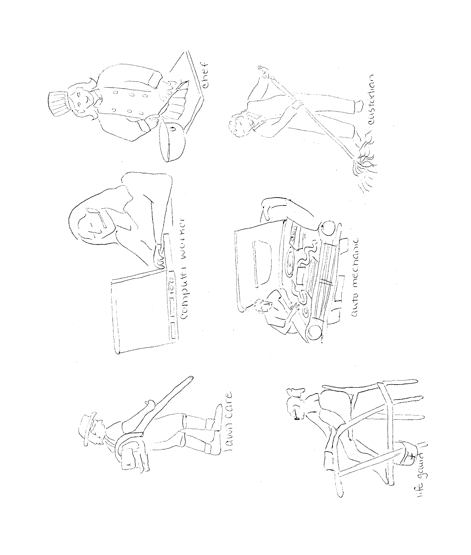
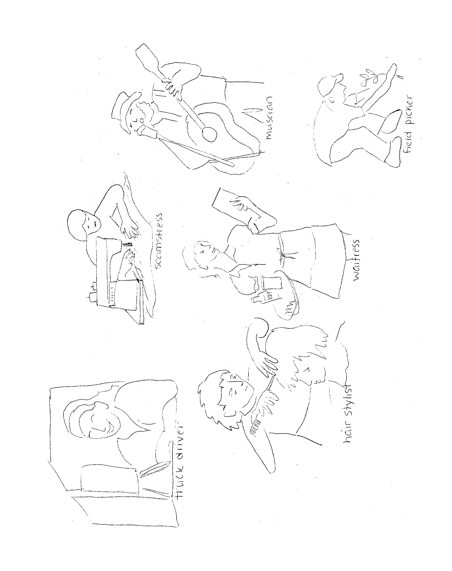
            Use the jobs cards.  Have each child pick a card and tell you one or two things about the picture.  Do you know what that job is called?  Can you name any special tools that they use?

Social & Emotional Development/Knowledge of Families & Communities; develops growing awareness of jobs and what is required to perform them.

Ask parents to write a brief description of what they do for work and illustrate it.  Make it into a classroom book.

Social & Emotional Development/Knowledge of Families & Communities; develops growing awareness of jobs and what is required to perform them.