When the Wind Stops, by Charlotte Zolotow

            This is a book that honors the planet earth by telling about her unending cycles.  It is a nice story to read to help answer some of your children’s why questions about nature.

Materials

  •  Several shirt boxes and small balls or marbles.
  • Strong flashlight
  • Blue food coloring
  • Several clean cans with holes poked in the bottom (to allow water to flow through)
  • Pictures of day and night

Vocabulary

  • Break on the sand (crash to the shore)
  • Cycle (repeating a process over and over).

Before Reading the Story

Bring in pictures of day and night. Hold them up one at a time and ask the children to tell you what time of day it is.

Science/Scientific Knowledge; develops growing awareness of ideas and language related to the attributes of time and temperature.

Reading the Story

On the page where the boy is playing with his friend and they drink lemonade on the porch, ask the children if they can guess what time of year it is. What are some other things you do in the summer?

Science/Scientific Knowledge; develops growing awareness of ideas and language related to the attributes of time and temperature.

As you continue reading the book, allow the children to add any information they may have that goes along with each page.

Science/Scientific Knowledge; expands knowledge of and abilities to observe, describe, and discuss the natural world, materials, living things, and natural processes.

After Reading the Story

            Talk about what season you are in currently and then move forward from there talking about the next season and changes that will occur. Allow the children to add any information that they may have.

Science/Scientific Knowledge; expands knowledge of and abilities to observe, describe, and discuss the natural world, materials, living things, and natural processes.

Discovery

            This experiment will have to be done on a sunny day.  Ahead of time you will have to cut each child’s letters to their name out of paper.  Have the child then tape these to a piece of dark construction paper.  These are laid out in the bright sun for 2 days.  After 2 good days of lying in the bright sun, bring them inside and have the children carefully peel the letters off of the construction paper. The paper will have faded from the sun and their name will appear. Or if your center has a budget, purchase Light Sensitive Paper https://www.stevespanglerscience.com/store/sun-sensitive-paper.html?gclid=EAIaIQobChMIr4vXpsSe7AIViInICh0WRAsSEAAYASAAEgIQ_vD_BwE

Literacy/Alphabet Knowledge; shows progress in associating the names of letters with their shape and sound.

Music and Movement

If you have a rainstick, let the children experiment making rain sounds. Add other instruments and encourage the children to make a rain storm by starting softly and then getting louder and louder then softer and softer again.

Creative Arts/Music; experiments with a variety of musical instruments.

Put on some music and dance like the wind. Can you twirl around, blow low to the floor? Be a tree and let your branches/arms gently sway in the breeze.

Creative Arts/Movement; expresses through movement and dancing what is felt and heard in various musical tempos and styles.

Have the children sit in a circle. Explain to them that you are going to play day and night. The teacher stands in the center of the circle with a bright flashlight and slowly turns around. Remind the children that the mother in the book talked about how when one part of the world is in daylight, the other half is in darkness or night. Explain that when the sun/flashlight is shining you are awake, it is day. When the sun/flashlight is not shining you are asleep, it is night. Have the children pretend to be asleep and awake depending upon if the flashlight is shining on them.

Science/Scientific Knowledge; develops growing awareness of ideas and language related to the attributes of time and temperature.

Blocks

            Add natural elements from your area to the center.  Place out a basket with acorns, sticks, sweet gum balls, pinecones, marsh grass, seed pods, etc..

Science/Scientific Knowledge; expands knowledge of and abilities to observe, describe, and discuss the natural world, materials, living things, and natural processes.

Art

            Cut out blue circles that are able to fit in the bottom of the shirt box.  Put a marble in a small cup of green paint with a spoon.  The child can scoop the marble out and put it on his blue circle/earth and marble paint across it by rocking the box back and forth.

Creative Arts/Art; gains ability in using different art media and materials in a variety of ways for creative expression and representation. AND Social & Emotional Development/Self-Control; demonstrates increasing capacity to follow rules and routines and use materials purposefully, safely, and respectfully.

Library and Writing

Give the children black construction paper and white colored pencils or chalk to practice writing their names. Hang them on the wall for everyone to see how hard they are working on their letters.

Literacy/Early Writing; progresses from using scribbles, shapes, or pictures to represent ideas, to using letter-like symbols, to copying or writing familiar words such as their own name.

Sand and Water

Add some blue food coloring to the water today. Ask the children if they can make waves, remind them the water needs to stay in the water table! Add cleaned cans with holes poked in the bottom (using a nail) to make rain.

Social & Emotional Development/Self-Control; demonstrates increasing capacity to follow rules and routines and use materials purposefully, safely, and respectfully.

Dramatic Play

            Put out dramatic play clothes that represent the season you are in and the one that follows (spring; sweater, boots/summer; bathing suit, floppy hat/ fall; sweater, backpack /winter; boots, mittens).

Creative Arts/Dramatic PLay; participates in a variety of dramatic play activities that become more extended and complex.  AND    Science/Scientific Knowledge; develops growing awareness of ideas and language related to the attributes of time and temperature.

Math and Manipulatives

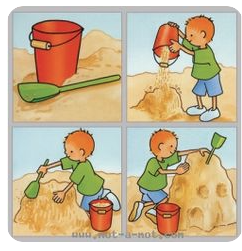
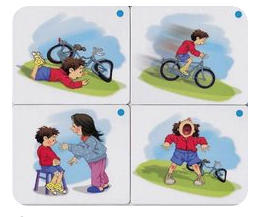
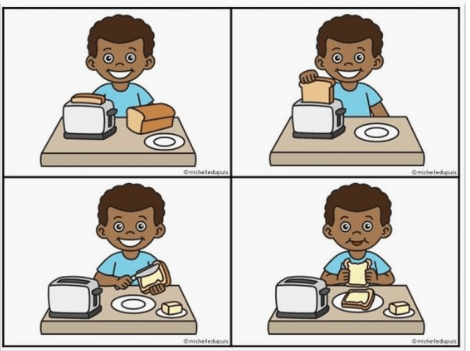
Use a variety of sequencing cards for the children to sort and put in order.

Mathematics/Patterns & Measurement; enhances abilities to recognize, duplicate, and extend simple patterns using a variety of materials.

Outdoor Play

Hang wind chimes on your playground. When they chime, remind the children that it is the wind moving that causes the sound. Bring out scarves and let the children run flapping them in the wind. Bring out bubble solution and watch which way the bubbles blow. Look at the clouds, which way is the wind blowing them?

Science/Scientific Knowledge; expands knowledge of and abilities to observe, describe, and discuss the natural world, materials, living things, and natural processes.

Transitions

            Talk about how your routine/schedule is also like a cycle, it goes from beginning to end and starts over again.  First we do ____, then we do _____.  After our lunch we _______. If you have a visual schedule, let the children take turns pointing out what you do during each part of your routine.

Mathematics/Patterns & Measurement; enhances abilities to recognize, duplicate, and extend simple patterns using a variety of materials.

Resources

PICTURES OF DAY AND NIGHT
SEQUENCING CARDS

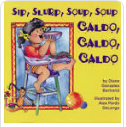
Sip,Slurp,Soup,Soup,Caldo, Caldo,Caldo by Diane Gonzales Bertrand

            Mother is busy in the kitchen making soup and the family is waiting.  This book goes through the steps to prepare the soup and readers will get caught up in the family’s anticipation for Mother’s delicious caldo.

Materials

  •  Corn tortillas
  •  Alphabet stickers
  •  Soup bowl alphabet seek and find
  •  Large pot and ladle
  • Dice
  • Plastic spoon per child
  • Several cardboard circle as a tortilla pattern
  • Several plastic knives for playdough cutting
  • Chalk for outside

Vocabulary

  •             Caldo (a special broth used to make soup) A kind of vegetable soup

Before Reading the Story

            Bring a variety of plastic foods or food picture cards to the rug.  Tell the children that you are going to pretend to make vegetable soup today.  Hold up the foods and ask the children to name it. Is this a vegetable?  If it is, put it into the pot.  If it is not, put it to the side.

Language Development/Speaking & Communicating; uses an increasingly complex and varied vocabulary.

Reading the Story

Encourage the children to repeat lines in the story of “caldo, caldo, caldo” and “tortilla, tortilla, tortilla”.

Literacy/Book Knowledge & Appreciation; shows growing interest in reading-related activities, such as asking to have a favorite book read; choosing to look at books; drawing pictures based on stories; asking to take books home; going to the library; and engaging in pretend-reading with other children.

After reading the Story

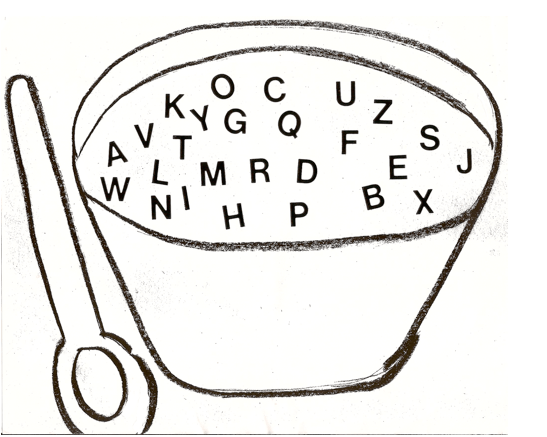
            Tell the children that you are going to pretend that you are making alphabet soup.  Draw a large bowl onto a piece of paper.  Ask the children to show you what three looks like on their fingers (hold up 3 fingers) and then put an alphabet letter on each/each child will receive three stickers.  After all the children have 3 stickers, point to an alphabet chart and say “if you have the letter R that looks like this you can come put it in the soup bowl”.  As the children put their letters on the paper bowl, encourage them to make the letter sounds with you. Continue choosing letters until all the children have put their letters into the soup.

Literacy/Alphabet Knowledge; shows progress in associating the names of letters with their shapes and sounds.

Discovery

            Bring in corn tortillas for the children to roll up and try.  Are you eating anything for lunch that they can try to use their tortilla as a straw? Make a chart; Like-Dislike Tortillas. Have the children mark their preference.

Social & Emotional Development/Self-Concept; begins to develop and express awareness of self in terms of specific abilities, characteristics, and preferences. AND Science/Scientific Skills & Methods; develops growing abilities to collect, describe, and record information through a variety of means, including discussion, drawings, maps, and charts.

Music and Movement

Do the Jack Hartmann song Special Soup https://www.youtube.com/watch?v=zXqEty5dA1Y

Sing The Soup is Boiling Up to the tune of The Farmer in the Dell. https://www.youtube.com/watch?v=WnVxTT42Kik

The soup is boiling up,

The soup is boiling up,

Stir it slow around we go,

The soup is boiling up.

Literacy/Phonological Awareness; shows growing awareness of beginning and ending sounds in words.

Blocks

Bring out any alphabet blocks that you have today. If you do not have alphabet blocks, you can put stickers onto your regular blocks. Encourage the children to write their names, copy simple words such as soup and caldo amd to name any letters that they can identify.

Literacy/Alphabet Knowledge; identifies at least 10 letters of the alphabet, especially those in their own name.

Art

            Use play dough and rollers to roll the play dough out very thin. Use the cardboard circles and plastic knives to cut out tortillas.  Or show the children how to make a ball of play dough and work it out into a tortilla.

Physical Health & Development/Fine Motor Skills; grows in hand-eye coordination in building with blocks, putting together puzzles, reproducing shapes and patterns, stringing beads, and using scissors.

Sand and Water

            Put any plastic vegetables you might have in the water table so the children can wash them and pretend to be making soup. Include the soup pot and ladle. Can the children name the vegetables as they ladle them into the pot?

Creative Arts/Dramatic Play; participates in a variety of dramatic play activities that become more extended and complex. AND Language Development/Speaking & Communicating; uses an increasingly complex and varied vocabulary.

Library and Writing

            Bring the soup bowl picture from group to the table.  Give each child another sticker or just show/name a letter.  Ask the child to then use a colored pencil to circle the one/s just like this.  (Kerry you find the T that looks like this and Roger you find the R just like in your name).  Or you can use the soup bowl to find and circle all the letters in the child’s name.

Literacy/Alphabet Knowledge; shows progress in associating the names of letters with their shapes and sounds. AND Physical Health & Development/Fine Motor Skills; progresses in abilities to use writing, drawing, and art tolls, including pencils, markers, chalk, paint brushes, and various types of technology.

Dramatic play

            Tell the children that the vegetables are being washed in the water table so let’s make something else today.  Ask the children to tell you about some of their favorite foods that their mother might cook.  Encourage them to pretend to prepare them for you.  Add paper so if they need to make a grocery list.

Language Development/Speaking & Communicating; develops increasing abilities to understand and use language to communicate information, experiences, ideas, feelings, opinions, needs, questions; and for other varied purposes.

Math and Manipulatives

            Give each child a plastic bowl.  Put out a pile of counters, any kind will work.  Tell the children that you are going to make ______soup (my counters were bears so we made bear soup).  Take turns rolling the dice and putting the correct number of bears/counters into the bowls using a plastic spoon.  Pretend to eat the bear soup as the children take the bears in and out of the bowl while they count.

Mathematics/Number & Operations; begins to associate number concepts, vocabulary, quantities, and written numerals in meaningful ways. AND Physical Health & Development/Fine Motor Skills; grows in hand-eye coordination in building with blocks, putting together puzzles, reproducing shapes and patterns, stringing beads, and using scissors.

Outdoor Play

On the cement use the chalk to make an alphabet line. Make each letter about six inches tall and spaced out so that the children can jump from letter to letter. Some letters can be closer together and others further apart. Show the children how to start on letter A and jump and sing the alphabet to Z.

Literacy/Alphabet Knowledge; knopws the letters of the alphabet are a special category of visual graphics that can be individually named. AND Physical Health and Development/Gross Motor Skills;shows increasing levels of proficiency, control, nad balance in walking, climbing, running, jumping, hopping, skipping, marching, and galloping.

Transitions

Let the children take turns picking a hot/cold card and taping it onto the correct side of a large paper titled Hot / Cold.

Science/Scientific Knowledge; develops growing awareness of ideas and language related to attributes of time and temperature.

Resources

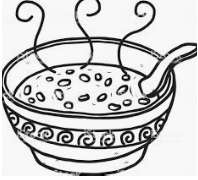
Can you find the letters in your name in the bowl of soup?

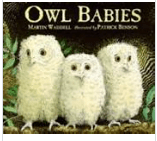
Owl Babies, by Martin Waddell

            When the baby owls wake up in the middle of the night, their mother is gone!  The babies are scared, where could she be? 
Materials
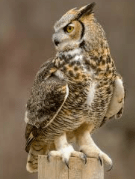
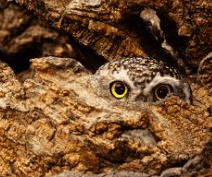
  • A good picture of an owl that shows detail (calendar, internet, natural magazine)
  • Bag of colored feathers
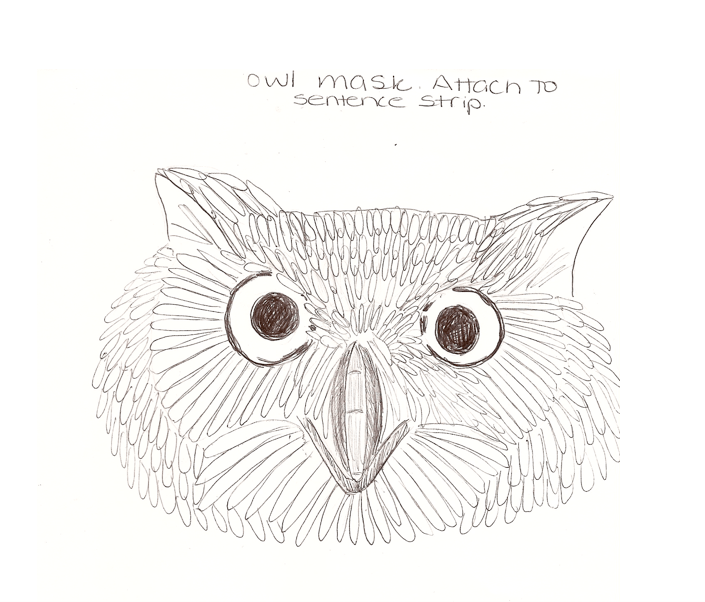
  • Owl head pattern for paper bag puppet
  • Paper lunch sack, one per child
  • Cut out a large tree with several branches.  Cut out three leaves per child.
  • Grocery list or flyers
  • Snapping clothes pins, several
  • Box of large paper clips
  • Several hoola hoops or string circles

Vocabulary

  • Beak (the mouth of a bird)
  • Brave (to show courage even when you are afraid or nervous)
  • Owlet (a baby owl)
  • Talons (the hooked claws found on the owls feet)

Before Reading the Story

            Show the children the cover of the book.  Does anyone know the name of this kind of bird? Ask them if they can tell what time of day it is.  Look at the baby owl’s eyes.  How do you think they feel?  They look scared.  What do you think made them afraid?

Language Development/Speaking & Communicating; develops increasing abilities to understand and use language to communicate information, experiences, ideas, feelings, opinions, needs, questions; and for other varied purposes. AND Approaches to Learning/Reasoning & Problem Solving; develops increasing ability to find more than one solution to a question, task, or problem.

Reading the Story

            Read adding inflection so the children can hear a bit of fear in your voice.  Encourage the children to say Bill’s line with him, “I want my Mommy!” 

Literacy/Book Knowledge & Appreciation; shows growing interest in reading related activities, such as asking to have a favorite book read;choosing to look at books; drawing pictures based on stories; asking to take books home; going to the library; and engaging in pretend reading with other children.

After Reading the Book

            Lead a discussion into ‘being afraid’.  Have you ever been afraid?  What did you do?  Do you know what it means to be brave?  Think of a time when you were brave (I got a shot and didn’t cry, My Dad took the wheels off my bicycle and told me to ride on only two, The dog came in my yard and I was outside). 

Language Development/Speaking & Communicating; uses an increasingly complex and varied spoken vocabulary.

Discovery

            Find a detailed picture of an owl.  Talk with the children about the picture.  Look at the owl’s eyes, why do you think they are so big (to be able to see at night), Did you know owls cannot move their eyes, they have to turn their heads.   Look at the owls’ beak, why do you think it is so sharp? (To eat meat)  What do we use to eat meat?  Look at the owl’s feet, why do you think their nails are so sharp?  Their feet are called talons.  Continue to look at the owl and see if the children can compare owls to people and how they are alike and different. 

Science/Scientific Knowledge; expands knowledge of and abilities to observe, describe, and discuss the natural world, materials, living things, and natural processes. AND Approaches to Learning/Reasoning & Problem Solving; develops increasing abilities to classify, compare, and contrast objects, events, and experiences.

Music and Movement

            Put several hoola hoops on the floor.  Each hoop should be able to hold several children.  Have the children practice flying and swooping from one hoop to the next.  Make sure you practice woo, wooing also.

Creative Arts/Dramatic Play; shows growing creativity and imagination in using materials and in assuming different roles in dramatic play situations.

Teach the poem, Wide-Eyed Owl

Wide-Eyed Owl

Here’s a wide-eyed owl

With a pointed beak

And claws upon his toes.

He lives up high in the tree.

He turns his head to look at me.

He flaps his wings

And says whoo,whoo,whoo.

(Act out accordingly)

Creative Arts/Dramatic Play; shows growing creativity and imagination in using materials and in assuming different roles in dramatic play situations.

Blocks

            The owl family lived in a tree in the forest.  Encourage the children to recreate the forest by standing many varied blocks up on end.  Can they stack one upon the other, can they stack three?

Physical Health & Development/Fine Motor Skills; grows in hand-eye coordination in building with blocks, putting together puzzles, reproducing shapes and patterns, stringing beads, and using scissors.

Art

            Use the owl head and glue it to a paper lunch sack.  Put out many colored feathers and let the children glue them on to the bag to make an owl puppet.  For a less structured art project, just put out the feathers and let the children make a feather collage. 

Creative Arts/Art; gains ability in using different art media and materials in a variety of ways for creative expression and representation.

Sand and Water

            With sand in table, add many small animal counters or small items.  Show the children how to open the clothespins and grab an animal.  Put a small basket beside the table and the children can move the animals they “catch with their owl beak” and put them in the basket. 

Physical Health & Development/Fine Motor Skills; develops growing strength, dexterity, and control needed to use tools such as scissors,l paper punch, stapler, and hammer.

Library and Writing

            Ask the child to take a leaf and write their name on it.  Then add a piece of tape and give the child a positional direction of where to tape it to the tree. (Put your leaf under a branch, at the top of the tree, next to Kerry’s leaf, on the left side of the tree).

Literacy/Early Writing; progresses from using scribbles, shapes, or pictures to represent ideas, to using letter-like symbols, to copying or writing familiar words such as their own name. AND Mathematics/Geometry & Spatial Sense; builds an increasing understanding of directionality, order, and positions of objects, and words such as up, down, over, under, top, bottom, inside, outside, in front, behind.

Dramatic Play

            Put grocery lists and grocery fliers into the center and encourage the children to pretend that they are getting ready to go to the grocery store.  Will the baby dolls go with to the store or will they stay at home?  Who will they stay home with?  Ask the children if their parents have ever left home without them.  Did someone come to stay with you?  Who?  What did you do? 

Language Development/Speaking & Communicating; develops increasing abilities to understand and use language to communicate information, experiences, ideas, feelings, opinions, needs, questions; and for other varied purposes.

Math and Manipulatives

            Have the children count out 8 paperclips.  Tell them that these are the talons for their owl puppet.  Have them slip them onto the bottom of the paper bag and count as they put them on. 

Mathematics/Number & Operations; begins to make use of one-to-one correspondence in counting objects and matching groups of objects. AND Physical Health & Development/Fine Motor Skills; grows in hand-eye coordination in building with blocks, putting together puzzles, reproducing shapes and patterns, stringing beads, and using scissors.

Outdoor Play

            Tell the children that they are going to be owl families.  Pick several children to be the owlets.  They must stay together while their parents go to gather food for them.  Have the parent owls’ swoop around the playground picking up sticks (mice and snakes) to bring back to their babies to eat.  The babies can hoot while they wait for their parents. 

Creative Arts/Dramatic Play; shows growing creativity and imagination in using materials and in assuming different roles in dramatic play situations.

Transitions

            Give each child a colored feather.  Have them use the feather to find something else in the room that is the same color.  They can fly around the room looking for objects.   After a short amount of time they can gather back at the carpet.  As they go off to the next activity they can tell you the color name of their objects, the names of the objects themselves, and how many objects they were able to find.

Approaches to Learning/Reasoning & Problem Solving; develops an increasing ability to find more than one solution to a question, task, or problem. AND Mathematics/Geometry & Spatial Sense; shows growth in matching, sorting, putting in a series, and regrouping objects according to one or two attributes such as color, shape, or size.

Dear Parent-

            Today we talked about owls.  Go for a walk with your child and look for other kinds of birds that are in your neighborhood.  Teach your child the names of one or two of these bird species and how to identify them (That’s a cardinal, he is red all over.  That’s a Robin Red Breast because his belly and breast area are the color red).

Resources