Scamper’s Year, by Jeff Kindley

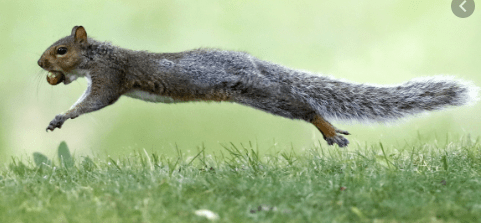
                  Scamper teaches children about the life of a squirrel as he enjoys the fruits of each season. 

Materials

  •                   Bag of mixed nuts in the shell
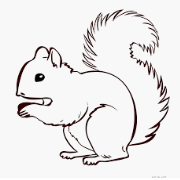
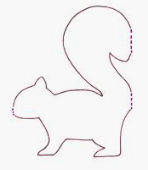
  •                   Squirrel shape

Vocabulary

  •                   Scamper (to run and jump while playing)

Before Reading the Story

                  Ask the children to share with you what they know about squirrels.  Write their responses down on a piece of paper. 

Science/Science Knowledge; expands knowledge and abilities to observe, describe, and discuss the natural world, materials, living things, and natural processes.

Reading the Story

As you read the story, allow the children to make comment and ask questions. Use this to help assess how much each child knows about squirrels.

Language Development/Speaking & Communicating; progresses in abilities to initiate and respond appropriately in conversation and discussions with peers and adults.

After Reading the Story

                  Ask the children if they can think of any new information that can be added to their knowledge chart.

Language Development/Speaking & Communicating; progresses in abilities to initiate and respond appropriately in conversation and discussions with peers and adults. AND Science/Science Knowledge; expands knowledge and abilities to observe, describe, and discuss the natural world, materials, living things, and natural processes.

 Discovery

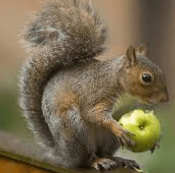
                  Put out books and pictures of real squirrels.  If you have squirrels in your neighborhood, consider feeding them so that the children can observe their funny antics.

Science/Scientific Skills & Methods; develops increasing ability to observe and discuss common properties, differences, and comparisons among objects and materials.

Music and Movement

                  Sing Gray Squirrel. https://www.youtube.com/watch?v=J1U5i_scF_M&list=PLAd00doYJ7gSnyFdUUk9Uw4C8EiBThjHn&index=1 Have the children do the actions as you sing.

Gray squirrel, gray squirrel

Swish your fluffy tail.

Gray squirrel, gray squirrel

Swish your fluffy tail.

Wrinkle up your funny nose,

Put a nut between your toes.

Gray squirrel, gray squirrel

Swish your fluffy tail.

Creative Arts/Music; participates with increasing interest and enjoyment in a variety of music activities, including listening, singing, finger plays, games, and performances.

                  Give each child two nuts and let them tap them together for musical instruments as you sing.

Creative Arts/Music; experiments with a variety of instruments. AND Mathematics/Patterns & Measurement; enhances abilities to recognize, duplicate and extend simple patterns using a variety of materials.

Blocks

Add natural items to your center to add to children’s structures. (Rocks, sticks, acorns, seed pods, pine cones, etc).

Creative Arts/Dramatic PLay; shows growing creativity and imagination in using materials and in assuming different roles in dramatic play situations.

Art;

                  Give each child a squirrel shape.  Cut out 1 inch squares of tissue paper and show the children how to make balls and glue it to the squirrel shape.

Physical Health & Development/Fine Motor Skills; develops strength, dexterity, and control needed to use tools such as scissors, stapler, paper punch, and hammer.

Sand and Water

                  Add many acorns to the table. ( A note: acorns that come into the warm for an extended period of time may contain tiny larva which will pop out over time. Use acorns for just a day or two before setting them back outside). Give the children small containers or a balance scale. They can then count the acorns or try to get both sides to be equal.

Mathematics/Number & Operations; begins to use language to compare numbers of objects with terms such as more, less, greater than, fewer, equal. AND Mathematics/Number & Operations; begins to use one-to-one correspondence in counting objects and matching groups of objects.

Library and Writing

                  In the story the squirrel talks about what he likes to do in each season.  Challenge the children to think about the activites that they like to do during each season.  Help them to write an  I like the ____ poem. (I like the summer because I play outside after dinner.  I like the fall time because I like Halloween pumpkins.  I like the winter because Grandma comes to my house.  I like spring because there was a rainbow once at my Grandma’s house”.

Approaches to Learning/Reasoning & Problem Solving; develops increasing ability to find more than one solution to a question, task, or problem. AND Social & Emotional Development/Self-Concept; begins to develop and express awareness of self in terms of specific abilities, characteristics, and preferences.

Dramatic Play

                  Bring in some clothing to represent your two most extreme seasons.  Help the children verbalize the names of the seasons as they dress. IE summer and winter

Mathematics/Patterns & Measurement; shows increasing abilities to match, sort, put in a series, and regroup objects according to one or two attributes such as shape or size.

Math and Manipulatives

                  Squirrels like to eat nuts.  Bring in a bag of mixed nuts in the shell and let the children use them for sorting.

Mathematics/Geometry & Spatial Sense; shows progress in matching, sorting, putting in a series, and regrouping objects according to one or two attributes such as shape, size, or color.

Outdoor Play

                  Put several hoola hoops on the ground in a spread out fashion.  Ask the children to all stand in a hoola hoop.  More than one child may stand in the same hoola hoop.  The teacher is “it”.  When the teacher shouts “Squirrels Change Trees” the children must run from one hula hoop to another without being caught by the teacher. 

Physical Health & Development/Health Status & Practices; participates actively in games, outdoor play, and other forms of exercise to enhance physical fitness.

Transitions

Hold your two hands into fists. Bump them together as you say the following poem; 1,2,3, What number do you see? When you say “see” hold up fingers and ask a child to name how many. For younger children start with 1-5 and older children include 1-10.

Mathematics/Number & Cooperations; begins to associate number concepts, vocabulary, quantities, and written numerals in meaningful ways.

Resources
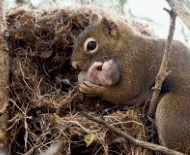
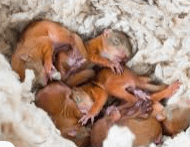
squirrel babies are very small and their eyes are shut at birth
Squirrels snuggle together in their nest to stay warm
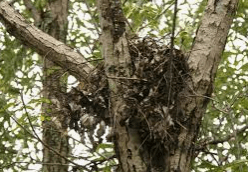
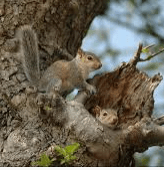
Many squirrels build large nests in trees
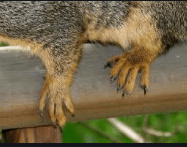
Squirrels have 4 toes on the front and 5 on the back. Their nails are sharp so they can climb trees.
Some squirrels make their home in holes of a tree
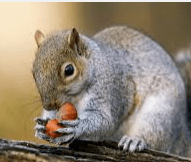
Squirrels carry nuts in their cheeks
Squirrels bury and hide their nuts so they will have food for the winter when there are no nuts available
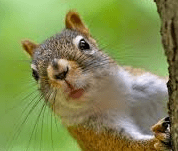
Squirrels have whiskers on their faces
Squirrels are fast runners and jumpers
Squirrels are good at balancing and climbing
Squirrels have fluffy tails

On Mother’s Lap, by Ann Herbert Scott

            There’s no place as comforting as Mother’s lap.  In this story a little boy brings his favorite things to his Mother’s lap where there always seems to be enough room.  But what will happen when the baby wakes up, will he still have a lap to sit on?

Materials

  •             Parachute or large sheet
  •             My Family graphing directions
  •             Pictures of children on Mother’s lap

Vocabulary

  • Rocking chair ( a chair with curved pieces of wood attached to the bottom to make the chair go back and forth)
  • Reindeer (a kind of animal, like a big deer)
  • Whisper (to say something very, very softly)
  • Jealous (Unhappy because another person gets something you want)

Before Reading the Story

            Ask the children if they know what it means to be jealous?  Have they ever been jealous of another person? (I wanted the baby doll but Kerry got it but then she let me have a turn next, I wanted the red one but Roger said no). 

Language Development/Listening & Understanding; understands an increasingly complex and varied vocabulary.

Ask the children who likes to sit on their Mother’s lap? Ask them how it makes them feel (happy, special, good warm, soft).  Tell the children that children all over the world like to sit on Mother’s lap.

Language Development/Speaking & Understanding; develops increasing abilities to understand and use language to communicate information, experiences, ideas, feelings, opinions, needs, questions; and for other vaired purposes.

Reading the Story

            As you read, rock gently back and forth.  Read in a soft soothing voice.  When you get to the page where Michael says, “There isn’t room”, stop and ask the children if they can tell how Michael is feeling (jealous), why (he thinks that Mother will put him down now)?  Ask the children what they think will happen.

Literacy/Book Knowledge & Appreciation; demonstrates progress in abilities to retell and dictate stories from books and experiences; to act out stories in dramatic play; and to predict what will happen next in a story.

After Reading the Story

            Ask the children who remembers what jealous means?  Ask the children why they think that Michael did not want his baby sister to come and sit with his Mother and him?  (There would not be enough room for them both).  Look at the picture of Michael and the baby on Mother’s lap and ask how Michael is feeling now (happy).  Tell the children when they share something it helps jealous feelings go away.  Point out recent examples of sharing you have seen in your room. (Yesterday I saw Kerry share the bicycle with Roger, that was being a good friend, Today Roger was looking at the book Kerry wanted so he said they could look at it together, that was sharing).

Social & Emotional Development/Cooperation; shows increasing abilities to use compromise and discussion in working, playing, and resolving conflict with peers.

Science

            Use a balance scale.  Put one heavy object on the left side and ask the children to see how many lighter objects it takes to balance the scale out.  (large rubber animal and 1 inch cubes, rock and shells)

Mathematics/Patterns & Measurement; shows progress in using standard and non-standard measures for length and area of objects.

Music and Movement

            Play the following; If You Have

If you have a big brother, stand up.

If you have a big brother, stand up

Big brothers its true, are older then you.

(Now do big sisters)

If you have a little brother, stand up.

If you have a little brother, stand up.

Little brothers its true, are younger then you.

(Now do little sisters)

Language Development/Listening & Understanding; shows progress un understanding and following simple and multiple-step directions. AND Social & Emotional Development/Knowledge of Families & Communities; develops ability to identify personal characteristics, including gender and family composition.

Blocks

Put play people into the center today and encourage the children to build homes for the families.

Physical Health & Development/Fine Motor Skills; grows in hand-eye coordination in building with blocks, putting together puzzles, reproducing shapes and patterns, stringing beads, and using scissors.

Art

            Bring in old supply catalogs and let the children cut out all the toys they would like for the playground or classroom.  Have them glue them to a poster board that is labeled “Class Wish List”.  Note after you finish the class collage that there was room on the paper for everybody’s cuttings.

Social & Emotional Development/Self-Concept; begins to develop and express awareness of self in terms of specific abilities, characteristics, and preferences.

Sand and Water

Add water and toy boats to the water table today. Remind the children that the little boy in the story brought a toy boat to his mother’s lap.

Library and Writing

            Use the rocking chair picture to have the children illustrate what they would take to their Mother’s lap, write their dictation underneath.

Literacy/Early Writing; begins to represent stories and experiences through pictures, dictation, and in play.

Dramatic Play;

            Ask the children what kinds of things they like to do with their Mother.  Help direct the play to act out several of these scenarios.

Social & Emotional Development/Self-Concept; begins to develop and express awareness of self in terms of specific abilities, characteristics, and preferences. AND Social & Emotional Development/Knowledge of Families & Communities; progresses in understanding similarities and respecting differences among people such as genders, race, special needs, culture, language, and family structures.

Math and Manipulatives

            Use unifix cubes or small pieces of paper to make a family graph. Have the children illustrate all the members that they call family.  Put out the people illustrations to show what color cubes to take for each family member.  The children collect the appropriate colored cubes to represent their family.  Who has the biggest family, who has the most sisters?

Social & Emotional Development/Knowledge of Families & Communities; develops ability to identify personal characteristics, including gender and family composition. AND Mathematics/Number & Operations; demonstrates increasing interest and awareness of numbers and counting as a means for solving problems and determining quantities.

Outdoor Play

            Bring out a parachute or large sheet for parachute play today.  When the children come over to play, tell them there is always room for one more.  Let the children help maneuver their bodies to all fit around the parachute.

Social & Emotional Development/Cooperation; develops increasing abilities to give and take in interactions; to take turns in games and using materials; and to interact without being overly directive or submissive.

Transitions

            Dismiss the children in a whisper voice. 

Resources
Old Black Fly, by Jim Aylesworth

            Old black fly is buzzin around and annoying everybody in the kitchen.  This alphabet book will have all the children repeating, “Shoo fly, shoo fly, shoo!”

Materials

  •             Two clean fly swatters
  •             Several old toothbrushes and Popsicle sticks

Vocabulary

  •             Shoo (go away!)

Before Reading the Story

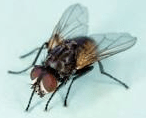
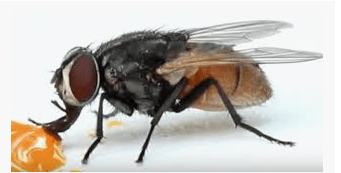
            Show children a fly swatter.  Does anyone know what this is?  When do you see flies?  Explain that flies land on food and throw up a tiny bit of liquid that they then suck up through their straw like mouth, yuck!  They also walk all over your food with dirty feet.  Because their feet are dirty, they can make you sick.  If a fly comes near your food, use your hands to move him away and say “Shoo fly, shoo fly shoo!”  Let the children practice this several times. 

Approaches to Learning/Reasoning & Problem Solving; grows in recognizing and solving problems through active exploration, including trial and error, and interactions and discussions with peers and adults.

Reading the Story

            Tell the children when you get to the parts that say “Shoo fly shoo fly shoo!” you need them to help. 

Literacy/Book Knowledge & Appreciation; shows growing interest and involvement in listening to and discussing a variety of fiction and non-fiction books and poetry.

As you turn each page, point to the letter and see if the children can name it.

Literacy/Alphabet Knowledge; identifies at least 10 letters of the alphabet, especially those in their own name.

After Reading the Story

            Go back through and point out the letter on each page and ask the children what went with it (O=olive oil). 

Literacy/Phonological Awareness; associates sounds with written words, such as awareness that different words begin with the same sound.

Discovery

            Find an old dead fly and put it into a sealed container (bug catcher, empty cassette case) and let the children examine it with magnifying glasses.  Do you see its two eyes?  Do you see the hairs on its legs?  How many legs does the fly have?  What are those things on his back?  For older children encourage them to draw what they see.

Science/Scientific Skills & Methods; develops growing abilities to collect, describe, and record information through a variety of means, including discussion, drawings, maps, and charts.

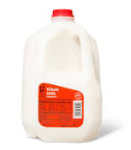
            As an extended activity, take a container of milk and put it someplace out of the way.  This should be at room temperature so that the children can hypothesize what will happen and then observe the milk over a period of a week.  Each day carefully pull it down and let the children talk about the changes that are occurring.  Can they predict what is going to happen to the milk?

Science/Scientific Skills & Methods; begins to describe and discuss predictions, explanations, and generalizations based on past experiences.

Music and Movement

            Put on the video of Flick a Fly and let the children dance along with the video. https://www.youtube.com/watch?v=qgPKQKa4U9E

Creative Arts/Movement; shows growth in moving in time to different patterns and beat in music.

            Sing the alphabet song.  Sing it starting off in a whisper voice getting louder and louder.  Sing it in a loud voice getting softer and softer.   Use this same effect using classroom instruments. Point to each letter on your alphabet chart as you sing.

Literacy/Alphabet Knowledge; knows that the letters of the alphabet are a special category of visual graphics that can be individually named.

Blocks

            Challenge the children to make alphabet letters using the blocks.  You might want to use a dry erase board to show the shape of several letters at a time.  It is easiest to begin with capital letters as there are more straight lined letters.  With the help of a teacher, four year olds can begin to write their names using blocks. 

Literacy/Alphabet Knowledge; knows that the letters of the alphabet are a special category of visual graphics that can be individually named.

Art

            Show the children the cover of the book and the spray that is following the fly. Tell the children that you are going to make spray using paint. Put out several bowls of colored paint.  Give the children old toothbrushes and Popsicle sticks.  Show them how to scrape the Popsicle stick against the toothbrush to make the paint spatter onto their paper.

Creative Arts/Art; gains ability in using different art media and materials in a variety if ways for creative expression and representation. AND Physical Health & Development/Fine Motor Skills; develops growing strength, dexterity, and control needed to use tools such as scissors, paper punch, stapler, and hammer.

Sand and Water

            Fill the table up with sand.  Put magnet letters in and mix it all up.  Let the children sift through the sand in search of the letters.  Can they name them?  Can they make a word that begins with the letter sound?

Literacy/Alphabet Knowledge;identifies at least 10 letters of the alphabet, especially those in their own name.

Library and Writing

            Encourage the children to write or trace alphabet letters.  If you do not have large letters, find punch out ones at the local Dollar Store that the children can trace around. 

Literacy/Early Writing;progresses from using scribbles, shapes, or pictures to represent ideas, to using letter-like symbols, to copying or writing familiar words such as their own name. AND Physical Health & Development; progresses in abilities to use writing, drawing, and art tools, including pencils, markers, chalk, paint brushes, and various types of technology.

Dramatic Play

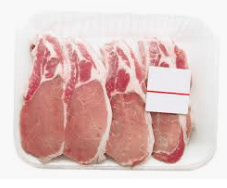
            Kitchen play today.  Can the children sort all the foods that must go in the refrigerator from those that do not have to go in the refrigerator?  Ask what do you think would happen if you did not refrigerate the food?

Mathematics/Patterns & Measurement; shows increasing abilities to match, sort, put in a series, and regroup objects according to one or two attributes such as shape or size. AND Physical Health & Development/Health Status & Practices; builds awareness and ability to follow basic health and safety rules such as fire safety, traffic and pedestrian safety, and responding appropriately to potentially harmful objects, substances, and activities.

Math and Manipulatives

            Use food cards to sort those that need refrigeration and those that do not.   

 Mathematics/Patterns & Measurement; shows increasing abilities to match, sort, put in a series, and regroup objects according to one or two attributes such as shape or size.

Outdoor Play

            Bring your fly swatters outside and with chalk write the letters of the alphabet on the sidewalk.  Hold up a letter written on an index card or piece of paper.  The children then must find it on the sidewalk and swat it with their swatter.  Ask them if they can name the letter.  If not, say the letter name and have them repeat swatting the letter again.  This game needs to be controlled and works best with two children at a time. 

Literacy/Alphabet Knowledge; identifies at least 10 letters of the alphabet, especially those in their own name. AND SOcial & Emotional Development/Cooperation; develops an increasing ability to give and take in interactions; to take turns using materials and in games; and to interact without being overly submissive or directive.

Transitions

            Same activity as outdoor play but in the classroom. Use 26 paper plates on the floor. For younger children only put out 5 paper plates at a time.

Literacy/Alphabet Knowledge; shows progress in associating the names of letters with their shapes and sounds

Resources

Dear Parent,

            Learning letter names is hard work for children.  You can help them by learning the most important letters first, those in their name.  Write your child’s name on a piece of paper and encourage him or her to copy it.  As you and they write the letters, name them and encourage your child to repeat back to you.  Once your child has mastered his/her first name, work on your last name or the names of other family members.  The idea is to get your child to see, write, and name letters.