The Doorbell Rang, by Pat Hutchins

Materials

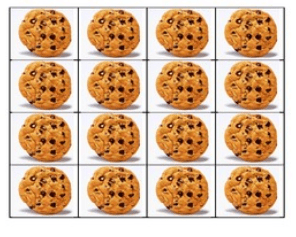
  • Cookie page cut out
  • A small box of cookies, enough for 1-2 per child
  • small drinking cups and spoons for mixing
  • Large zip-lock of cornstarch, flour, salt, dirt, sand, etc.
  • Small pitcher of water

Vocabulary

  • Tea (a hot drink that people like with cookies)
  • Starving (really, really hungry)
  • Enormous (really, really big-huge)
  •  Fair (to do according to the being nice rules)

Before Reading the Story

Ask the children if they have ever helped their parent to bake. What did they help to bake? Do they remember the steps that they took? Give the children a moment to talk about any experience they may have had and then tell them that you are all going to make pretend cookies. Have the children act out the following; Get your bowl and place it in your lap. Pour in 2 cups of flour. Break in 4 eggs. Stir your batter. Add a little milk and stir some more. Tell the children if they want chocolate chip cookies, now would be the time to pour them in. Stir your pretend batter one more time and then scoop from the bowl how many children you have today (ie 17). Pretend to put the cookies in the oven, remind the children to be safe as the oven is hot. While your pretend cookies are baking, sing C is For Cookie. https://www.youtube.com/watch?v=Ye8mB6VsUHw. Can the children think of other words that start with C? Sing about several other items also. Now tell the children that the cookies are done, can you smell them? They smell delicious. Have the children pretend to take them out of the oven and eat one. What kind of cookie did each child make? Ask them to share one with their neighbor. Remind them to thank each other for sharing their yummy pretend cookies with each other.

Creative Arts/Dramatic Play;participates in a variety of dramatic play activities that become more extended and complex.

Reading the Story

                  Each time you say “No one makes cookies like Grandma” have the children make a doorbell sound (ding-dong).  When you get to the page where each child has only one cookie on their plate and the doorbell rings, ask the children why everyone was looking at the door but not answering it.

Language/Listening & Understanding; demonstrates increasing ability to attend to and understand conversations, stories, songs, and poems. And Approaches to Learning/Reasoning & Problem-Solving; develops increasing abilities to classify, compare, and contrast objects, events, and experiences.

After Reading the Story

                  Talk to the children about sharing.  Bring in a box of real cookies and divide them equally among the children.  Break some in half if you have to make sure everyone gets the same amount.  Talk about being fair and even.  Give some examples of when children have done something fair.  (Roger was being really fair at breakfast when he only filled his juice cup to the line so that there would be some for the next person.  Kerry was fair when she let Tammie in line because Tammie’s name was called first.

Social & Emotional Development/Social Relationships; shows progress in developing friendships with peers. AND Mathematics/Number & Operations; begins to use one-to-one correspondence in counting objects and matching groups of objects.

Discovery

Cover the science table with newspaper. Put out the small cups and spoons. Show the children how to scoop a small amount of flour, etc. into their cup and add abit of water. Stir it around. What happens to the flour? Try adding a bit of water to a variety of substances. Do they become sticky, runny, thick? Let the children play with mixing different substances for different results. Pretend that you are mixing cookie doughs.

Science/Scientific Skills & Methods; develops increased ability to observe and discuss common properties, differences, and comparisons among objects and materials.

Music and Movement;

                  Play Count and Shout with the children.  Call out an action command and a number.  The children then must do the action while counting.  (Hop on both feet three times! 1-2-3. Flap your arms like a bird 5 times!  Jump like a frog 3 times!  Clap your hands 4 times!  Lift your knees 6 times!)

Mathematics/Number & Operations; begins to use one-to-one correspondence in counting objects and matching groups of objects.

Use 5 of your Chocolate Cookie cut-outs to do the following poem. Have the children act out.

Five Chocolate Chip Cookies

Five chocolate chip cookies, which I adore,

In came my mother, and then there were four.

Four chocolate chip cookies, that’s plenty for me,

Oh!  Here comes my father, now there’s just three.

Three chocolate chip cookies, they’ll have to do,

Oh no!  Here comes my brother, now there’s just two!

Two chocolate chip cookies, I better grab and run!

Too late! Sister is here and now there’s just one.

One little chocolate chip cookie, well its better than none.

I’ll take tiny little nibbles, that will be more fun!

Yum, yum

            Play, Who Stole the Cookies from the Cookie Jar?

Who stole the cookies from the cookie jar?

(Name a child) stole the cookies from the cookie jar.

Who me?  Yes you.  Couldn’t be.

Then who stole the cookies form the cookie jar?

(Name another child) stole the cookies from the cookie jar.

Who me?  Yes you.  Couldn’t be.

Then who……..

Language Development/Listening & Understanding; demonstrates increasing ability to attend to and understand conversations, stories, songs, and poems.

Blocks

                  As the children build with blocks today, ask them to add one more, three more, zero more blocks to their building.  Watch to see if they know how many objects make up a number.

Mathematics/Number & Operations; develops increases abilities to combine, separate and name “how many” concrete objects.

Art

                  Tell the children that you are going to pretend to make sugar cookies. Cut out 6 inch circles from poster board or heavy construction paper. Give the children light brown paint with salt mixed in and have them paint their cookie shapes. Ask the children what they think the salt is doing to the paint? As the paint dries, the salt will sparkle.

Science/Scientific Knowledge; shows increased awareness and beginning understanding of changes in materials and cause-effect relationships.

Library and Writing

                  Make your own The Doorbell Rang book.  Ask each child to draw a picture of someone, or something, inside the door frame paper.  Attach a door to the front of each child’s page and the words Ding-Dong.  Put all the pages together into a classroom book. As you read it, say DIng-Dong and then open the door and tell who, what is there. (Ding-Dong, Alicia was at the door. Come on in! Ding-Dong, an elephant was a the door. Come on in!).

Literacy/Early Writing;begins to represent stories and experiences through pictures, dictations, and in play.

Sand and Water

Fill your table up with warm water and soap today. Explain that after one bakes, one must wash the dishes. Add some play dishes, bowls, and spoons.

Physical Health & Development/Health Status & practices; builds awareness and ability to follow basic health and safety rules such as fire safety, traffic and pedestrian safety, and responding appropriately to potentially harmful objects, substances, and activities.

Dramatic Play

Ask the children if they can remember what the mom was doing in the story (mopping the floor)? If you have access to a child’s sized mop, let the children try their hand at this chore. Also small brooms for sweeping.

Approaches to Learning/Initiative & Curiosity; chooses to participate in an increasing variety of tasks and activities.

Math and Manipulatives

                  Encourage the children to use materials and divide them equally among themselves.  Card games are good for this as you must go around the circle, one for you, one for you, one for you, and one for me.  One for you, one for you, one for you, and one for me.

Mathematics/Number & Operations; begins to use one-to-one correspondence in counting objects and matching groups of objects.

Outdoor Play

                  Add a little water to the dirt and let the children make mud cookies.  Let them use old cookie sheets or trays to put them on.  They can use natural materials to decorate their cookies.

Creative Arts/Dramatic Play; shows growing creativity and imagination in using materials and in assuming different roles in dramatic play situations.

Transitions

                  Talk to the children about what it means to have more, less, or equal amounts.  Ask the children to each grab a handful of a manipulative (unifix, chains, bears).  Have them count the number of manipulatives they were able to pick up with one hand.  Ask the first child if they or the person beside them has more.  Whoever has more may move to the next activity.  Next ask a child who has less, themselves or the person beside them.  Whoever has less may go to the next activity.  If both children have an equal amount, they may both go.  Continue until everyone has moved to the next activity.

Mathematics/Number & Operations; begins to use language to compare numbers of objects with terms such as more, less, greater than, fewer, equal to.

Resources
Silly Sally, by Audrey Wood

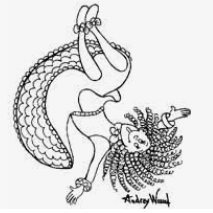
            Children seem to like this silly story about a girl named Sally who went to town walking backwards upside down.

Materials

  • A carnation flower or Queen Anne’s Lace. If no flower, a celery stalk
  • Food coloring
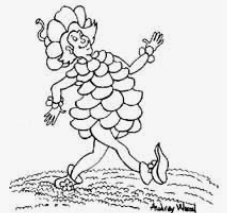
  • Pictures of Silly Sally characters

Vocabulary

  • Backwards (to not face the front but the back)
  • Upside down (where the upper part is where the lower part should be)
  • Silly (to be goofy or foolish)

Before Reading the Story

            Bring to the rug a variety of classroom objects with sets of two that begin with the same letter sound (car and crayon, pencil and purple piece of paper, block and bear counter).  Put out the set plus one other item (car, crayon, pencil).  Name the objects and ask the children which one has a different beginning sound.  Do this several times until the children get the hang of the game.  Then ask the children if they can think of two words that begin with the same letter sound.  Write the children’s responses on a piece of paper.

Literacy/Phonological Awareness; shows growing awareness of beginning and ending sounds in words.

Reading the Story

            On a second reading, have the children act out the actions.  They can walk backwards with their heads hung low instead of on their hands.

Language Development/Listening & Understanding; shows progress in understanding and following simple and multiple-step directions.

After Reading the Story

            Ask the children to answer questions about the story. Silly Sally went to town, walking which way upside down?  Silly Sally danced a jig with this very silly___?  Silly Sally played leap frog with this very silly ___?  Silly Sally sang a tune, with this very silly ___?  Silly Sally fell asleep with this very silly ___?  Along came Ned Buttercup walking ____?

Literacy/Book Knowledge & Appreciation; demonstrates progress in abilities to retell and dictate stories from books and experiences; to act out stories in dramatic play; and predict what will happen next in a story. AND Literacy/Phonological Awareness; progresses in recognizing matching sounds and rhymes in familiar words, songs, stories, and poems.

Discovery

            There are lots of flowers in the story.  Put a carnation or Queen Anne’s lace into a vase of water.  Add a few drops of food coloring and predict what the children think will happen.  Observe it for a day or two and see if their predictions come true.  You can talk about how all living things need water.  People drink water through their mouths.  Plants are also alive and need water.  They drink theirs through their roots and stems.

Science/Scientific SKills & Methods; begins to participate in simple investigations to test observations, discuss and draw conclusions, and form generalizations. AND Science/Scientific Knowledge; shows increased awareness and beginning understanding of changes in materials and cause-effect relationships.

Music and Movement

            Teach the children a tongue twister; Silly Sally snake slithered slowly down the slippery slope on a sunny summer’s day.

Literacy/Phonological Awareness;associates sounds with written words, such as awareness that different words begin with the same sound.

            Sing Down By the Bay. https://www.youtube.com/watch?v=-CSxGHve60E

Literacy/Phonological Awareness; progresses in recognizing matching sounds and rhymes in familiar words, games, songs, stories, and poems.

            Do the following finger-hand play.  Follow the movements accordingly.

Up and Down, round and round

I put my  fingers on the ground

Over, under, in between

Now my fingers can’t be seen!

Hands in front, hands behind

Now my  hands you  can not find!

Here’s my left hand, here’s my right

My hands and fingers are back in sight.

Mathematics/Geometry & Spatial Sense; builds an increasing understanding of directionality, order, and positions of objects, and words such as up, down, over, under, top, bottom, inside, outside, in front, behind.

 Blocks

            In the story there is a bridge that goes into town.  Encourage the children to make a bridge and line up the people or animals across it. Can they make a long bridge? A tall bridge? A bridge using only one size block? How many people fit onto their bridge? Can they make oine that will fit more?

Mathematics/Patterns & Measurement; begins to make comparisons between several objects based on a single attribute.

Art

            Tape pieces of drawing paper to the underside of the art table.  Put the markers or crayons in a basket under the table.  The children can lie on their backs under the table and draw upside down.

Creative Arts/Art; gains ability in using art media and materials in a variety of ways for creative expression and representation. AND Approaches to Learning/Initiative & Curiosity; chooses to participate in a increasing variety of tasks and activities.

Sand and Water

Put magnet letters into the sand today. Give the children spoons or tongs to search for the letters. As they pull a letter out, can they name it? Can they name another letter that rhymes with it?

Literacy/Alphabet Knowledge; identifies at least 10 letters of the alphabet, especially those in their own name. AND Literacy/Phonological Awareness; progresses in recognizing matching sounds and rhymes in familiar words, games, songs, and poems.

Library and Writing

            Bring out letters to trace or stamp.  Ask the children to find the first letter of their name and trace it/stamp it.  Ask them if they can think of a word that begins with that letter sound.  Write their name and the word beside one another.  As they trace more letters, ask them to think of two words that begin with that letter sound.

Literacy/Alphabet Knowledge; identifies at least 10 letters of the alphabet, especially those in their own name. AND Literacy/Phonological Awareness; progresses in recognizing matching sounds and rhymes in familiar words, games, songs, and poems

Dramatic Play

Add some silly hats and bow ties to the center.  Encourage the children to dress up silly.  Put the coat on backwards and two different shoes, add a bow tie and a silly hat.

Math and Manipulatives

Make a game using the Silly Sally pictures. Give each child a picture. Start by saying, “Everybody upside down”. The children turn their card so the figure is upside down to them. Continue playing by calling upside down or right side up. The children must move their picture accordingly. Try to trick them by calling upside down twice in a row, etc..

Language Development/Listening & Understanding; shows progress in understanding and following simple and multiple-step directions.

Outdoor Play

            Help the children to feel what it is like to walk on their hands, upside down.  Have them bend over, the teacher holds their ankles up in the air and they can try to walk on their hands several feet.

Physical Health & Development/Gross Motor Skills; shows increasing levels of proficiency, control, and balance in walking, climbing. running, jumping, hopping, skipping, marching, and galloping.

Transitions

            Send children off to the next activity with instructions to do a silly movement to get there.  As they go say, “Silly Serry went to town, walking on her knees.  Silly Soger went to town, jumping like a frog,” etc

Literacy/Phonological Awareness; progresses in recognizing matching sounds and rhymes in familiar words, games, songs, and poems.

Resources

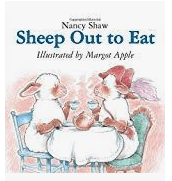
Sheep Out To Eat, by Nancy Shaw

            What happens when sheep go out to eat?  A restaurant disaster and a very silly story.

Materials

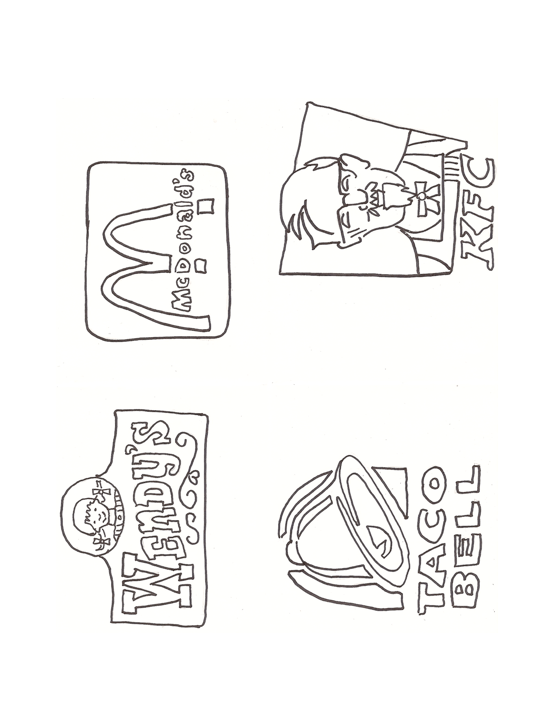
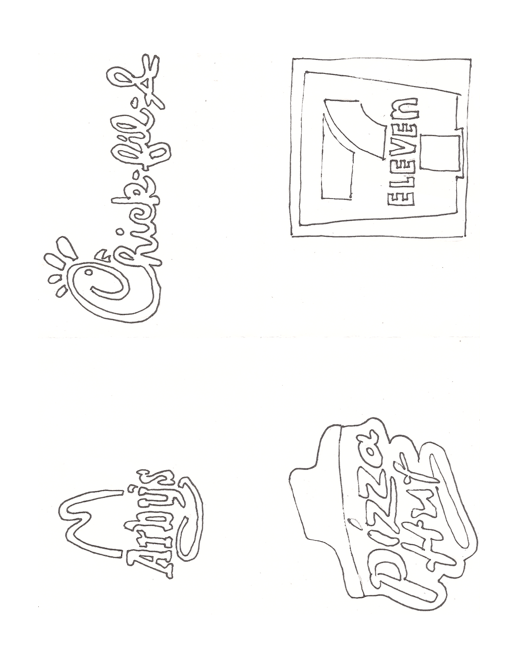
  •  Restaurant signs
  •  Schedule a field trip to a local restaurant if possible
  • Pictures of a variety of foods
  • Several nail scrub brushes

Vocabulary

  • Tea shop ( a restaurant where you can get tea to drink and little cakes) Menu (a list of foods that you can order)
  • Appetite (the desire to eat)
  • Tips (the money you leave on the table at the restaurant for the waiter or waitress)

Before Reading the Story

            Ask the children how many of them have ever been out to eat at a restaurant.  Talk about their experiences and help them learn the names of objects found in a restaurant (menu, booth, waiter, and tip).  

Social & Emotional Development/Knowledge of Families & Communities; develops growing awareness of jobs and what is required to perform them.

Reading the Story

            Stop on each page and talk through the pictures.  What is happening?  Do you see what the words are talking about? 

Literacy/Book Knowledge & Appreciation; shows growing interest and involvement in listening to and discussing a variety of fiction,and non-fiction books, and poetry.

After Reading the Story

            Use the restaurant signs to make a graph and ask the children to label their favorite restaurant.  Which one has the most votes?

Mathematics/Number & Operations; begins to use language to compare numbers of objects with terms such as more, less, greater than, fewer, and equal to.

Discovery

Bring in pictures of different kinds of foods.  Can the children name the foods?  Talk about the colors of the foods and where they fit on the food pyramid.  Ask the children to sort the cards by foods they like and foods they do not like.

Approaches to Learning/Reasoning & Problem Solving; develops increasing abilities to classify, compare, and contrast objects, events, and experiences. AND Social & Emotional Development/Self-Concept; begins to develop and express awareness of self in terms of specific abilities, characteristics, and preferences.

Music and Movement

Play the song, Tea Party by the L. Berkner and act out as she sings. https://www.youtube.com/watch?v=mLOkR_IP1w0 This could be done in the dramatic center today.

Sing I’m a Little Teapot and teach the children the movements. https://www.youtube.com/watch?v=AB4vzj93OGY

Creative Arts/Music; participates with increasing interest and enjoyment in a variety of music activities, including listening, singing, finger plays, games, and performances.

Blocks

            Challenge the children to build a restaurant.  Can they build the tables and add people to fill it in?

Creative Arts/ Dramatic Play; participates in a variety of dramatic play activities that become more extended and complex. AND Social & Emotional Development/Cooperation; shows increasing abilities to use compromise and discussion in working, playing, and resolving conflicts with peers.

Art

            Make placemats with the children.  Take a piece of construction paper and do an art activity of choice on it.  Then cover each with contact paper. Use these at meal time to determine who will sit where for the meal.

Approaches to Learning/Initiative & Curiosity; chooses to participate in an increasing variety of tasks and activities. AND Creative Arts/Art; develops growing abilities to plan, work independently, and demonstrate care and persistence in a variety of art projects.

Library and Writing

            Have the children help create a name for their dramatic play restaurant and a sign.  This could be a group coloring project.  Also have the children cut out food items and glue them on a poster board.  You can add amounts and this could be a billboard sign like many fast food restaurants.

Literacy/Early Writing; develops understanding that writing is a way of communicating for a variety of purposes.

Sand and Water

            Add water and nail scrub brushes along with some plastic vegetables and fruits.  The children can pretend to clean them for cooking. If you do not have nail scrub brushes use rags or paper towels.

Physical Health & Safety/Health Status & Practices; builds awareness and ability to follow basic health and safety rules such as fire safety, traffic and pedestrian safety, and responding appropriately to potentially harmful objects, substances, and activities.

Dramatic Play

            Play restaurant.  Add some carry out menus, a cash register, an apron, and a pad of paper to write the orders on. 

Creative Arts/ Dramatic Play; participates in a variety of dramatic play activities that become more extended and complex.

Math and Manipulatives

            Bring in several dollars worth of change for the children to sort.  Add magnifying glasses and talk with the children about what they see on each coin and the coins name.

Mathematics/Patterns & Measurement; shows increasing abilities to match, sort, put in series, and regroup objects according to one or two attributes such as shape or size. AND Language Development/Speaking & Communicating; develops increasing abilities to understand and use language to communicate information, experiences, ideas, feelings, opinions, needs, questions; and for other varied purposes.

Outdoor Play

            In the story the sheep ended up eating the grass outside the restaurant.  On the playground sit in the grass and smell it, touch it, chew a piece.  Help the children to become aware of grass using all of their senses.  Put a thick blade of grass between your two thumbs and make a whistle from it.

Science/Scientific Skills & Methods; begins to use senses and a variety of tools and simple measuring devices to gather information, investigate materials, and observe processes and relationships.

Transitions

            Ask the children to help you recall the story.  Who went to the restaurant, what kind of restaurant was it?  What did they order, then what happened?

Literacy/Book Knowledge & Appreciation; shows growing interest and involvement in listening to and discussing a variety of fiction and non-fiction, and poetry.